San Francisco · Hardware · Est. 2018
Daylight Computer Co.
The computer, de-invented. A 60-frames-a-second tablet that refuses to glow blue.
The computer, de-invented. A 60-frames-a-second tablet that refuses to glow blue.
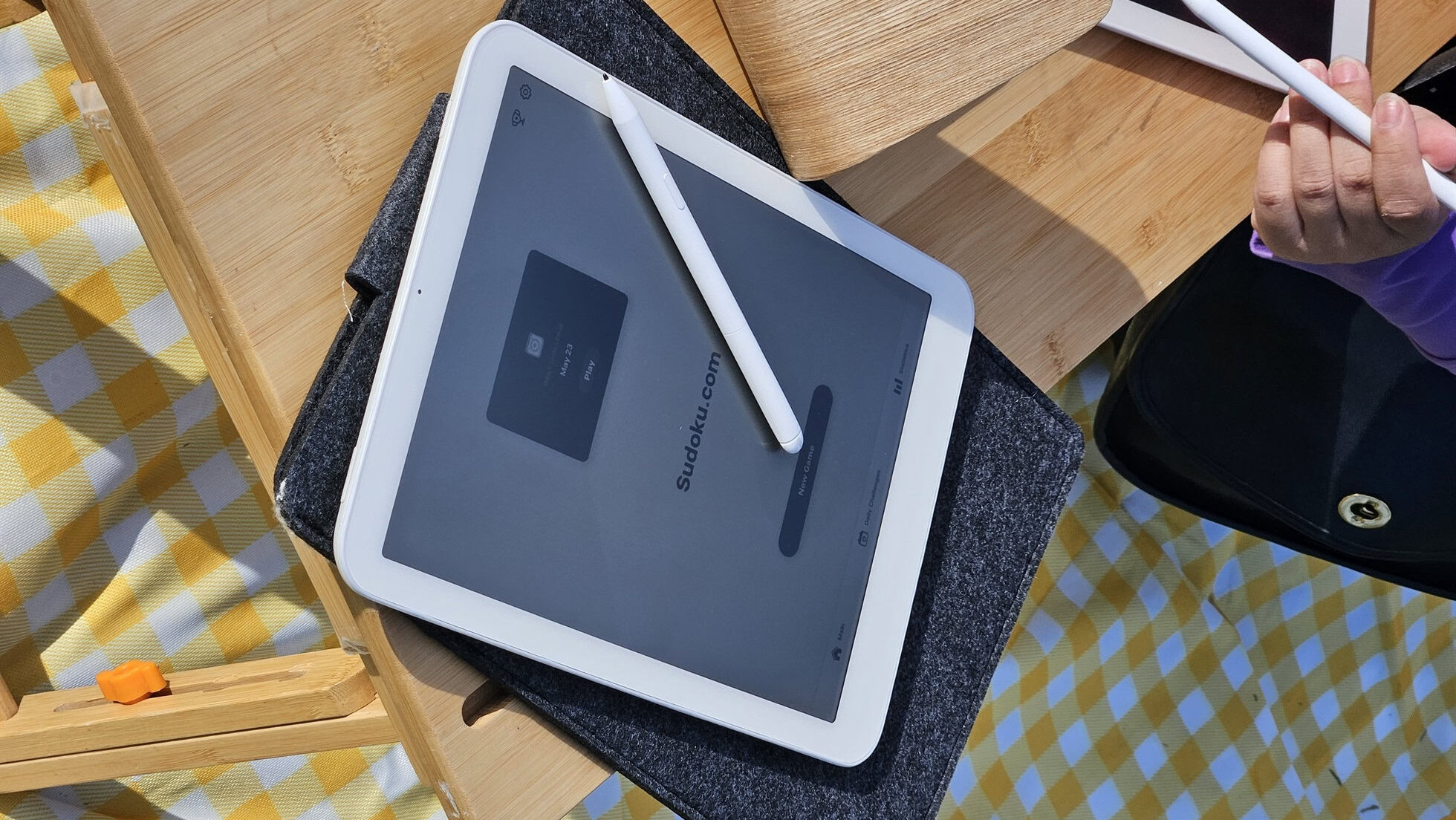
It's a Tuesday in the Mission. The DC-1 is on a wooden table, between a half-eaten croissant and someone's notebook. The screen is on. It's not glowing - exactly. It's just there, like a page. A child reaches for it. The parent doesn't flinch. That's the whole thesis of Daylight Computer Co., written out in body language.
The Daylight DC-1 doesn't announce itself the way a tablet usually does. There's no rectangle of blue light at the edge of your vision. No headache hum after twenty minutes. No phantom flicker your eyes feel before your brain does. It looks like paper. It scrolls like an iPad. It runs Android apps. And it sold out.
Daylight is a six-year-old hardware company in San Francisco, founded by a Stanford-trained engineer named Anjan Katta. He wanted something the market kept refusing to make: a computer his eyes didn't argue with. So he made it. Then 5,000 strangers wanted one too. Then they ran out.
The story sits in a strange place. It is, on one hand, a small hardware company in a category that has eaten countless startups whole. It is, on the other, one of the most legible examples of a quiet shift in consumer technology: the idea that screens should be on our side.
DC-1 vs. the screen you're probably reading this on
The DC-1 runs Android 13 under the name SolOS. You can install your apps. You can answer email if you must. But most people don't buy it for that.
Kindle, Pocket, the news, the PDF you've been avoiding. In sun, in shade, at midnight under an amber glow.
Markdown, journals, screenplays. The stylus has palm rejection. It feels like paper friction, not glass.
Monochrome by design - which is a constraint, and constraints are good for the work.
PDFs, contracts, research papers. Markup with the pen the way you would on paper.
Speakers, microphone, podcast apps. The DC-1 isn't anti-app; it's anti-anxiety.
This is the one the co-founder of Notion reportedly couldn't shut up about.
"Help technology and humanity live happily ever after."Daylight Computer Co. - Stated Mission
Katta graduates from Stanford with a focus on medical device technology. The seeds of a different kind of computer get planted.
The company incorporates with a single, stubborn idea: no blue light, no flicker.
First scientific prototype, then a proof-of-concept. Katta puts $300,000 of personal savings into R&D.
A Victorian greenhouse in Golden Gate Park hosts the DC-1's debut. The first 5,000-unit run sells out within days. Over $2.5M in opening-week revenue.
Reports surface of a ~$12M round backed by angels and operators from Oculus, Pinterest, and Dropbox.
The DC-1 appears on The Joe Rogan Experience. Waitlists swell. New brand identity drops, designed by The Office of Ordinary Things.
Trained at Stanford in medical-device technology. Inspired by the Kindle and by his own eyestrain, he spent six years getting from "what if a screen didn't hurt" to a shippable tablet. He has called the DC-1 "an analog object that happens to have digital magical capabilities." He talks about systematic disincentives in tech the way other founders talk about TAM.
Return to that table in the Mission. The croissant is gone. The notebook is closed. The DC-1 is still there, still doing what it has been doing the entire time - which is, in a sense, nothing. It hasn't pinged. It hasn't pulled. It hasn't asked.
That stillness is the product. You buy a tablet, and what you get back is a small, regular reminder that not every screen has to behave like every other screen. That you can put a piece of glass in your hand and feel less, not more.
Daylight is small. The category is hard. Hardware is brutal. But the early evidence - sold-out runs, full inboxes, podcast spots, a community that calls the device "my DC-1" rather than "my tablet" - suggests there is, in fact, a market for a computer that doesn't try so hard.
The parent across the café picks up the DC-1, hands it to the child, and goes back to their coffee. Six years of engineering, one quiet handoff. That's the scene. That's the company.