David Wilson’s first business came with an unusual research department: the dumpster. At 22, he was gathering information about political candidates, collecting campaign material and compiling reports. He called the work “mail tracking.” A campaign had paid to put its message into circulation. Wilson found a use for the paper after somebody else had finished with it.
The detail is funny because political consulting tends to present itself rather more elegantly. There are conference badges, careful biographies and photographs in good jackets. A bin rarely makes the brochure. Yet Wilson’s account gives his career a tangible starting point. Before he was organizing teams to deliver messages, he was gathering evidence of the messages already being delivered.
Today, David M. Wilson is the co-founder, president and CEO of RedDog. The Sacramento-based firm organizes grassroots communications, with field deployment across the country. Wilson is based in Newport Beach. His working world includes canvassers, phone bankers and texting programs: the people and systems that make direct voter contact happen.
The business in the bin
Wilson began volunteering for his local congressman at 14. Politics arrived in his life as something to participate in, well before the first company. Eight years separate that starting age from the age at which he says he began his mail-tracking business. Those are two concrete markers in his early career.
His account of the first business emphasizes gathering material and making reports. The output matters as much as the eccentric collection method. Discarded campaign literature could become useful when somebody organized it. A leaflet on its own is an object; a report gives another person a way to examine it.
There is a pleasing reversal in the story. Campaign mail asks its recipient to pay attention. Once discarded, it asks nothing at all. Wilson supplied the attention anyway. His one-person operation grew, he recalled, after the approach proved successful in one area. It is an origin with paper, labor and a customer’s need for information at its center.
A one-person business acquires a workforce
In 2018, Wilson helped develop C3 Public Strategies in partnership with Jeff Flint. By March 2021, he was describing his role as chief operating officer and his responsibility for full-time employees and more than 1,000 canvassers across the country. The unit of work had changed considerably from a report assembled by one person.
That move helps explain the kind of executive he became. Managing a field workforce requires an operation that other people can carry out. The person at the center must make the work legible to both the workers and the client. A useful plan has to survive its journey from an office to a neighborhood.
The scale Wilson described also puts the phrase grassroots communications in practical perspective. A campaign may speak about a community as a single audience. The staff encounter it through separate conversations. Managing that work means holding the individual encounter and the larger program in view at the same time.
Two colleagues from the C3 team, Bryan McPartlan and Scott Borges, subsequently joined Wilson in founding RedDog. Their shared professional history gives the newer firm a recognizable connection to his earlier operational work. The company’s origin brings together people who had already worked in the business of reaching voters.
The geography behind the message
Wilson grew up in Sacramento and has aided hundreds of municipal, legislative and congressional campaigns. He now lives in Newport Beach, anchoring the Southern California office. His career has kept a California focus while his operational work has extended nationally.
Those locations are useful details because a campaign audience has an address. A statewide political argument can be discussed in one room; its delivery takes place across many different communities. Municipal races and congressional campaigns also ask an operation to work at different scales. A familiar map does not make those assignments identical.
In November 2024, Wilson appeared on a CalChamber Public Affairs Conference panel reviewing California’s legislative and congressional election results. Rob Stutzman moderated the discussion, with Marva Diaz, Kate Holliday and Christy Wilson also on the panel. David Wilson was there under the Red Dog Vote affiliation.
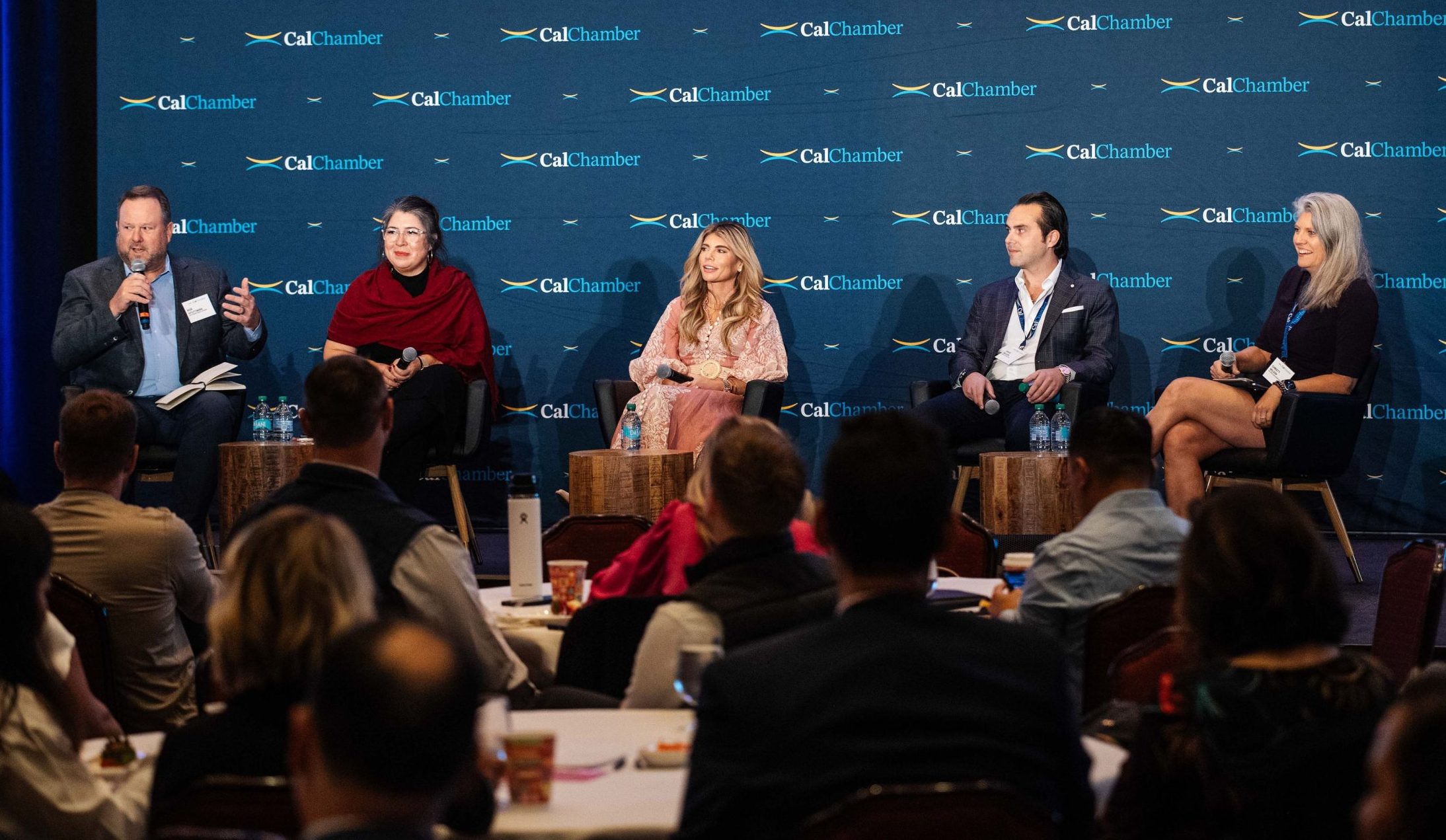
The photograph supplies a different scene from the mail-tracking beginning. Here is the campaign operator onstage, among others examining the result. It is a public setting for expertise accumulated in work that often happens away from the microphone. The audience sees the panel; the career behind it includes the less photogenic business of getting programs carried out.
A complaint with two parts
In August 2024, Wilson discussed RedDog’s texting work and the vendors it used. His account started with frustration about delivery verification and support. He wanted to understand whether messages were arriving, and he wanted help from people who understood the urgency of the job. He said a conference meeting with Prompt.io’s leadership led to a better fit.
“The two biggest challenges were reliability and customer service.”
David Wilson, 2024
It is a revealing pair of complaints. Reliability concerns the work itself. Customer service concerns the person trying to manage it. Both come into play when an executive needs an answer about an active program. A tool may be easy to describe in a demonstration and rather harder to explain when the customer is asking where the messages went.
Wilson’s account can be read as an operator’s view of software. The attractive screen is only part of the working relationship. Someone needs to answer questions, interpret the result and help resolve trouble. An election deadline makes that relationship especially concrete: the calendar continues moving while the customer waits.
The reply is part of the work
The direct-contact business Wilson describes includes canvassing, live calls and texting. In the same discussion, he identified delivery and voter engagement as measures of a texting program’s effectiveness. The distinction is useful. A message arriving and a person responding are separate events, even when a report puts both on the same page.
A reply gives the operation something else to handle. It can contain a question, a refusal or information about what matters to the voter. Those possibilities change the job from distribution into conversation. The organization must be prepared to receive something, as well as to send it.
That is a helpful way to understand Wilson’s career without reducing it to a list of communication channels. The channels change the place where contact happens. A doorstep, a telephone call and a text exchange each create a different setting. In every setting, the work still involves a person whose response cannot be supplied by the campaign’s original script.
What happens after the canvasser leaves
RedDog’s published quality controls include nightly performance audits, location verification, time-stamp reviews and calls to confirm canvasser surveys. The firm also lists direct supervision of phone-bank employees and tracking of survey and refusal rates. These commitments describe the work around the encounter, after the visible act of contact.
- PlaceA location check helps establish where.
- TimeA time stamp helps establish when.
- EncounterA confirmation call can test the reported survey.
Illustration of the checks RedDog lists. These checks do not, by themselves, establish persuasion.
For Wilson, those procedures sit inside a business built around other people doing work in many places. An executive cannot personally accompany every canvasser. The record becomes one way to examine what happened. It needs a meaning that the worker, supervisor and client can understand.
The distinction between an encounter and an outcome deserves care. Establishing that someone was at a location does not establish what a voter thought. Confirming a conversation does not establish a changed mind. A useful operation keeps those claims proportional to the evidence, rather than asking one number to perform several different jobs.
Attention travels in both directions
RedDog announced three 2025 Pollie Awards, including gold for a Republican field campaign, silver for a paid field program and bronze for local get-out-the-vote work. Those are company honors, earned in categories close to Wilson’s operational career. They offer another public marker of the firm’s field work.
The more distinctive thread in his story remains the relationship between a message and the information it leaves behind. Early on, Wilson collected campaign material for reports. Later, he helped manage canvassers. Today, the business he leads organizes direct contact and describes ways to check its records.
Calling that a career in politics is accurate, though a little broad. It is also a career in paying attention to work after the obvious moment has passed. The mail has arrived. The canvasser has left. The text has been sent. Somebody still needs to know what can be learned from the result.
The dumpster story survives because it is so specific. It gives a polished executive biography a corner that will not quite straighten out. Wilson began by finding a useful report in material someone else had discarded. Years later, the tools and workforce are different. The practical question remains recognizable: what information will help the next person do the job?