The career of David Wachsman can be traced to a party, a bar and a question asked at the correct moment. In 2014, at a technology gathering in New York, he met Jaron Lukas, the founder of the early Bitcoin exchange Coinsetter. Wachsman was then working at a Manhattan public-relations agency. Lukas had a product from a world that sounded half like computer science, half like monetary heresy. They kept talking. Wachsman kept asking questions. Soon Coinsetter was his client.
The assignment revealed a peculiar commercial gap. Bitcoin had builders, investors and zealots. It had fewer adults who could translate its machinery into sentences that a reporter, customer or nervous institution might willingly repeat. Wachsman and Lukas shaped Coinsetter's brand and won attention against larger exchanges. Eventually Lukas gave his adviser some advice: he plainly loved the industry and ought to work in it full time.
Wachsman took the hint. In 2015 he opened a firm bearing his name, initially one employee in a WeWork. His strategy was less romantic than the technology and more durable than many of its tokens. Instead of making one grand wager, he assembled clients across the young ecosystem: a mining pool, a hardware wallet, a software wallet, a venture fund and a Bitcoin ATM network. If the category survived, every part of it would need a vocabulary.
It all started in a bar and asking a lot of questions.David Wachsman, recalling the firm's origin
A business built from the missing nouns
Public relations is sometimes caricatured as the application of gloss. Crypto in 2015 did not need more shine. It needed explanation. What was a wallet if it held no coins? Why did a token matter? Where, precisely, was the blockchain? The language was novel, the stakes were financial, and the sector had an extravagant talent for producing crises before breakfast. A communications specialist who understood the technology could become more than a messenger. He could become part translator, part skeptic and part emergency electrician.
The niche widened quickly. Within three years, Wachsman said the firm had gone from that lone WeWork seat to roughly 100 people across three continents. By mid-2018 it reported 90 employees, offices in New York and Dublin, more than 100 blockchain-focused clients, and new event-management and strategy capabilities. It had begun as a narrow agency for Bitcoin companies and was turning into a professional-services business for an industry still inventing itself.
That expansion produced an inversion every agency covets: reporters began contacting the firm for context, rather than merely receiving its pitches. Wachsman had arranged clients across enough of the market to see its moving parts. A journalist confronting a new technical claim could call someone whose team already spoke to exchanges, infrastructure providers, investors and protocol builders. Category knowledge became a distribution advantage.
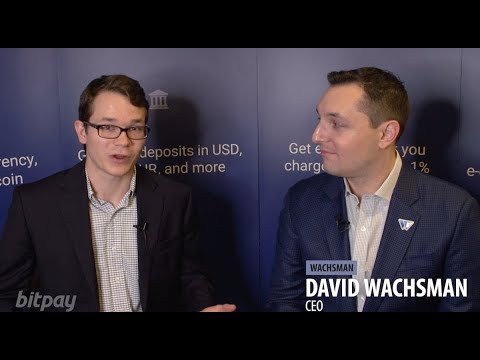
It also made Wachsman himself a public explainer. During Bitcoin's vertiginous 2017, he appeared on CNN and said the technology remained hard to use. He compared its stage of development to the internet in 1991. The analogy did useful work: it admitted the clumsiness while preserving the possibility. Anyone who remembers a dial-up modem understands that awkward beginnings do not settle the ending.
The boom was useful. The busts were the education.
A specialist in digital-asset communications enjoys unusual access to human nature. Every market upswing attracts certainty. Every collapse rediscovers vocabulary such as governance, custody and accountability. Wachsman's firm had to operate in both weather systems. Its work expanded into crisis and issues management, executive counsel, investor relations, policy, transactions and market positioning. The common material was trust, especially when it was scarce.
Wachsman's own comments have consistently returned to literacy. A 2020 podcast framed his mission as clearing away stereotypes and crypto illiteracy. A 2021 company profile described a deliberate attempt to counter misinformation and misunderstanding. Even his simplest career advice carries the same instinct: “Read widely, and not just in your professional area.” The line is modest, almost suspiciously sensible for an industry fond of manifestos. It explains the work. Translation improves when the translator has more than one dictionary.
The firm survived long enough to experience several versions of its own category. “Bitcoin company” gave way to “blockchain,” then “crypto,” “Web3,” “digital assets” and, increasingly, the less flamboyant language of finance and policy. Its client work spread beyond startups to banks, payment networks, conferences and established technology businesses. Offices followed across North America, Europe and Asia. The Inc. 5000 ranked Wachsman No. 405 in 2020 and No. 2,770 in 2023, snapshots from two very different market moods.
A chance meeting leads to communications work for Coinsetter, an early Bitcoin exchange.
Wachsman opens as a one-person specialist firm in New York.
The company reports 90 employees and adds events and strategic advisory.
Two appearances on the Inc. 5000 mark growth across contrasting crypto cycles.
Wachsman becomes president and principal executive officer of Hawkeye Digital.
Scale changed his daily job. The founder who once chased each account eventually spent mornings on video calls with Asia and Europe, met department leaders, spoke with clients and prospects, and often finished at an evening technology panel. By 2026, senior executives at Wachsman were being elevated to run global operations and strategy. The promotions were a clue that the founder was making room for another undertaking.
The adviser steps through the glass
In April 2026, an investment group led by Wachsman took control of Hawkeye Systems, a small public company whose previous operating business had ceased years earlier. Wachsman became president and principal executive officer. The company later changed its name to Hawkeye Digital and set out a plan to operate in private equity and corporate advisory services, beginning with digital assets and expanding toward financial services and advanced technology.
He kept his CEO role at Wachsman. The pairing is revealing. For eleven years, he had sat close to founders while they raised money, launched products, met regulators, endured controversies and tried to make a market believe. Hawkeye moves him from the next chair into the accountable one. A counselor can recommend patience. An operator must pay for it.
Source opportunities. Form partnerships. Build a team. Raise capital. Advise companies. Own the result in public.
The corporate filings supply a bracing dose of reality. Hawkeye had generated no revenue in its two most recent fiscal years. It needed additional funding, had no completed acquisition of a registered financial-services business by June 2026, and described substantial risks around execution, regulation and capital. Wachsman's annual salary was set to accrue from September, with payment deferred until funding for the strategy was achieved. The arrangement is a reminder that a press release can announce a direction, but only an operating business can make it true.
There is wit in the predicament. A professional explainer now leads a company whose own future requires careful explanation. Yet the overlap is real. Private equity and advisory work depend on networks, pattern recognition, judgment and access to operators. Wachsman has spent a decade watching companies move through inflection points from unusually close range. He has relationships with founders, executives, investors, lawyers and reporters across the market. Hawkeye is a bet that those connections can originate deals and improve companies, not merely improve their descriptions.
It is also a test of whether communications is downstream from substance or part of it. In unfamiliar markets, language shapes which risks people notice, which partners take a meeting and which institutions decide that a strange product has become legible. Still, language cannot replace revenue, governance or returns. The distance between a persuasive thesis and a functioning enterprise is where Hawkeye now lives.
From category fluency to capital
Wachsman's career has been a study in entering before conventions harden. His original firm arrived when cryptocurrency lacked professional scaffolding. Its advantage came from learning the category faster than generalists and explaining it more calmly than enthusiasts. The next project begins with a similar map but heavier luggage: public shareholders, a capital requirement, an embryonic business model and an obligation to disclose the unlovely details.
The ambition is to build Hawkeye into a global private-equity and business-advisory firm. Its initial terrain is familiar, but Wachsman has spoken about moving into other high-growth areas of finance and technology. That aspiration makes his old reading advice newly relevant. The wider the mandate becomes, the less useful narrow expertise will be. Curiosity got him into the room once. Discipline will determine what he builds there.
Read widely, and not just in your professional area.David Wachsman on the habit that keeps ideas productive
There is no tidy ending yet. Hawkeye's strategy is at the beginning, not the triumphant final act. That is what makes this chapter more interesting than another victory lap around agency growth. The founder who made a career from other people's uncertain futures has volunteered for one of his own. His work will still involve stories. The difference is that the numbers now get the last word.