A cell is an awkward thing to hand to a computer. Under a microscope it has shape and motion; inside a sequencing machine it becomes a column of measurements, thousands of gene names paired with levels of activity. The result is information-rich and meaning-poor, like receiving every word in a novel without the sentences. David van Dijk has spent much of his career looking at that sort of mess and asking a computer scientist’s favorite question: where is the structure hiding?
His most consequential answer was almost suspiciously tidy. Rank the genes in a cell by how actively they are expressed. Write the names in order. Treat the list as a “cell sentence.” Now a language model has something it recognizes: a sequence of tokens, carrying context in their arrangement. A T cell does not suddenly start composing sonnets, but its state becomes legible to machinery built to learn patterns in language.
That representation became Cell2Sentence, a framework published at the International Conference on Machine Learning in 2024. It also became the intellectual footing for CellType, the Y Combinator W26 startup van Dijk co-founded with Ivan Vrkic. CellType’s aim is to build biological foundation models that predict how cells and tissues respond, then put AI agents around those models to help run parts of drug discovery. It is the sort of company idea that sounds enormous in a pitch and pleasingly small in its first technical move: put the genes in a useful order.
The long route to a short sentence
Van Dijk began in computer science, earning bachelor’s and master’s degrees at Vrije Universiteit Amsterdam and completing a doctorate at the University of Amsterdam in 2013. His doctoral research, conducted with the Weizmann Institute of Science, moved him from theory toward gene regulation. Working with computational scientist Eran Segal, he studied promoter DNA: sequences that help determine whether a gene becomes active.
The work was hands-on in a way the phrase “machine learning” often disguises. Van Dijk designed and mutated promoter regions in yeast, creating a dataset that algorithms could use to predict gene activity from sequence. The experiment gave abstraction a physical consequence. Change the code, observe what biology does, then ask the model to find the rule connecting the two.
By his own account, he had not expected to land in cardiovascular research. His interests migrated as he discovered that computation could travel. “Computer science can be a vehicle to understand the world, whether it’s biology, medicine, or sociology,” he said in a 2022 Yale interview. It is a useful line because it explains both the range and the consistency of his work. The subject changes. The vehicle keeps looking for patterns.
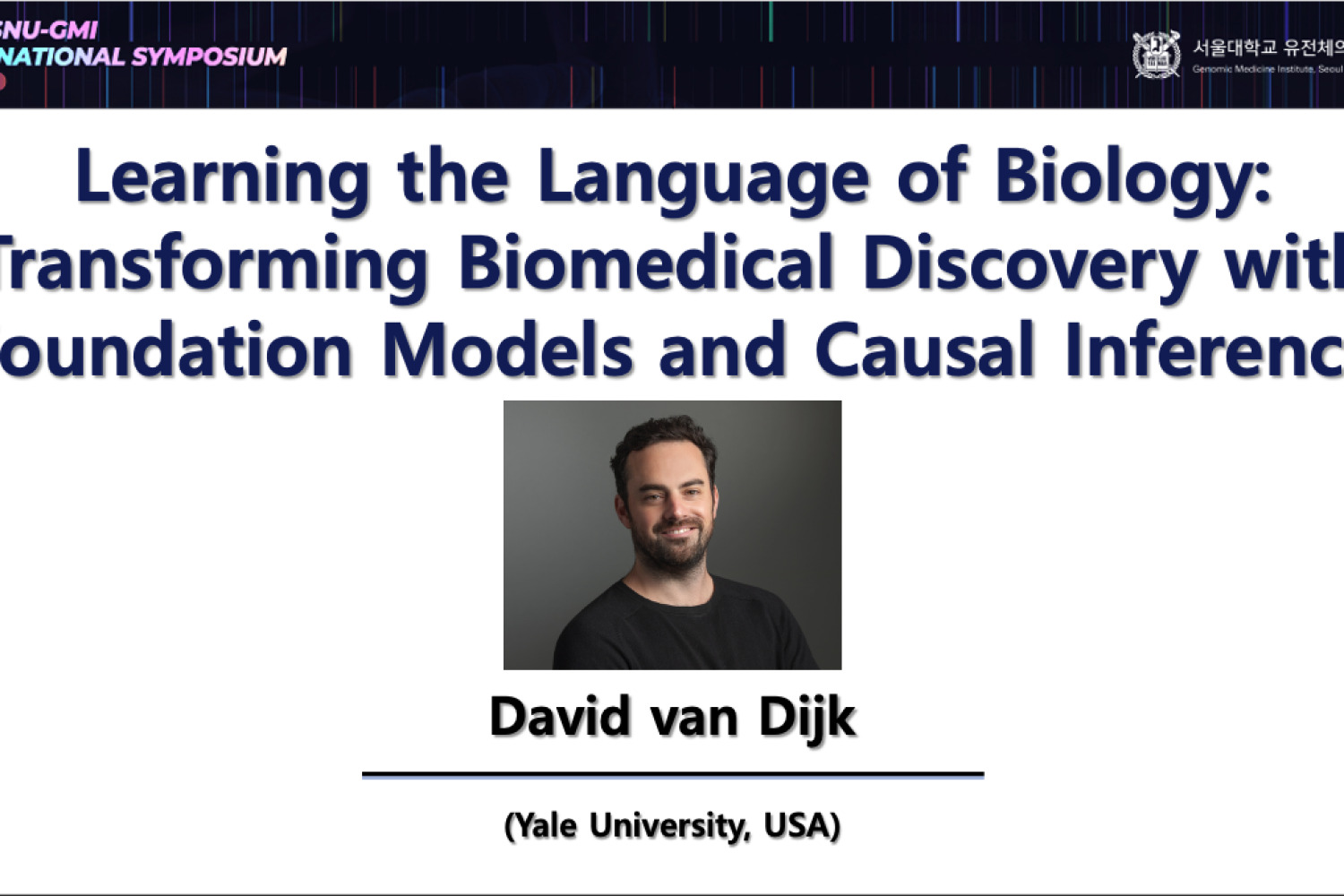
Single cells, noisy rooms
In 2015, as single-cell RNA sequencing was becoming widely used, van Dijk took a postdoctoral position at Columbia University. The new technology could measure gene activity cell by cell instead of averaging an entire tissue into one blurred result. It offered a much sharper view of biological variation, and it produced mountains of unruly data. Measurements dropped out. Useful signals hid inside high-dimensional noise. Here was the perfect machine-learning problem: the instrument could see more than researchers could comfortably interpret.
During postdoctoral work spanning Columbia and Yale, van Dijk helped develop methods that became familiar names in single-cell analysis. MAGIC uses data diffusion to recover likely gene relationships from sparse measurements. PHATE creates visualizations that preserve both local and global structure, allowing developmental paths and transitions to appear from complicated data. The names have a little stagecraft to them, but the job is practical: recover a coherent landscape without sanding away what makes each cell different.
He established his Yale lab in September 2019, straddling Internal Medicine and Computer Science. That institutional split reads like a job description. The group draws people from computer science, mathematics, physics, biology, medicine and neuroscience, and its projects range across single-cell sequencing, imaging, electronic records and brain activity. The lab’s recurring trick is to let one domain lend another a way of seeing.
“There’s a universal ‘grammar’ underlying both systems - it’s all based on logic and rules.”David van Dijk, on human language and biology
Teaching the model some biology
Cell2Sentence is an elegant example of this borrowing. A cell’s gene-expression profile is converted into text by listing gene names from most to least active. Language models can then be fine-tuned on tasks such as identifying a cell type, describing a tissue or predicting how a cell’s state could change after a perturbation. Textual metadata can live beside the biological sequence, giving the model experimental context in a format it already knows how to process.
The cell-to-sentence translation
The first paper demonstrated the format. The next collaboration asked how far it could scale. With researchers at Yale, Google Research and Google DeepMind, van Dijk helped build C2S-Scale, a family based on Google’s Gemma models. The models ranged from 410 million to 27 billion parameters and trained on more than one billion tokens drawn from transcriptomic data, biological text and metadata. The team reported that larger models improved across predictive and generative tasks, echoing the scaling behavior seen in general language models.
The important word is “tasks.” A biological model earns its keep by doing more than producing a fluent paragraph. It must classify, generate, compare and predict against measurements. Van Dijk’s group has repeatedly paired computational claims with experiments or benchmark data. CellType’s launch highlighted a screen of more than 4,000 drugs in which the model proposed a previously unrecognized biological response; the prediction was then tested in cell lines and intact human tumor microenvironments. The startup points to that loop from simulation to experiment as the proof of seriousness.
The professor becomes a founder
By 2025, van Dijk had the outlines of an academic career with no obvious need for a startup detour. Yale lists an NIH MIRA, an NSF CAREER Award and a run of 2024 and 2025 honors. His publication trail reaches Cell, Nature Methods, Nature Machine Intelligence, ICML, ICLR and NeurIPS. His lab released code through GitHub and models through public repositories. The machinery for grants, papers and graduate training was working.
Then he and Vrkic, who had co-developed Cell2Sentence at Yale, founded CellType. Y Combinator’s company profile supplies the sharp anecdote: van Dijk turned down Google to build it. The choice makes more sense when viewed as a change in delivery mechanism. A lab can establish a method and share its code. A company can be held responsible for fitting the method into a customer’s workflow, keeping data secure, building repeatable systems and deciding what gets tested next.
PhD in computer science, with gene-regulation research spanning Amsterdam and Weizmann.
Opens a biomedical machine-learning lab at Yale.
Cell2Sentence appears at ICML; BrainLM at ICLR.
C2S-Scale launches with Google collaborators; CellType is founded.
CellType joins YC W26 and moves from research provenance toward deployment.
CellType describes itself as a biological world-model company. Underneath the science-fiction resonance is a specific complaint about drug development: common preclinical models often fail to capture what happens in human biology. Van Dijk’s proposed alternative is not a chatbot with a biology textbook in its context window. It is a specialized model trained on cellular measurements and asked to forecast response across cells, tissues and experimental conditions.
The company joined YC’s Winter 2026 batch and said it was already working with a top-ten pharmaceutical company. In March, CellType and Senhwa Biosciences announced a strategic memorandum of understanding. By summer, the team was presenting at YC Startup School, talking with the industry at the Festival of Genomics and adding staff around strategy and partnerships. These are modest corporate milestones beside the ambition of simulating human biology, which is precisely why they matter. Companies are built from calendars, contracts and hires while the vision waits impatiently upstairs.
A model that picks up the pencil
Van Dijk’s 2026 research suggests where the technical story is going. STRIDE, co-authored with members of his research circle and presented at ICML, trains language models to refine proteins and molecules through explicit edit operations: insert, delete, replace. Instead of jumping straight to a finished sequence, the model emits a trail of changes that can be inspected and executed. On reported protein-optimization tasks, success rose from 42 percent to 89 percent, while novelty rose from 47 percent to 97 percent.
There is a satisfying progression here. First, recover a clean signal from noisy cells. Then represent a cell as a sentence. Scale the reader. Finally, teach it to revise. The grammar metaphor has moved from interpretation toward action, where every proposed edit carries more consequence than a misplaced comma.
Van Dijk’s public persona remains more workshop than theater. His stated hobbies include hiking, art and building furniture. Furniture is an almost too-perfect pastime for someone preoccupied with hidden structure: elegant geometry is welcome, but the chair still has to hold. His academic work faces the same test, and the startup adds a harsher one. A model may be clever. It must also survive contact with experiments, users and decisions worth real money.
The useful magic is not making a cell speak. It is making a prediction precise enough that a scientist knows what to test next.
The aspiration behind CellType is larger than any current model. Van Dijk has spoken about moving from virtual cells toward tissues and, eventually, patient-specific simulations. The near-term work is more disciplined: learn from biological data, model perturbations, rank hypotheses, validate what matters. The distance between those two scales is where companies become durable or become footnotes.
For now, van Dijk occupies both worlds. At Yale he is an associate professor of cardiology leading a lab devoted to the logic of life. At CellType he is a founder turning that logic into a product with deadlines. The continuity is stronger than the contrast. He began by treating computer science as a way to understand the world. Now he is asking whether a machine can understand enough of the living part to help change it, one carefully tested sentence at a time.