In 1984, David Gold was a lawyer in New York with a practical volunteer assignment. He wrote wills for people confronting the AIDS crisis. The documents were orderly. The circumstances were anything but. A legal education had trained him to parse rules and anticipate consequences; the city around him was showing what happened when institutions moved slowly and ordinary people had no appetite for waiting.
Gold had taken a conventional detour after law school. He worked in real estate to repay his student loans and formed a small investment company that bought residential and commercial properties. This is an oddly useful prologue to a career in advocacy. Property deals teach the unromantic mechanics of action: incentives, leverage, timing, negotiation, signatures. Moral urgency can open a meeting. It does not, by itself, close one.
The volunteer work drew him closer. He attended ACT UP, joined its Treatment and Data Committee, and began learning the language of research. Gold later recalled a conversation with Larry Kramer that sharpened his direction: if he wanted to change the course of the crisis, research was where his attention could matter. He took the counsel seriously enough to build a career around it.
“AIDS transformed the relationship between citizens and the biomedical research institutions.”David Gold
The useful outsider learns the inside language
Activism rewarded volume, but it also rewarded homework. Gold's experience with business made him comfortable reading the motives of pharmaceutical companies. They wanted returns, wished to avoid public embarrassment and, sometimes, wanted to do good when the incentives allowed it. He helped organize pressure around access to an experimental medicine, an early example of the inside-outside method that recurs through his work: understand an institution's machinery, then apply force where the gears can turn.
By 1990, Gay Men's Health Crisis had hired him as medical information director. He oversaw information programs and edited Treatment Issues, a widely distributed publication on HIV treatment. The title sounds modest. The function was not. In a fast-moving scientific field, a clear and trusted publication could give non-specialists a working map. It could also change who was permitted to join the conversation.
Learn the technical language. Translate it without flattening it. Put it in the hands of people who can create pressure.
Gold's undergraduate degree had been in rhetoric and communication, with a minor in political science, at SUNY Albany. Years later, those subjects met his legal training in a newsroom-like office. His route was less a reinvention than a convergence. The student-government president, the student delegate to a Democratic convention, the lawyer and the editor were all practicing versions of the same craft: deciding what an audience needs in order to move.
A publication becomes a coalition
In 1992, while at GMHC, Gold helped form a New York community working group around AIDS vaccines. The group published an early paper about community questions surrounding vaccine research. Three years later, he left GMHC and co-founded AVAC with Bill Snow, pushing for sustained attention and investment in a field that many people considered distant or speculative.
The next turn came through the Rockefeller Foundation and Seth Berkley, who was building what became the International AIDS Vaccine Initiative. Gold created the IAVI Report, a publication intended to cover the field rather than flatter the institution. That distinction mattered. Credibility is difficult to borrow and easy to spend. A journal that readers trusted could do more than circulate updates; it could help disparate researchers, advocates and officials imagine themselves as participants in the same project.
Gold became IAVI's vice president for policy and public support. He oversaw advocacy and regional programs in North America, Europe, Japan and Latin America. Working with IAVI's leadership, he helped secure political and financial commitments exceeding $350 million. Partnerships connected the effort with the World Health Organization, the European Union, the National Institutes of Health and the Brazilian government.
Volunteers at GMHC and enters ACT UP's research and treatment work.
Leads medical information at GMHC and edits Treatment Issues.
Co-founds AVAC and begins helping build IAVI's public-policy work.
Co-founds Global Health Strategies with Victor Zonana.
Leads a communications and advocacy network working across six regions.
There is a temptation to tell this period as a triumph of persuasion: one good argument, repeated until the money arrived. Gold's own recollections point to something less cinematic and more useful. Local leaders needed credibility in their countries. International gatherings had to create moments of attention. Journalists needed clear material. Officials needed constituencies. Advocates needed access to the science. The coalition grew because different people could enter it for different reasons and still pull in the same direction.
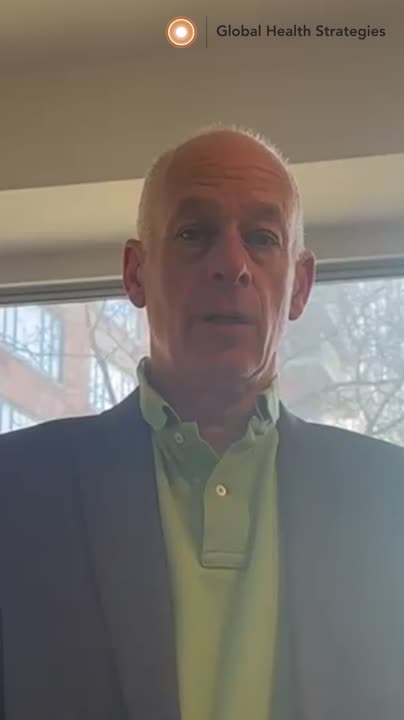
The consultancy keeps the activist grammar
In 2002, Gold and journalist and policy official Victor Zonana founded Global Health Strategies. Their combined experience included activism, media, industry and government. The firm's proposition was straightforward: advocacy, communications and policy analysis could be designed together, rather than handed from one department to another after the important choices had already been made.
GHS began in New York, serving organizations in the United States and Europe. It grew into a network spanning six regions and working with local and global audiences. The map expanded, as did the range of assignments. Yet the operating logic remained recognizable from Gold's earlier years. Gather credible evidence. Understand the political context. Find people with standing. Give them language they can use. Build enough public will that a decision becomes possible.
This is communications stripped of its decorative reputation. In Gold's career, it is closer to infrastructure. A press story can alter an agenda. A briefing can equip a minister. A coalition can show a funder that an idea has a constituency. A publication can establish common vocabulary before a field has common institutions. None guarantees a result. Together, they change the odds.
“Health is a human right.”David Gold
The sentence is short enough for a placard, a social post or a meeting table. That portability is part of its strength. Gold wrote in 2020 that the same basic claim had echoed from ACT UP demonstrations into a widely shared GHS message decades later. The media changed. The need for a clear moral center did not.
Optimism with a calendar attached
Gold's public voice is rarely misty about progress. In a 2024 video, he paired optimism about new tools with a blunt request for political commitment and resources. The construction is typical: acknowledge what has improved, identify the decision still waiting, then invite a broad group to own the next move. Hope, in this register, is neither mood nor forecast. It is a work plan with names beside the tasks.
His LinkedIn posts show the same instinct at a smaller scale. A message about vaccination in India begins with football, moves to the country's immense public programs, and lands on confidence as a team effort involving parents, frontline workers, doctors and community leaders. The sporting comparison is light, but it does real work. Scale becomes imaginable. A complex system acquires human positions. Nobody wins alone.
Even the company's expansion is described through relationships rather than flags on a map. GHS emphasizes local audiences and local partners in the regions where it works. Gold learned early that a global campaign cannot simply export a New York argument with a different letterhead. Credibility lives with people who understand their own institutions, languages and stakes. The consultant's job is partly to know when to speak and partly to know whose voice will travel farther.
A network measured in people
Gold's recent public writing reveals another measure of institutional life: where people go next. He has pointed with evident pride to former GHS colleagues working across foundations, international agencies, news organizations, universities, ministries and technology companies. The list reads like a dispersed alumni map of the field.
That may be the most personal expression of his current role. The young volunteer once entered a movement and found an education no classroom could provide. The executive now speaks about giving early-career colleagues consequential work, ambitious peers and room to become leaders. Institutions often celebrate retention. Gold also notices circulation.
He names alumni now working at foundations, international agencies, companies and universities, then turns the list into a recruiting pitch for the next cohort. There is pride in the destinations, but also a founder's recognition that an organization can extend its influence by preparing people to leave it. A network becomes more useful when its nodes belong to many institutions. The career ladder, viewed from above, starts to resemble civic infrastructure.
At an NYU conversation in November 2025, his career was described as more than three decades across international policy, communications and advocacy. The arithmetic is accurate but incomplete. Time is only one scale. There is also the distance between a will drafted for one person and a network designed to influence decisions across regions.
The line connecting them is neither mystery nor destiny. It is a habit: move toward the hard information, make it intelligible, and organize the relationships that let it travel. Gold's career began amid emergency, when delay was visible and costly. He responded by learning how institutions work. Then he spent four decades helping people work on them.