David Gandler has a pitch for Lionel Messi. Asked who he would choose for thirty seconds in an elevator, the Fubo co-founder named the footballer and said he had an idea to put to him. Asked his favourite sports team, he answered, “Wherever Messi is playing.” There is something pleasingly economical about this arrangement: follow the talent, keep the sales pitch ready, and avoid the inconvenience of permanent allegiance.
Owning Leyton Orient requires a different relationship with a club. In April 2025, Gandler became its majority shareholder. The photograph has the familiar ingredients of a football takeover: a scarf stretched between raised hands, green grass, red seats. For someone whose career had involved selling access to sport, it marked a move closer to the thing itself. There would now be supporters to answer to, alongside customers and shareholders.
By July 2026, he had left Fubo, the streaming company he helped build over more than a decade. His work in sport continued. An East London club, an American football franchise and a proposed stadium have become the setting for his next commercial argument. He wants more of the business around the game to work together. The difficult part will be making that argument convincing to people whose attachment predates his arrival.
The salesman who understood the bill
Gandler’s route into streaming ran through advertising. He studied economics at Boston University, then worked at Telemundo, Time Warner Cable and Scripps Networks Interactive. Before Fubo, he was vice president of advertising sales at DramaFever, the video service associated with Korean television. This was an education in how programmes find audiences and how those audiences become a business.
That background matters because television has always involved more than the programme on the screen. Someone negotiates for the channel. Someone buys the commercial time. Someone decides which channels arrive together. The viewer meets the result as a monthly charge. Gandler had worked inside that machinery before attempting to assemble a version of his own.
With Alberto Horihuela and Sung Ho Choi, he started the business that became Fubo. The service launched in January 2015 around soccer. To an American television executive, soccer offered a particular advantage: a large audience beyond the United States. Starting with one sport gave the young company an identifiable proposition while leaving room for an international business.
By early 2016, Fubo was adding entertainment networks. Gandler explained that sports had always been the starting point for expansion. His longer view of television was almost automotive: cable resembled a BMW 7 Series, internet-delivered live television a 5 Series, and on-demand subscriptions a 3 Series. Each had a place. The comparison made a complicated distribution market sound briefly like a showroom.
More television next.
Fubo launched in January 2015. The early focus gave viewers a clear reason to try a new service.
A better seat, several screens
Getting the channels was only part of the job. Live sport also imposed a practical examination on the product. A drama can wait for the viewer. A match rather rudely continues without them. Picture quality, reliability and finding the right game become part of the service people believe they are paying for.
Fubo introduced 4K streaming in July 2018. That summer, Gandler talked about building a platform ready for major events throughout the year rather than treating the World Cup as an exceptional exercise. He also described work on recommendations and the company’s front-facing applications. Behind the language of growth was a fairly ordinary customer request: let me watch what I came for.
Multiview added another answer, allowing several streams to be watched together on supported devices. The company’s published biography described simultaneous viewing on up to four screens on Apple TV. It suited the peculiar mathematics of a sports weekend, when several events can demand attention at once and a single television suddenly seems underemployed.
The business grew beyond its original niche. In November 2018, paid subscribers were approaching 250,000, and Fubo had raised more than $150 million. Its investors included media companies as well as venture firms. The people whose programming it needed were also among the people financing the attempt to distribute it differently.
In April 2020, Fubo merged with FaceBank. Its New York Stock Exchange listing followed that October. Five years after launching the service, Gandler was leading a listed company. The task now included explaining the business to a public market, with its appetite for evidence arriving on a quarterly schedule.
- 2015Soccer service launches
- 20184K streaming arrives
- 2020NYSE listing
- 2026Gandler leaves as CEO
The expensive education
Expansion also produced a retreat. Fubo moved into sports wagering, then shut its sportsbook and gaming subsidiary in October 2022. A strategic review had brought interest from potential partners, but the company said the available options would not sufficiently reduce funding needs or produce the required shareholder returns.
The decision puts a useful limit on the tidy story of a company finding adjacent opportunities. Watching and wagering may belong to the same evening. That does not make them equally sensible businesses for the same company to finance. Gandler said continuing the operation would interfere with Fubo’s longer-term profitability goals. The company stopped it.
By 2024, the more consequential contest involved the owners of programming. Disney, Fox and Warner Bros. Discovery planned Venu Sports, a streaming joint venture. Fubo sued. In August, a federal court granted a preliminary injunction blocking the launch. The ruling was an interim legal victory, with the underlying dispute still separate from that immediate result.
The argument concerned the terms on which a distributor could compete for sports viewers. For Gandler, access to content and the ability to package it were business fundamentals. The small entrant of 2015 had become a company prepared to challenge the organisations on which television distribution depended.
Then the seating plan changed. In January 2025, Fubo and Disney announced an agreement to combine Fubo with Hulu + Live TV. The litigation was settled alongside the arrangement, which included an aggregate $220 million cash payment to Fubo from Disney, Fox and Warner Bros. Discovery. A courtroom opponent was becoming a majority owner.
The combination closed on October 29, 2025. Disney held approximately 70 percent; existing Fubo shareholders held approximately 30 percent. The businesses together had nearly six million North American subscribers at closing. Fubo and Hulu + Live TV remained separate consumer services, while Gandler and the Fubo management team initially led the combined operation.
Two consumer services. One combined company. Ownership percentages at closing, approximately.
That arrangement lasted into the following summer. On July 9, 2026, Fubo announced Alisa Bowen as its next chief executive, effective July 10. Gandler also resigned from the board. His departure statement credited the team’s work over eleven years. The business he had co-founded would continue with a new chief executive and Disney as its controlling shareholder.
A scarf comes with obligations
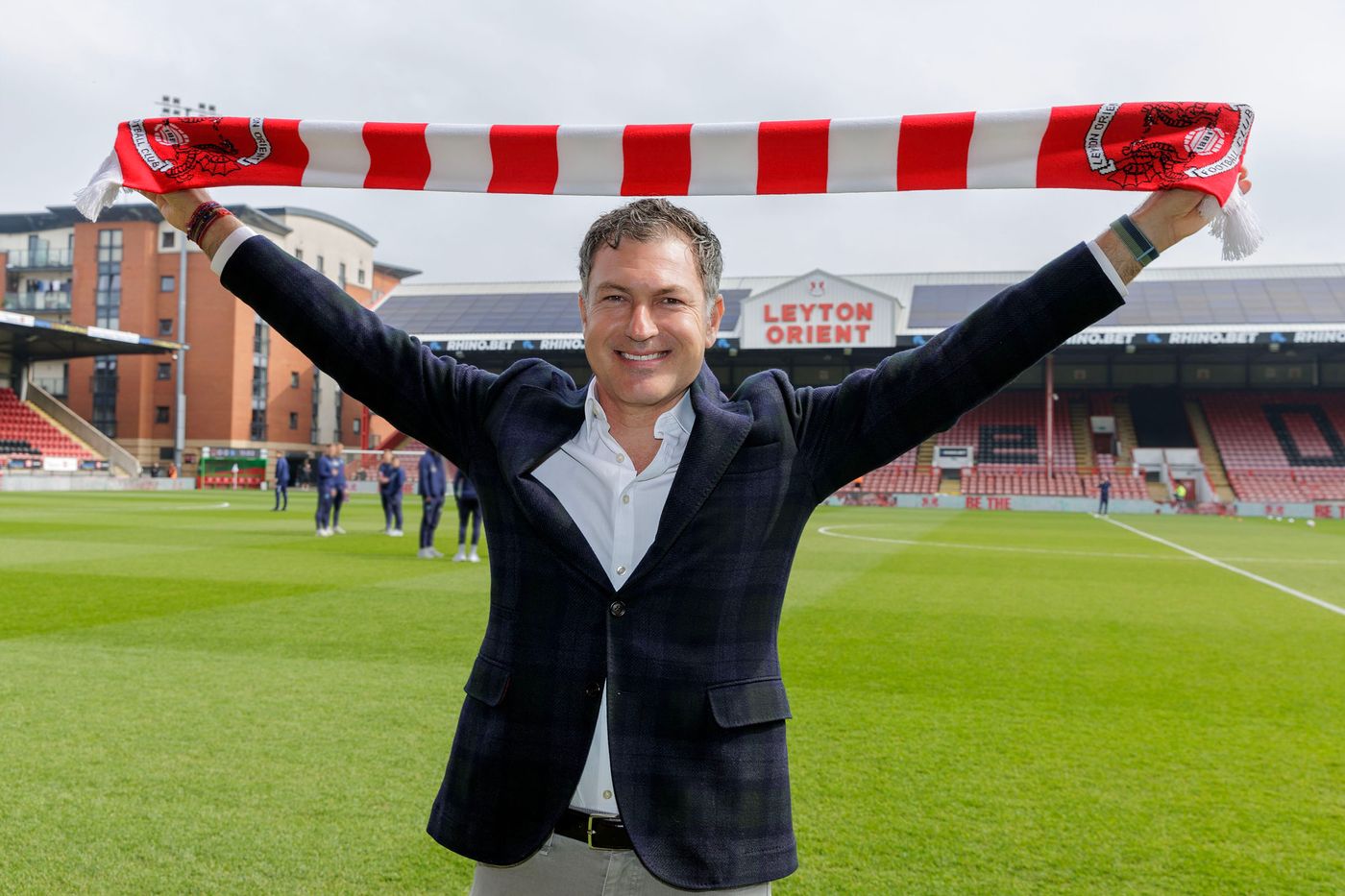
Gandler had already begun buying into football. He was a co-owner and director of Paris FC from 2022 to 2024. Leyton Orient followed in April 2025. At the takeover, he held 78.55 percent of the new ownership vehicle. His stated goal was to help Orient reach the Championship.
He also said he would leave the daily running to chairman Nigel Travis, chief executive Mark Devlin and their staff. That is a revealing division of labour: the investor brings plans and resources, while the existing leadership carries on with the club. A new owner can buy a majority holding considerably faster than he can learn everything a supporter knows.
Gandler acknowledged the scepticism that comes with the introduction. “Trust is earned,” he said. In a later supporter interview, he described a long commitment to Orient and the work of turning ambition into a more durable operation. Fans were being asked to judge a future project while continuing to live with the weekly results.
“I have a track record of never giving up.”
David Gandler, October 2025
There are lighter details in his public answers too. He chooses pickleball over tennis. He follows Messi. They give a little texture to a career often described through corporate announcements. But a football club supplies a less forgiving character assessment: supporters can compare what an owner says with what changes around them.
From a bundle to a borough
The stadium proposal makes that comparison tangible. In September 2026, Leyton Orient and Waltham Forest signed a Development Performance Agreement for the proposed new home and surrounding multi-sport campus. Populous had been appointed to lead planning and design. The ambition is delivery by 2031, Orient’s 150th anniversary.
The agreement creates a framework for technical work, planning activity and consultation. It does not grant planning permission. Land, statutory processes and delivery still stand between an ambition and an opening day. Gandler’s stated vision includes a venue used throughout the year, with sport, entertainment, hospitality and opportunities for local people.
Alongside Orient sits the London Guard, the American football franchise scheduled to enter European Football Alliance competition in 2027. Gandler Sports Group says its home games will be at Brisbane Road. The group also lists a minority interest in the league. Its proposed commercial connections run through teams, venues, distribution, fan technology and sponsorship, concentrated in East London.
Seen together, these projects suggest a continuation of Gandler’s interest in bringing related businesses closer together. At Fubo, the work gathered programmes into an app. Here it gathers sporting assets around a place. The ambitions are public; their results will arrive over years. For now, the scarf is already in his hands. The next ground is still on the drawing board.
Follow the next fixture
CONVERSATIONS, ANNOUNCEMENTS & PUBLIC PROFILES
- Gandler Sports Group
- David Gandler on LinkedIn
- David Gandler on X
- Leyton Orient
- The early Fubo conversation
- The October 2025 supporter interview
- Watch: Gandler discusses the Venu ruling
- Listen: Inside the Stream interview
- Fubo’s July 2026 leadership announcement
- The stadium’s September 2026 planning step