Dave Monahan was new at Microsoft when Steve Ballmer gave him a review that was difficult to misunderstand. Ballmer disliked his presentation. Monahan had brought problems into the room without bringing answers. For someone trying to learn the business, it was an efficient lesson, although perhaps not the welcome basket one might have chosen.
He carried the lesson into a career that would include running FitLinxx, founding Kleer, and leading its combination with Membersy. Each move put him in front of another unfamiliar set of questions. The interesting part of his story is how often the practical answer required him to revise what he thought the job would be.
A review he could use
Monahan’s early training was in engineering. He studied mechanical engineering at Penn State and worked at Northrop Grumman on avionics and surveillance systems. An MBA from Loyola University Maryland added a business education. The route toward management also included marketing and financial work: different ways of looking at the same organization, with different reasons for believing something might go wrong.
At Microsoft, where he worked from 1999 to 2006, he developed product, market, and partnering strategies. Working with partners meant thinking about what software could do inside another company’s particular line of business. An industry has its own customers, routines, and stubborn exceptions. Selling a general-purpose tool is one task. Helping someone make it useful in a working business is another.
His responsibilities expanded into regional management. The education had moved beyond the classroom. A company could have an impressive product and still need someone to understand who would buy it, how to reach them, and who else needed to be involved. Those questions would travel rather well when he eventually left.
The ambition meets the cash account
In 2006, Monahan joined FitLinxx. He wanted the responsibility of running a company, and this was a much smaller setting in which to take it on. The move exchanged the resources of Microsoft for the close-range consequences of a startup’s decisions. A title may fit on a business card; the obligations tend to spill over the edges.
Then came the financial crisis. Monahan has described the company’s survival in terms that leave little room for romance: reducing the team by half, renegotiating debt, finding capital, and managing cash closely. These are the verbs that disappear when a career is compressed into a succession of logos. They are also the verbs that explain what a chief executive actually had to do.
FitLinxx expanded into wearable devices and was acquired in 2016. His work there included partnerships with companies such as Nike. The chapter gave him experience with products, commercial relationships, and the difficult mechanics of keeping a business operating while its direction changed. It also left him with a fresh question: what should he build next?
The company before the company
After the sale, he started looking at the business of dental practices. His background supplied technical and commercial experience. It did not supply an automatic understanding of a new market. So he went looking for that understanding through interviews, focus groups, and surveys with practice owners and consumers.
The distinction matters. Kleer’s starting point was an investigation into how people bought services and how offices administered their businesses. Monahan was studying an existing set of frustrations before deciding which ones software could usefully address. Listening was part of product development, while there was still time for the product to become something different.
By July 2017, he was describing a platform that would let practices design their own membership programs and set their own fees. A beta was planned for September, followed by a wider launch in January 2018. The early proposition put control with the practice and supplied the software needed to administer the arrangement. It made a recurring business model available without asking an office to become a software company first.
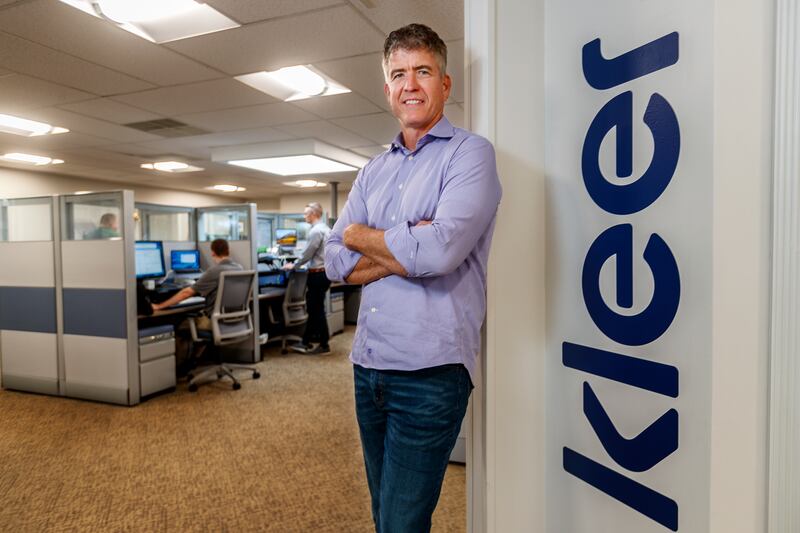
Kleer’s initial test group, before its January 2018 public launch.
By September 2018, Kleer had nearly 1,000 participating dentists in 40 states. The initial test had involved 30. These are useful markers because they preserve the scale of the beginning. Before a merger could be announced with a nationwide footprint, there had to be a small enough group to discover what worked and what needed changing.
The ordinary work is the product
Membership programs already existed. The work of managing them could be awkward. Tracking the details by hand put another job on the office staff. Kleer offered a platform through which a practice could set its own prices, name its program, and manage the relationship. The opportunity lived partly in work that was easy to overlook from outside the office.
As the business developed, another difficulty became clear. Staff were transferring information between Kleer and their practice-management systems. A subscription platform could be convenient in isolation while leaving the person at the desk with duplicate work. The software had reached the customer, but the job was still following the customer home to the keyboard.
The team built Kleer Intelligence to connect those systems and automate tasks such as posting payments and filling in data. Chief technology officer Paul Biancaniello and the engineering team had to make different systems cooperate. Customer-success staff brought requests from the people using them. Monahan’s role sat among those disciplines: product decisions had consequences for both the software and the day of the person operating it.
His own description of management is hands-on. He says he is prepared to get deeply involved when support is needed. For an executive with an engineering background, there is a recognizable attraction here. The work has a concrete test: does the thing help someone finish the job?
A company people can go home from
Monahan has also questioned a familiar startup assumption: that the excitement of growth entitles the company to all of an employee’s time. Rapid expansion changes priorities and creates disorder. He acknowledges that founders can be tempted to cut corners. His view is that employees still deserve realistic expectations and room for the rest of their lives.
“You don’t have to work 12 hours a day to make something successful.”
Dave Monahan
The remark has some weight coming from an executive who has described the harsher side of keeping a small company alive. It leaves room for ambition without making exhaustion a measure of commitment. The working arrangement needs to be explained honestly, and people need to know what the company is asking them to accept.
There is a personal dimension to that view. A 2018 biography described Monahan coaching his children’s teams and making time for travel and competitive activities. His management accounts include delegating responsibility for celebrations and getting colleagues together away from work. A milestone can be worth marking before everyone hurries toward the next one. Even a recurring-revenue business benefits from an occasional interruption.
His interest in subscriptions also follows him away from the office. In a LinkedIn video, he described cancelling his cable television service and setting up Netflix, Hulu, and YouTube TV. The household decision became an occasion to explain why recurring arrangements appeal to buyers and sellers. It is a small glimpse of the executive off duty: the television gets reorganized, and a business-model discussion comes with it.
Two teams, one working language
Charlesbank Capital Partners announced the acquisition and combination of Kleer and Membersy in May 2024. The announcement put the combined footprint at 20,000 dentists across all 50 states. Monahan became the combined company’s CEO. The task had changed again: he now had to help two operating businesses work as one.
May 2024 · acquisition and combination
ClerriJuly 2025 · one company name
The businesses brought complementary customer strengths. Kleer had a position with smaller and midsize practices; Membersy brought enterprise relationships. Monahan emphasized the people involved as well as the transaction itself. Getting the agreement completed did not settle how colleagues would make decisions together.
In an April 2025 account of the integration, he described giving capable people the authority to lead their parts of the business, then providing money for the tools they needed. There is a practical understanding of delegation in that sequence. Responsibility without authority makes a person a messenger. Authority without resources can leave them explaining why nothing happened.
The Clerri name arrived in July 2025. The company had spent its first year working on people, processes, and culture before introducing the new identity. Branding work took close to six months. A shorter name helped the outside world recognize a single business. Inside, colleagues had already been doing the less photogenic work that made the new name credible.
The founder changes seats
In November 2025, Monahan moved into an advisor and board observer role. Alan Press served as interim CEO during the search for a permanent leader, and Clerri announced Jim Higgins as CEO on December 9. The handoff belongs in Monahan’s story as much as the founding does. The organization had reached another stage, with another person taking responsibility for the daily decisions.
His current public biography includes membership in Robin Hood Ventures and advisory work with growing companies. On LinkedIn, he has described his interest in backing AI and vertical software founders. The part of company building he says he particularly enjoys is the beginning, when a small team is trying to make an uncertain idea work.
That preference connects the chapters without smoothing away their differences. Engineering, Microsoft, FitLinxx, Kleer, and the combined business each asked something new of him. His next seat brings him closer to people asking their own first questions. He has enough operating history to know that the useful answer may change the plan.
Keep the conversation going
- Dave Monahan on LinkedIn
- Robin Hood Ventures member biography
- Clerri company website
- The early Kleer conversation with Finch Brands
- The 2018 office profile
- A conversation about startup workloads
- Monahan on integrating Kleer and Membersy
- The leadership handoff
- Watch: the January 2018 Kleer interview
- Listen: Dentistry for the Rest of Us