Pat and Judy Quinlan had spent 28 years owning Coffman & Company when they faced a problem a sale price could not settle. They wanted to sell their Denver-area heating and air-conditioning business. They also wanted to recognize it afterward. The employees mattered. So did the customers. A buyer with grand plans to change everything was precisely what they hoped to avoid.
In February 2020, their company became The SEER Group’s twelfth acquisition. Darrin Erdahl, its founder and CEO, welcomed the business; his co-founder Eric Beardemphl confirmed that Coffman’s existing leadership would remain. An acquisition announcement usually celebrates what the purchaser gains. This one spent considerable time explaining what the seller would get to keep.
That concern runs through Erdahl’s work at SEER. Buying an established trade business means buying something whose value already lives in other people’s hands. The technician knows the equipment. The dispatcher knows the schedule. The customer knows whom to call. Change the ownership, and those relationships still have to turn up for work on Monday.
Two careers meet at the service counter
Erdahl co-founded SEER with Beardemphl in 2018. Their partnership joined an entrepreneur’s experience of owning businesses with an operator’s knowledge of the heating and cooling trade. In a 2023 introduction, the company described each as bringing roughly three decades of relevant experience. Beardemphl became president; Erdahl was the founding chief executive.
Erdahl has more than 35 years of experience owning and acquiring businesses across industries. His career includes Erdahl Holdings; he attended Washington State University from 1978 to 1982. His acquisition career therefore preceded SEER by many years. The group was a new vehicle for an already established occupation: becoming an owner.
His connection to heating and cooling also extends beyond the familiar service company. He has also been chairman, financial partner and majority owner of Transformative Wave. That company developed the CATALYST controller for improving the efficiency of constant-volume HVAC systems. Here was another part of the same commercial world: the equipment’s behavior, rather than the name answering the telephone.
SEER gave Erdahl and Beardemphl a different task. They would assemble established businesses while offering their owners a choice about what came next. Full sales, partial sales and continued involvement could all fit. A founder approaching an exit and a founder eager to expand did not necessarily require the same arrangement.
The introductions were local
In Oregon, the early expansion acquired its own geography. Specialty Heating and Cooling joined in March 2019. Climate Control, based in Tigard, followed that July as SEER’s second Oregon acquisition. Climate Control would operate as a division of Specialty, under Sarah and Cory Streeter’s leadership.
The arrangement matters because “local leadership” can otherwise sound like something printed on a brochure immediately before an unfamiliar person changes all the passwords. Here, the announcement named the people who would lead. Erdahl emphasized Climate Control’s customer service and its team; Beardemphl described a compatible culture. The structure connected businesses already serving the Portland market.
Coffman took that approach into Colorado the following year. The Quinlans’ concern was concrete: protect the people and the business they had built. Their eventual approval of SEER was equally concrete. They had investigated, met the president and decided the values matched. Erdahl’s welcome acknowledged their record of looking after employees and customers.
These were negotiated transitions involving named owners, existing workforces and local histories. They gave Erdahl’s growth ambitions a human scale. The national map was being drawn one conversation at a time, with the sellers paying close attention to what would happen after the signatures dried.
“We see increasing growth opportunities throughout the Northwest, organically and through strategic acquisitions.”Darrin Erdahl, August 2022
Seventeen, eighteen, twenty-seven
By November 2021, SEER had reached its seventeenth acquisition: a majority stake in Brower Mechanical in Rocklin, California. Brower dated to 1979. Partner and general manager Duane Knickerbocker would continue to run it. Erdahl’s announcement explicitly looked forward to working with him as he kept guiding the business.
Knickerbocker supplied a useful explanation of the attraction. He wanted help managing overhead, along with the opportunity for his department managers to learn from peers at other SEER companies. That second benefit is easy to miss on an acquisition spreadsheet. A manager gains colleagues outside the building without having to leave the business.
Maki Heating & Air Conditioning in Auburn became acquisition eighteen, also announced that November. Co-owners Debbie and Kyle Dahl stayed in charge. Debbie described the partnership as a way to keep concentrating on staff and customers. The appeal of a larger organization was partly the room it could give a smaller organization to do its own work.
In April 2022, Terry’s Heating & Air Conditioning in Twin Falls, Idaho, became number twenty-four. Longstanding management would continue leading the team. In July, SEER announced a majority investment in another Twin Falls business, Element Heating & Cooling. Founders Justin and Bobbi Bohrn would remain as partners. Justin said their business philosophies had aligned when they met Erdahl and Beardemphl.
Evergreen Gas, Heating & Cooling, in Sherwood, Oregon, brought the count to twenty-seven in August 2022. Kelsey and Bill Belden had founded it in 2003 and would continue leading it. Their concern about a partner’s intentions toward employees echoed the Quinlans’ earlier hesitation in Colorado.
Erdahl talked about both organic growth and acquisitions. The distinction is useful. Adding another company enlarges the group; helping an existing company grow asks something different of the owner. It calls for support that works after the welcome announcement has slipped down the news page.
A plumber changes the mix
In March 2023, SEER announced its thirtieth acquisition since 2018: Seattle’s Raymark Plumbing. The company traced its beginnings to 1977. Its brand would remain intact, and 25 employees would join the group. For Erdahl, the deal had a particular strategic significance.
He described Raymark as SEER’s first acquisition devoted entirely to plumbing, complementing the group’s established HVAC presence in the region. The milestone was therefore about more than counting businesses. It added a different specialty to a familiar market. Erdahl also expressed an interest in bringing more plumbing companies into the organization.
The transaction shows the two scales on which his work operated. At the regional level, plumbing could sit alongside an existing heating and cooling footprint. At the individual business level, the Raymark name and its employees supplied continuity. Both belonged in the same announcement. A strategy built around local businesses has to account for the local part.
Later in 2023, the acquisition of All Fuel Installation and Service in Troutdale, Oregon, offered another example. Founders Eric and Sheri Camp joined a network that could provide training, legal support and human resources assistance. Erdahl again linked expansion in existing markets with the ambition to establish a national footprint.
The classroom behind the deal
There is a pleasantly unceremonious detail in SEER’s training history: the Institute began with signs taped to a wall, printed materials, instructors with field experience and four people who came to class. Large organizations enjoy describing their infrastructure. This piece began small enough to count the students without a spreadsheet.
The program subsequently expanded to technicians, customer service representatives and future leaders. Its curriculum includes diagnostics, electrical principles and refrigerant certification pathways, alongside customer communication. Leadership training covers financial literacy, managing people and handling change. These are the tasks that arrive with running a business, whether or not its owner particularly enjoys them.
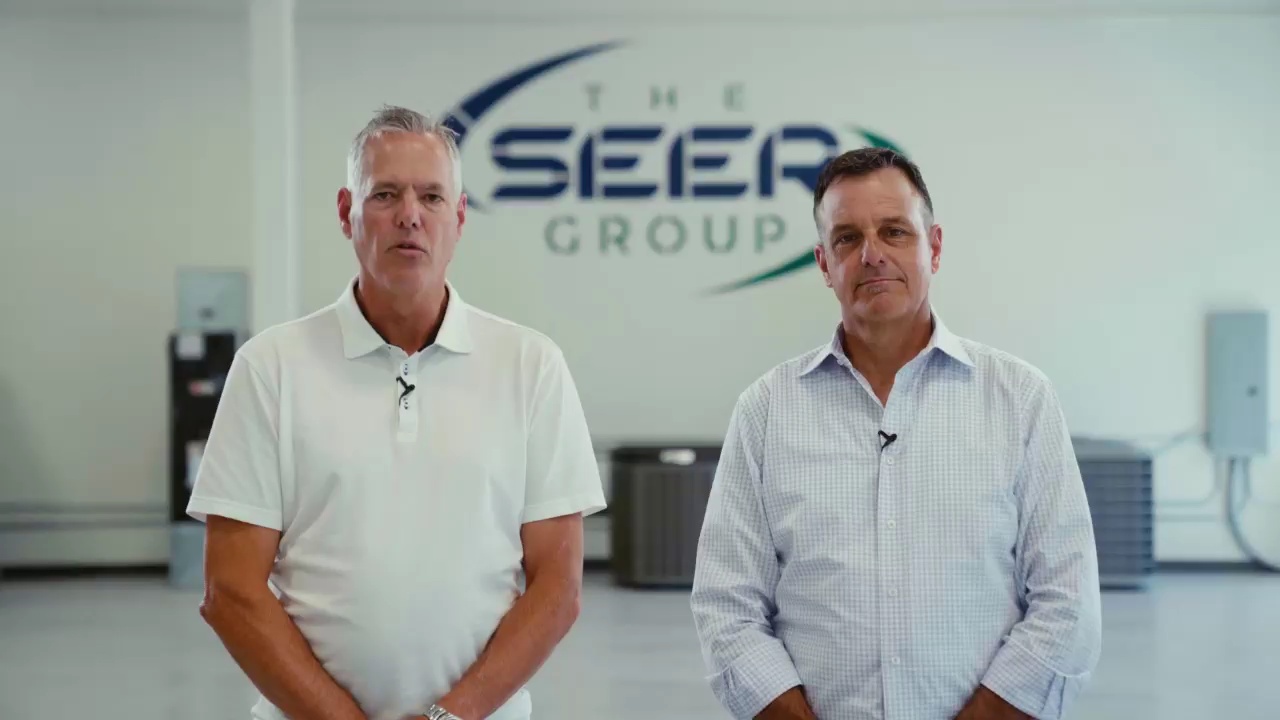
Erdahl and Beardemphl appear together in a company video discussing the Institute. Its place in their broader project is clear: a collection of acquisitions needs ways for people to improve at their jobs. Training also gives the promise of continued opportunity something more durable than a line in a welcome letter.
Customer relationships
Operating leadership
Specialist support
Training and collaboration
An illustration of SEER’s stated partnership approach. Individual transaction terms vary.
A founder’s idea, with other people at the controls
SEER took on a strategic investment partner in 2023. An April sale to Genstar Capital brought in new ownership, with Jefferies serving as sole financial adviser. The company Erdahl helped start had itself become part of a larger ownership story. No public purchase price is needed to understand the change in scale.
By May 2026, SEER described a collection of 40 businesses across 11 states. Harish Ramalingam became CEO effective April 30, succeeding Justin Nagy. Erdahl’s place in that history is as co-founder and founding chief executive. The organization now operates under subsequent leadership, carrying forward a model developed during his tenure.
The original question still travels with it. What does a buyer owe the people whose business makes the acquisition worth doing? The Quinlans asked it before selling Coffman. Knickerbocker answered it partly in terms of colleagues and overhead. The Beldens wanted confidence about their team’s future. Each put a different practical demand on the same proposition.
Erdahl’s SEER story lives in those arrangements: the owner who stays, the manager who gains someone to call, the company name that survives the sale. Acquisitions make a visible tally. Whether the people who built the businesses can keep doing useful work is the quieter test that follows.