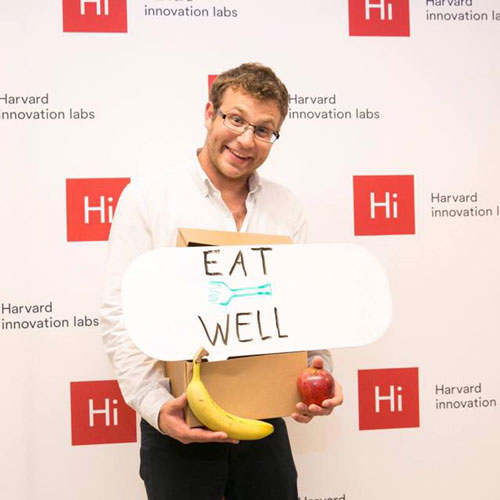
A pharmacy that happens to look like a kitchen
Walk into the problem Daniel Wexler set out to solve and you will not find a laboratory. You will find a bus schedule. A family in Mattapan, two transfers from the nearest full grocery store, deciding between fresh produce that spoils before the next paycheck and the corner store that never closes. Wexler, co-founder and CEO of EatWell, studied that exact commute before he ever wrote a recipe.
EatWell is a Boston public-benefit company that sells affordable, nutritious meal kits - and then convinces the healthcare system to treat them as medicine. The pitch is disarmingly literal: a doctor or an insurer can prescribe a box of groceries the way they would prescribe a pill, to fight food insecurity, head off diet-related disease, and shave money off the long, expensive tail of chronic illness. Wexler runs the company from Brookline, where the work is less about food trends and more about logistics, trust, and the unglamorous math of who can reach what.
Before EatWell built recipes, it built a map. Wexler laid Boston's food-insecurity hotspots over the transit grid - every T stop, every bus route - and cross-referenced grocery stores and community centers. The empty spaces told the story. Mattapan and Dorchester's Upham's Corner lit up as places where affordable, fresh food was simply out of reach. That map became the company's first product decision.
Change happens at the speed of trust.
Community-informed, not community-targeted
Plenty of well-meaning founders arrive with a finished solution and look for somewhere to apply it. Wexler did the opposite. He spent two years working the Mattapan Farmers Market, learning what families actually liked to eat, how they cooked, and what equipment they had - or didn't. The recipes that came out of EatWell were not invented in a test kitchen and handed down. They were assembled from what the community already valued.
That constraint shaped the product in concrete ways. Every EatWell kit is built for one pot and 30 minutes, because a recipe that assumes a full set of cookware assumes wrong. Kits were priced around $10, roughly $3 a serving, and designed to be SNAP-eligible so the people who needed them most were not priced out of their own dinner. "One of our core values," Wexler has said, "is to be community-informed."
It is a quietly radical design philosophy. Most of the meal-kit industry chases affluent subscribers chasing convenience. Wexler pointed the same machinery - sourcing, portioning, recipe cards - at the households the industry ignored, and asked whether the box could do a public-health job on the way to the table.
The OriginHe quit medicine to prevent it
Wexler's path to food ran straight through the clinic - and then away from it. He enrolled in an MD/MBA program at St. George's University, then made an unusual call: he left medical school but finished the MBA. The closer he looked at how the system treated disease, the more he wanted to work upstream, where disease starts. That instinct carried him to the Harvard T.H. Chan School of Public Health, where he studied health management and behavioral economics, and where EatWell was born.
The company took shape inside a Social Entrepreneurship Lab course and was incubated at the Harvard Innovation Labs. Wexler and co-founder Kevin Hall - a fellow Harvard Chan classmate, value-based-care specialist, and committed hiker - did the legwork first: interviewing dietitians, physicians, and community health centers, and naming the three barriers that kept showing up. Affordability. Accessibility. Knowing how to cook. EatWell was the answer to all three at once.
The three walls between a family and a fresh meal
The early going was not a clean upward line. Farmers-market sales underperformed; the kits found their footing instead through community centers, where trust was already built. By October 2019, Wexler did something most founders avoid: he set five concrete goals and a date to shut down if they missed. EatWell hit three of the five. It was enough. The company kept cooking.
One of our core values is to be community-informed.
From farmers market to the doctor's prescription pad
The deepest version of EatWell arrived when Wexler stopped thinking of the company only as a grocer and started thinking of it as a healthcare tool. By 2022, EatWell had been rebuilt to serve eligible patients through MassHealth's ACO Flexible Services program - the box of groceries reimagined as a clinical intervention. The thesis is blunt and increasingly mainstream: a well-fed diabetic costs the system less than a hospitalized one. Fresh food, prescribed and delivered, can be cheaper than the disease it prevents.
That reframing is the heart of the "Food is Medicine" movement, and EatWell is built squarely on it. Wexler's plan is to keep equipping health insurers and providers with meal kits they can prescribe to treat food insecurity and reduce diet-related chronic disease, especially in diabetic populations. The American Heart Association and the Massachusetts Health Policy Commission have backed the approach. In late 2024, EatWell highlighted a partnership delivering kits to survivors of domestic violence - the same engine, pointed at another community that needed it.
The Other JobBy night, he teaches the data
There is a second Daniel Wexler that fits the first more neatly than it first appears. He is an instructor at General Assembly, teaching a hands-on introduction to data analytics and visualization with SQL and Tableau. The founder who began EatWell by mapping a city is, fundamentally, a data person - someone who believes the right query against the right map can find the family the system missed. He spends his off-hours teaching other people to do the same.
It is a fitting double life for a CEO whose whole company runs on the belief that the answer was always in the data, the routes, and the neighborhood - if you were willing to listen at the speed of trust. Wexler will tell you he finds his ideas in nature, and in a dog named Chance. The work, though, looks a lot like cartography. Find the gap. Fill it with dinner. Call it medicine.