CEO // Manifest
Software Supply Chain · Washington, D.C.
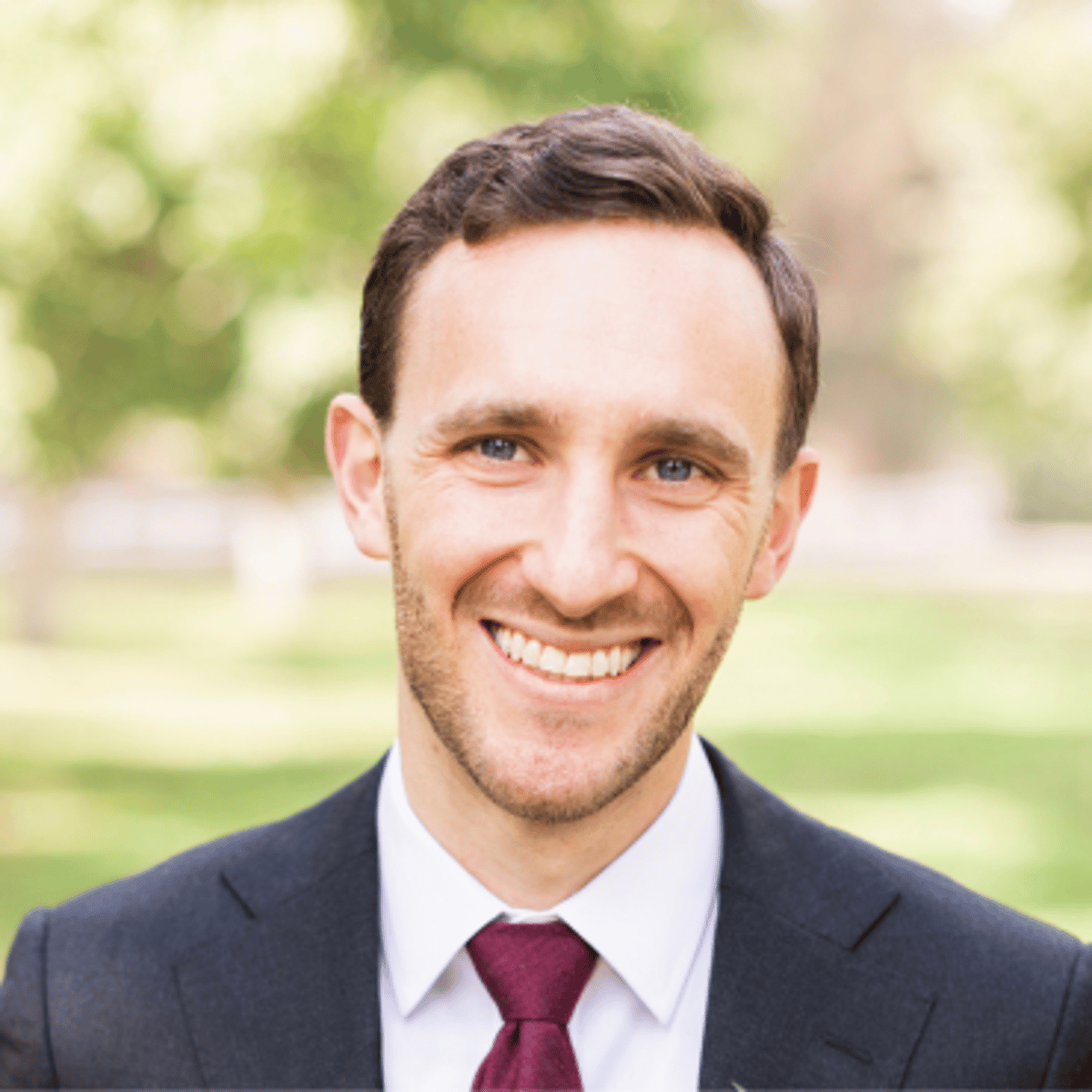
Daniel Bardenstein
Every can of soup has an ingredients list. He thinks your software should too.
Every can of soup has an ingredients list. He thinks your software should too.
On November 1, 2025, Daniel Bardenstein took the CEO chair at Manifest, the company he co-founded. The question he keeps asking is deceptively small: what is actually inside the software you run?
Most organizations cannot answer it. A modern app is a stack of borrowed parts - open-source libraries pulled from thousands of strangers, dependencies of dependencies, code nobody on the payroll ever wrote. Manifest builds the platform that reads that hidden recipe. It collects and operationalizes Software Bills of Materials (SBOMs) and, increasingly, AI Bills of Materials (AIBOMs), so a security team can see every component and move at the speed of the people attacking them.
Bardenstein launched the company's AI Risk product before stepping up to CEO, betting that the same opacity haunting software is about to haunt every model, dataset, and weight inside enterprise AI. The customers are exactly the institutions that cannot afford to guess: Fortune 500 enterprises, federal agencies, defense, and critical infrastructure.
He grew up outside Cleveland, Ohio, with his parents and older brother, devouring mysteries and spy novels. He spent plenty of childhood hours on the family computer, but he did not take technology seriously - the early plan was to become a doctor or a psychologist.
Technology grabbed him late, midway through his time at Stanford, where he studied Symbolic Systems, the cross-wired program of computer science, philosophy, linguistics, and psychology that has minted a long line of Silicon Valley founders. The spy-novel itch finally got scratched at Palantir, where as a Forward Deployed Engineer he worked a federal agency project investigating cyber crimes. Building tools to chase criminals through code felt like the secret-agent fantasy made real. He was hooked.
From Palantir he ran product teams at Exabeam, building cybersecurity and data analysis platforms, and spent time as a tech policy fellow at the Aspen Tech Policy Hub - the rare engineer who wanted to understand the rules as well as the code.
On the Palantir cyber-crime project that turned a doctor-in-waiting into a security founder.
Before the startup, Bardenstein spent years where the stakes were national. The thread running through all of it: making messy, critical systems legible and defensible.
Co-led cybersecurity, alongside the NSA, to protect the COVID-19 vaccine effort end to end - research, clinical trials, manufacturing, and distribution.
Directed cybersecurity programs at the Pentagon's startup-style unit, including the Hack the Pentagon bug bounty, attack surface management, and zero trust.
Drove technology modernization and OT/ICS strategy across the agency, and authored the CISA Cybersecurity Performance Goals now used as a national baseline.
In December 2021, the Log4Shell vulnerability tore through the internet. A flaw in a tiny, ubiquitous open-source logging library left countless systems exposed. The terrifying part was not the bug - it was the blindness. The world's biggest institutions could not even say which of their applications contained the vulnerable code.
Bardenstein and his co-founders found that unacceptable. Manifest was built so the next Log4Shell is a search query, not a fire drill - so any organization can instantly see what is inside its software and where the risk lives.
An SBOM works like the ingredients list for software - a structured inventory of every component that makes up an application or device.
An SBOM does not magically make an organization secure on its own. Its value comes from the visibility and speed it enables.
Treat technology like anything else in society that can affect public health and safety - demand transparency into what you build, purchase, and use.
I'm honored to lead Manifest into its next phase. Our mission has always been to make technology more transparent and secure.
Software was the first opaque supply chain. AI is the next, and arguably worse: models arrive as black boxes, their training data and dependencies hidden from the people deploying them. Bardenstein served on a Tiger Team defining standards for AI Bills of Materials, and made AIBOMs a product before he made himself CEO.
His pitch to security leaders is steady, not breathless: you cannot secure what you cannot see. Start by building the inventory. The visibility is what lets you respond at the attacker's pace.
Co-leads Foresight Partners, a nonprofit providing free cybersecurity support to political campaigns.
Set out to study medicine or psychology before code stole him away in college.
His favorite way to explain his life's work: if a can of soup lists its ingredients, software should too.