At 8:55 on a weekday morning, a chief executive can be sitting under the lights in Manhattan, listening to a producer count backward. At 9:00, an anchor in Phoenix asks the first question. At 9:12, it is a host in Tampa. Then Cleveland, Sacramento, St. Louis. The geography changes. The chair does not. By lunch, the same person may have completed more television interviews than most executives will do all year.
This is the satellite media tour, a form whose name carries a faint whiff of shoulder pads and fax machines. D S Simon Media has been producing versions of it since 1993. The surprising thing is not that the company still exists. It is that the underlying format remains useful after the satellite stopped being the interesting part.
The product is compression
The easiest way to misunderstand D S Simon is to call it a video company. It certainly makes video. Its Midtown studio has control rooms, satellite connectivity and crews for podcasts, b-roll, live cut-ins and corporate productions. But cameras are equipment. The product is the compression of a messy national media campaign into a repeatable morning.
The company’s media-relations team turns a corporate announcement or useful consumer idea into a pitch that a local producer might actually book. It prepares suggested questions, schedules stations in succession, runs the interviews, sends a same-day report, then follows with airings, audience estimates and clips. The client buys fewer handoffs: strategy, booking, production and measurement live under one roof.
One story, four controlled handoffs
Its customers are communications teams with a national story and agencies that do not want to build a broadcast operation for one campaign. Healthcare, technology, finance, travel, food, retail, entertainment, nonprofits and trade associations all appear in the company’s client mix. The work is sold by proposal. There is no public rate card. Co-op tours combine several non-competing products beneath one seasonal idea, while radio tours and remote formats reduce the production burden. The company says the AI layer introduced in 2025 did not increase its tour prices.
A fifth-floor walk-up and a national fireworks budget
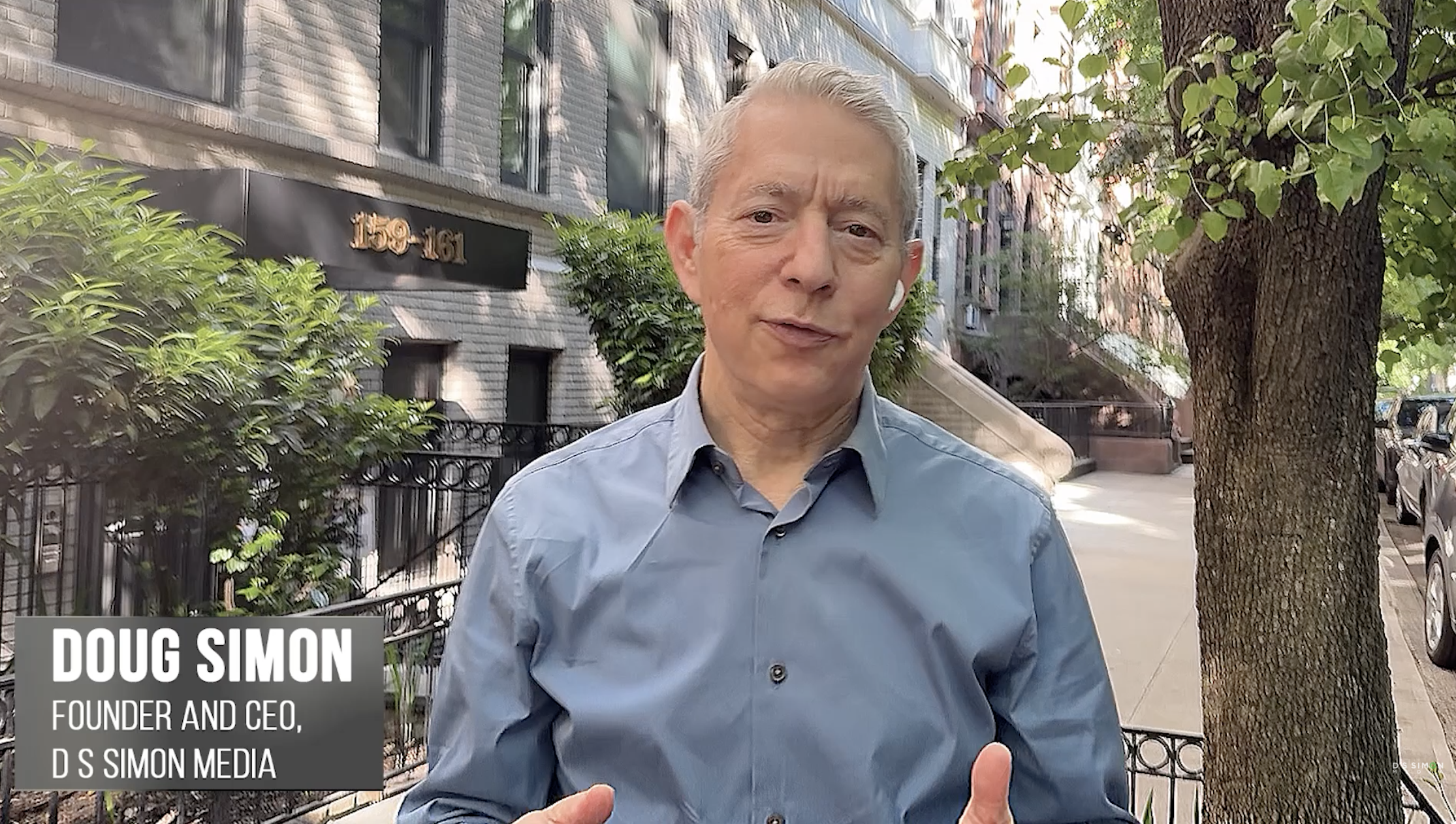
Doug Simon started the company on July 4, 1986, in a 400-square-foot fifth-floor walk-up on West 85th Street. He had $2,000 from his father’s life-insurance policy. He likes to joke that the nationwide fireworks were excellent for the launch budget. The joke works because the early operation was otherwise lean.
The company found itself adjacent to large moments. It made a video series for the West German government around the 25th anniversary of the Berlin Wall. It helped launch Disney.com. It distributed footage announcing the FDA approval of Viagra. An early satellite tour featured Lou Rawls promoting the United Negro College Fund telethon. Each assignment had the same quiet premise: a major event is only useful to a newsroom if someone packages the pictures, access and timing into something it can air.
“What has stayed the same is the importance of discoverability for organizations.”Doug Simon, founder and CEO
Forty years later, the company reports more than 125 awards, repeat business from more than 95 percent of clients and an average employee tenure above 11 years. Those numbers belong together. A media tour is a live relay race of bookings, feeds, cues and follow-up. Long tenure preserves the unglamorous knowledge of what happens when a station moves a slot, a guest loses an earpiece or a breaking story eats the morning schedule.
The satellite tour loses its satellite
The format survived by discarding pieces of itself. Hard-copy distribution gave way to downloadable video. The studio tour acquired remote spokespeople over Zoom and Skype during the pandemic. Streaming placement allowed campaigns to buy targeted reach around the earned interviews. Spanish-language tours stopped treating translation as strategy and added culturally adapted pitches, native speakers and market selection.
A single organization, a dedicated spokesperson and a national or regional interview schedule.
Several non-competing products share a timely segment and a credible third-party host.
Spanish-language booking and production built around cultural relevance, not literal translation.
B-roll, podcasts, studio shoots, streaming placement and video designed for newsroom reuse.
The first thing to fail, in other words, was never the interview. It was the assumption that one distribution system would keep carrying it. D S Simon’s sensible habit has been to leave the conversation intact and replace the plumbing.
The newest viewer is a machine
In 2025, the company launched what it calls an AI-Powered Broadcast Media Tour. Before the booking begins, its platform examines the questions people ask across 11 large language models and compares the client’s visibility with competing brands. Those questions influence the media pitch, the prompts offered to anchors and the answers rehearsed by the spokesperson.
After the interviews, D S Simon creates additional video and transcripts around those queries and distributes them online. The bet is straightforward: local interviews now have two audiences. One is the person watching the news. The other is the retrieval system deciding which pages, transcripts and authorities deserve to inform an answer.
It is too early to treat generative-engine optimization as settled science. Search systems change, their citations are inconsistent and a transcript cannot rescue a weak claim. But the operational idea is copyable without buying a tour: research the exact questions your audience asks; use an expert who can answer them plainly; give publishers clean footage, text and context; and design the follow-up before the camera turns on.
Where the arithmetic stops working
The format needs a credible spokesperson and an angle with real local utility. It is a poor match for a thinly disguised advertisement, an unsupported claim, or an audience that does not consume broadcast, streaming or searchable web content. Control can make a useful story efficient. It cannot make a dull story newsworthy.
That last distinction explains the durability of the five-hour morning. D S Simon does not sell virality. It sells orchestration: many small, credible conversations executed with enough discipline to behave like a national campaign. In an industry addicted to the new, this is a business built on a more useful question. What if the old thing was not broken? What if it merely needed a new route to the audience?