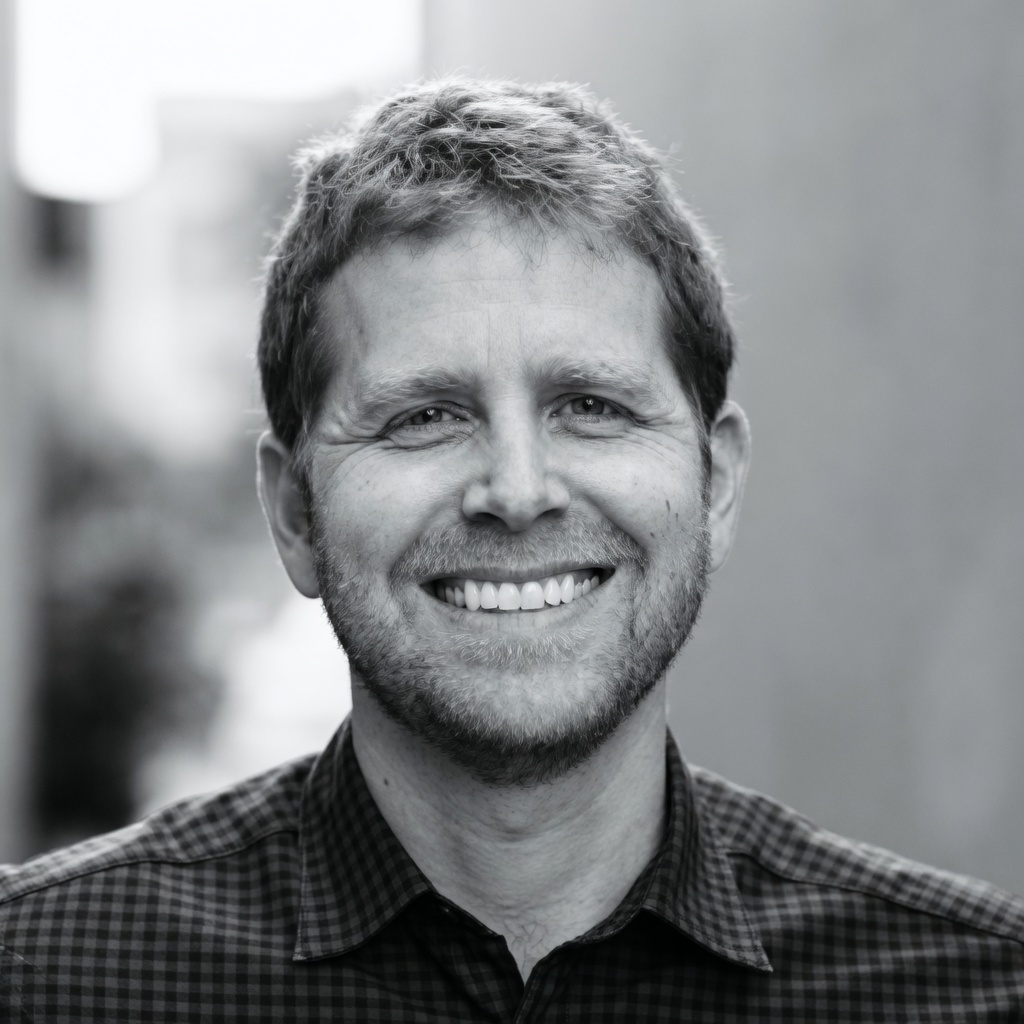
Curtis Spencer tracks 25,000 people you've never heard of. Every week, his team at Electric Capital updates a living census of who's building what in blockchain - which protocols gained developers, which lost them, where the smart money (the human kind) is flowing. The industry calls it scripture. Spencer calls it Tuesday.
Most venture capitalists write checks and wait. Spencer writes code. While managing over $2 billion in crypto assets, he still maintains open source projects on GitHub under the handle "jubos." He builds terminal UIs for fun. Creates pixel art. The man who decides which blockchain startups get millions in funding spends his evenings the same way he spent them at Stanford: hunched over a keyboard, solving problems that don't need solving, just because they're interesting.
This is not your typical VC origin story.
The Topology of Bad Ideas
In 2006, Spencer quit Oracle. Nice job, senior engineers, high-quality code discipline - the kind of role people retire from. He walked away to build Cruxlux with a Stanford classmate. Picture LinkedIn meets Six Degrees of Kevin Bacon: a social discovery platform based on connection graphs. "The online version of Six Degrees of Kevin Bacon," TechCrunch called it, which tells you everything about both 2007 and how hard it is to explain network topology to people who just want to find their college roommate.
Kosmix bought Cruxlux in 2009. Then Walmart bought Kosmix. Spencer's startup became a footnote in the retail giant's acqui-hiring spree, the kind of exit that pays the bills but doesn't make legends.
So he built another company.
Spool: The Good Kind of Failure
Spool solved a problem that felt urgent in 2010: you found an article on your phone but didn't have time to read it on your phone. Spencer and his college friend Avichal Garg built a mobile bookmarking service that saved content for later. Clean interface. Smooth experience. Genuinely useful.
Facebook bought the team in 2012. Not the product - the product shut down. The five people. An acqui-hire, that peculiar Silicon Valley transaction where companies buy talent by the pound. Spencer spent the next six years as a software engineer at Facebook, watching the social network swallow the internet while he worked on backend systems most users would never see.
Two exits. Two companies dissolved. Both founders absorbed into larger organisms. This is the part where most people either climb the corporate ladder or start a SaaS company with predictable revenue.
Spencer and Garg started a crypto fund.
The Taxonomy of Everything
Electric Capital launched in 2018 with a question nobody else was asking: where are the developers? Not the price charts, not the white papers, not the promises - show me the GitHub commits. Prove someone's actually building.
Spencer created the crypto-ecosystems taxonomy, a comprehensive classification system for every blockchain project worth tracking. Then he built the Electric Capital Developer Report, an annual assessment (now weekly) of developer activity across crypto networks. How many people are writing code for Bitcoin? Ethereum? Solana? Which ecosystems are growing? Which are ghost towns with good marketing?
The insight was obvious once someone said it out loud: developers are the leading indicator. Money follows attention follows builders. If talented engineers are committing code to a protocol, something real is happening. If they're leaving, run.
Every crypto investor now watches these reports the way traders watch the Fed. Spencer didn't just build a fund - he built the instrument panel for an industry.
The 3 Ts + G
Spencer's investment framework: Team, Tech, Tokens, Go-to-market. He announced it during an AMA with Encode Club that drew 150 students from 30 universities across five continents. The kind of audience that suggests your framework might have legs.
But the philosophy goes deeper than acronyms. Electric Capital owns 1% to 5% of the networks it backs. "We strive to own less than 10% of a project's token supply at most," Spencer explained. Contrast this with traditional VC, where ownership is status and control is strategy. Spencer's thesis: community-driven projects outperform VC-heavy ones. So take less equity. Give founders room. Let communities decide.
The fund's limited partners reflect this patience. 90% are nonprofits, foundations, university endowments - institutions locked in for 10 to 12 years. No quarterly pressure. No exit timelines. Just build.
Weekly Truths
The Electric Capital Developer Report used to come out annually. Big event. Everyone waited. Then in 2025, Spencer flipped the script: weekly updates. Live data. Real-time tracking of developer activity across Bitcoin, Ethereum, Solana, and every other chain worth watching.
This is harder than it sounds. Aggregating GitHub commits, filtering out bots, distinguishing meaningful contributions from noise, mapping developers to ecosystems - it's infrastructure work, the kind that compounds quietly. Spencer announced it on X (formerly Twitter) like it was no big deal: "The Electric Capital Developer Report site now updates weekly, not yearly."
Translation: we rebuilt the entire data pipeline to give you transparency in near-real-time because waiting 12 months for information in crypto is like waiting a decade in any other industry.
The Man Who Codes
Here's what makes Spencer unusual: he never stopped being an engineer. GitHub username jubos. Active repositories. Contributions to open source projects. The crypto-ecosystems taxonomy he created is open source - anyone can fork it, improve it, use it.
He builds terminal UIs because terminal UIs are elegant. Creates pixel art because pixel art is constrained. These aren't hobbies - they're a philosophy. The best solutions are minimal, functional, open. No black boxes. No proprietary moats. Show your work.
During his time at Oracle, Spencer learned from senior engineers what high-quality code looks like. That discipline stuck. Most investors pay engineers to build. Spencer is the engineer who learned to invest.
Fair Launches and Controlled Fires
Spencer champions fair launch token allocations - projects where tokens distribute broadly, not just to insiders. "If you look at a lot of the emerging, healthy ecosystems, they're not as VC-heavy," he told interviewers while discussing Yearn Finance and Olympus as examples.
It's a counterintuitive bet: take less ownership in more equitable systems. Traditional VC logic says maximize ownership. Spencer's logic says maximize ecosystem health. The former makes you rich once. The latter makes you Consensus 2023.
The Avichal Garg Constant
Every Curtis Spencer story includes Avichal Garg. College friends at Stanford. Co-founders of Spool. Partners at Electric Capital. When you work with the same person across three companies and two decades, you're either trapped or onto something.
Garg and Spencer didn't plan to become venture capitalists. The business took off quickly - earlier exits, pattern recognition from building companies, technical credibility that founders trusted. By 2020, they raised $110 million. By 2022, $1 billion across a $400 million venture fund and a $600 million token fund.
They built an engineering-focused VC firm in an industry drowning in finance people who can't read code. The pitch was simple: we've built, we've sold, we've shipped, and we can help you do the same.
What Gets Measured Gets Built
Electric Capital's portfolio includes Consensys, CoinList, Kraken - names that define crypto infrastructure. Eight unicorns. Three IPOs. Nine acquisitions. As of September 2025, the firm invested in 97 companies, with eight new bets in the previous 12 months, including a $40 million Series B for Etherealize alongside Paradigm.
But the real product is the Developer Report. It's the benchmark. The rosetta stone. The weekly referendum on whether crypto is growing or just getting louder. Spencer built a measurement tool that became the thing everyone measures themselves against.
You can game traffic. Fake users. Inflate TVL (total value locked). You can't fake sustained developer activity. Either people are committing code or they're not. Either ecosystems are growing or they're not. Spencer built the industry's lie detector and gave it away for free.
The Pixel Art Capitalist
In an industry of Patagonia vests and founder mythology, Spencer's hobbies feel like a tell. Terminal UIs. Pixel art. Open source taxonomies. These are the pursuits of someone who finds joy in constraints, elegance in minimalism, beauty in systems that just work.
He's on Keybase as jubos. Maintains GitHub repos while managing billions. Still writes code. The venture capitalist who acts like an engineer because he is one - and refuses to stop being one just because the checks got bigger.
What Comes Next
Spencer's current focus: open source developer ecosystems, privacy-preserving technologies, decentralized economies. The same things he's always focused on, just with more capital and better data.
Electric Capital just reported tracking over 25,000 developers building in open source crypto. That number updates weekly now. Every Tuesday, the industry checks the scoreboard Spencer built.
He left Oracle to build connection graphs. Sold companies to Facebook and Walmart. Mapped the blockchain universe from his laptop. The question was never whether Curtis Spencer could build things. The question was whether he'd ever stop.
He hasn't.