At his last earnings call as chief executive of MGIC, Curt Culver had a number ready. He had hosted these calls for 62 quarters. A mortgage insurer’s farewell might reasonably involve a small mountain of figures. Culver found room for a joke: “but who’s counting.”
It was January 2015. Some of those calls had been difficult, he acknowledged. He thanked his management team, then turned to the employees whose commitment had held through the company’s troubles. Their dedication was what he would remember. After years of explaining a business to investors, he ended by talking about the people inside it.
There is a temptation to arrange an executive’s life as a procession of promotions. Culver’s has the necessary dates, but the more revealing pattern is repetition: returning to the same company, the same university, the same question of how people learn to handle money and responsibility. He stayed at MGIC through the housing crash. He kept teaching. When he stopped being CEO, he continued showing up.
A long apprenticeship in Milwaukee
Culver earned his bachelor’s degree at the University of Wisconsin–Madison in 1974 and his master’s in 1975. His field was real estate and urban land economics. It was an education in the territory where buildings, borrowing and human ambition meet. The mortgage insurance business followed in 1976; he joined MGIC in 1982.
His connection to Madison continued alongside his corporate career. By 2006, when the business school gave him its Distinguished Business Alumnus Award, he had served on the dean’s advisory board since 2000. He also became a familiar presence in its classrooms, lecturing for more than two decades. An executive could return to campus for an award dinner and call the relationship complete. Culver’s involvement required rather more calendar space.
He had played on the university’s golf team, too. Later, he supported its indoor golf facility at University Ridge and endowed a golf scholarship. He funded annual scholarships for real estate students. The sporting and academic contributions belong together: both helped students take part in a university life he knew firsthand. In 2013, the Wisconsin Alumni Association’s Milwaukee chapter named him its Badger of the Year.
At MGIC, his responsibilities expanded over years. He joined the board in 1999, became CEO on January 1, 2000, and added the chairmanship in 2005. The title at the start of the new millennium placed him in charge of a company whose fortunes were tied to an especially persuasive American idea: buying a home.
When the promise became a liability
Mortgage insurance is an awkwardly named product for anyone encountering it for the first time. It protects the lender if a borrower falls behind. By reducing a lender’s risk, it can help someone qualify for a mortgage with a smaller down payment. It also adds to the borrower’s costs. The distinction matters: access to a home loan and the ability to carry it are related questions, with different answers.
A business built around those questions was exposed when the housing bubble burst. MGIC was hit hard. In 2012, years after the initial crash, the company still reported a net loss of $927.1 million. A recovery that can be compressed into a line on a chart had to be lived through one reporting period at a time.
Looking back in early 2015, Culver described remaining at the helm as a matter of responsibility. He reached for the image of a ship’s captain: stay and get the vessel sailing, or share its fate. He remembered decisions and the economy seeming to go against the company for a long stretch. The recollection left little room for the comfortable fiction that the outcome had always been obvious.
There is a limit to what persistence alone can explain. Insurers operate inside an economy; employment, home prices, claims and capital all bear on the result. Culver’s account of staying is most useful when kept beside those conditions. He was responsible for leading a company through them. He could not command them to improve.
Bar length shows magnitude against the 2012 loss. Signs distinguish losses from profit.
The numbers did improve. The 2013 loss narrowed to $49.8 million. That year, new insurance written increased 24 percent, while new delinquency notices declined 20 percent and paid claims fell 28 percent. Those were changes in the workings of the insurance business, giving substance to the improving bottom line.
For 2014, MGIC recorded $251.9 million in net income. When the results arrived in January, Culver pointed to fewer new delinquencies, lower claims and an improving inventory of delinquent loans. He also credited favorable trends in employment and home prices. The company was returning to annual profitability as he prepared to hand over the job.
Leaving the job, keeping the responsibility
The succession had been announced in July 2014. Patrick Sinks, then president and chief operating officer, would become CEO on March 1, 2015. He had already spent 36 years at MGIC when the announcement was made. Culver emphasized the company’s practice of developing chief executives internally. His own next assignment was to help the transition and give Sinks room to run the business.
A planned handover has a quieter dramatic structure than a sudden departure. There are months of overlap, decisions about authority, and the delicate business of remaining useful without occupying someone else’s chair. Culver became non-executive chairman, the position MGIC continues to list for him. The distinction is practical: he remains involved in board oversight after retiring from executive management.
On that final earnings call, Sinks described a colleague with humor, optimism and a habit of plain speaking. Culver answered with thanks and the 62-quarter joke. It was a fitting exchange for a transition between two people whose working lives had been spent largely inside the same institution.
The customer who arrived with an idea
One of Culver’s consequential conversations at MGIC began with a mistaken expectation. Lloyd Levin was a customer. When a customer wanted to see the CEO, Culver expected a claim problem. Levin instead wanted to discuss teaching teenagers about personal finance. He was building the organization that became SecureFutures.
Culver already had a reason to listen. His years teaching business students had exposed gaps in their knowledge of everyday finance. Students could reach a university classroom without a useful grounding in budgeting, interest rates or bank accounts. Levin’s proposal addressed a need Culver had encountered well beyond the mortgage insurer’s offices.
He became an early financial supporter, a continuing donor and a member of the organization’s advisory council. In its twentieth-anniversary storytelling in 2026, SecureFutures identified him as its first donor. Sandy Dunst, a former MGIC colleague, credited his support with introducing her and other employees to an organization they continued to serve as volunteers and donors.
The connection between the classroom and the mortgage office is easy to follow. A borrower eventually faces documents, costs and choices. Knowing how interest or a budget works can matter before any application is made. Supporting that knowledge gave Culver a way to work on the decisions that precede the business he had spent decades running.
A ButterBurger and a difficult conversation
In 2023, Culver and Susan Webb Yackee, director of UW–Madison’s La Follette School of Public Affairs, met over ButterBurgers in Hartland. Their subject was civil discourse and the school’s planned undergraduate public policy curriculum. The setting supplied its own Wisconsin joke: a restaurant was a promising place to seek common ground.
The Culver name had a family connection to the table. Curt’s brother Craig co-founded the restaurant business, and Curt serves on the board of Culver’s Franchising Systems. But the argument he and Yackee developed from their lunch concerned classrooms. They wanted students with different political views to be able to discuss difficult issues, listen seriously and practice negotiation.
They published their case together that September. For a businessman and an academic, disagreement was something students needed practice handling. Data analysis and policy methods would have limited reach if the people using them could not talk across differences. Their proposed educational work included the social skill of staying in a conversation when agreement became inconvenient.
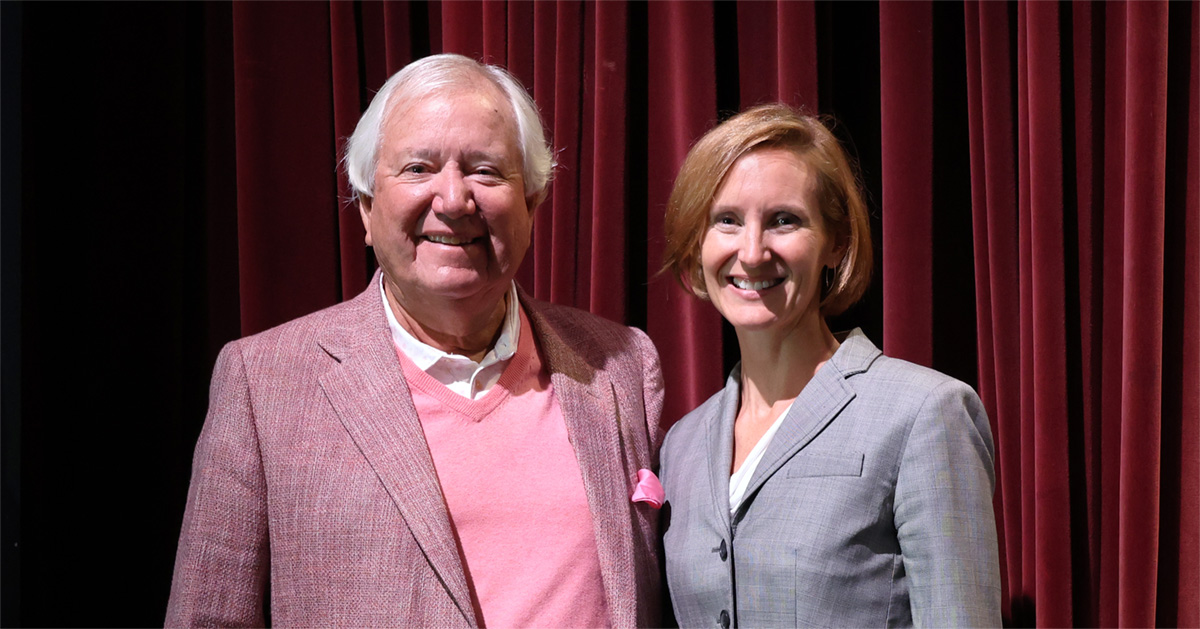
Putting a classroom behind the conviction
Culver had joined La Follette’s Board of Visitors in 2015. The following year, he and his wife, Sue, established a graduate fellowship fund in public service. He had relied on financial aid to get through college himself. The fellowship made that personal history useful to another generation of students.
In October 2024, the couple put $250,000 toward a professorship in public policy education. Its criteria included teaching, mentorship, civil discussion and engagement with different ideological perspectives. The gift translated a preference about education into a funded position, with a five-year term for the selected faculty member.
“how to think, not what to think”
Curt Culver, on the teaching he wanted to support, 2024
Christine Durrance became the first recipient that December. The selection gave the initiative a teacher and a timetable. A fellowship helped students attend; the professorship supported the kind of classroom the Culvers wanted those students to encounter. Together, the gifts addressed both entry into an education and the experience of receiving one.
There is a recognizable line from Culver’s farewell call to this work. In one setting, he thanked people who had stayed through difficult years. In another, he helped finance the patient work of teaching. His professional story contains losses, a return to profit and a carefully arranged succession. Away from the chief executive’s desk, he has continued to invest time and money in people who will have decisions of their own to make.
Follow the conversation
- Curt Culver on LinkedInPersonal professional profile
- Culver’s current MGIC board biographyRole and corporate career
- Listen: looking back on 33 years at MGICLake Effect · WUWM · January 2015 · 19 minutes
- A lunch conversation about common groundCurt Culver and Susan Webb Yackee · September 2023
- The public policy education professorshipLa Follette School · October 2024
- Culver reflects on supporting financial educationSecureFutures · April 2022
- MGIC’s website
- MGIC on YouTubeCompany channel