The hospital wanted $48,000. A CrowdHealth member in Dallas needed a hysterectomy after a cervical cancer diagnosis. According to the company’s account, its negotiators brought the quote down to $9,190. Then 142 members were asked to contribute an average of $64.71 each. The arresting detail is the order of operations: first shrink the bill, then find the money. Crowdfunding looks rather different when the price itself is allowed to move.
- Members use healthcare as cash-paying patients, with help finding and negotiating care.
- The company earns advocacy fees; members send medical contributions to one another.
- Funding is voluntary. Eligibility, prices and a member’s giving record matter.
CrowdHealth occupies an awkward, interesting corner of American healthcare. It sells the coordination that makes a group of self-pay patients function as a community. Doctors still provide the medicine. Hospitals still issue bills. The company supplies an app, advocates and a payment mechanism intended to make those bills manageable. For someone who has stared at an insurance explanation of benefits and wondered where the benefit went, the proposition has obvious appeal.
A fifteen-minute procedure, an $8,000 grievance
Andy Schoonover’s founding account begins with his daughter’s recurring ear infections and perforated eardrum. Her doctor recommended ear tubes and, Schoonover wrote, delayed a vacation because of concern about hearing loss. The procedure took fifteen minutes. The bill was $8,000. His insurer judged it “medically unnecessary.” The first failure, in this telling, was the family’s expectation that following medical advice would bring financial help.
That experience gave the business its emotional premise. Cash-pay medicine supplied the practical one: prices could change when the insurance machinery disappeared. The remaining problem was a bill too large for one household. CrowdHealth’s answer joined negotiation to organized contributions from other households. It began in 2021, announcing $6 million in launch financing that September. A further $6 million Series A announcement followed in December 2022.
Two payments, two destinations
The distinction that explains the business is where each dollar goes. A monthly advocacy fee pays CrowdHealth for its services. Crowdfunding contributions move between members’ accounts to help meet medical expenses. The website identifies Regent Bank as its banking provider. CrowdHealth says it neither pools these medical funds nor earns a percentage of them. Its product is administration with a human face, sold separately from the money for treatment.
Original membership currently lists a $60 monthly advocacy fee per person. Advertised crowdfunding asks reach $140 for someone under 55, $280 at ages 55-64, or $420 for a family of four or more. A four-person family also pays four advocacy fees. Processing fees and personal medical commitments sit outside those headline amounts. The member guide adds a qualification to the marketing: crowdfunding maxima are not fixed and may be adjusted.
Processing fees, personal commitments and ineligible care are additional. Published maxima can change under the member guide.
The published monthly history makes the variability tangible. An under-55 member’s January 2026 total was $125: $60 for advocacy and a $65 crowdfunding ask. September’s total was $155. Those figures describe monthly participation, before processing fees and the member’s own health-event expenses. They cannot tell a prospective member what a difficult medical year will cost.
The negotiation happens before the collection
For Original members, the personal commitment is generally $500 per eligible health event, with $3,000 for eligible maternity events. Members notify an advocate, seek cash prices and upload bills. An event can encompass related treatment rather than resetting with the calendar. For scheduled care, the useful intervention happens before the appointment: compare providers, establish a price and arrange the request.
Care advocacy is the company’s operational expertise: finding providers, checking prices, handling paperwork and negotiating balances. Original membership also includes virtual primary and urgent care, talk therapy and prescription discounts. These services matter because a patient with a worrying diagnosis has more pressing concerns than mastering hospital billing. Someone still has to do that work.
The crowd remembers who helped
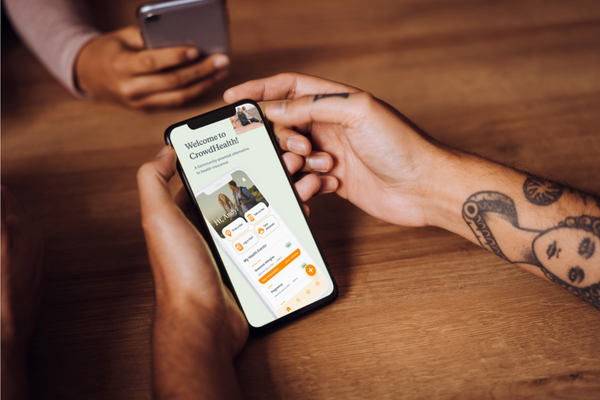
The model contains a behavioral nudge with teeth. A Generosity Score records how much a member gives relative to requests. Below 90%, their own request receives a red rating. Prices above the company’s fair-market criteria can also earn red. Members can decline red requests without hurting their generosity score. The company is attempting to make cooperation and careful shopping visible to everyone asked to contribute.
Freedom to choose a doctor still comes with a conversation about the price.
This is where CrowdHealth differs from both conventional insurers and religious cost-sharing ministries. There is no insurance network or religious pledge. There is also no contractual insurance promise to pay. Its natural audience includes freelancers, entrepreneurs and families seeking another way to finance care. The appeal depends on being willing to behave as a self-pay customer and accept community funding on its stated terms.
Those terms narrow the audience. Standard membership ends at 65, and published rules exclude specified tobacco histories and people above stated weight thresholds. The FAQ makes pre-existing-condition expenses ineligible during the first two years, then permits limited submissions. Long-term prescriptions and fertility treatment have restrictions. Membership does not satisfy an insurance mandate. Black Swan, the major-event option, lowers monthly asks but requires $15,000 per event and excludes pregnancy.
After the idea comes the paperwork
In its year-end 2025 letter, CrowdHealth reported 15,000 bills funded, 15,000 new members and corporate profitability. These are company figures. The next year’s priorities sounded admirably mundane: cheaper processing, faster funding, better bill tracking and more cash-price data. Its public April 2025 complaints log records withdrawal errors, cancellation trouble and misunderstood automatic contributions. Community spirit still needs software that lets people retrieve a receipt.
The transferable lesson is useful even outside membership: ask for the cash price, compare a planned procedure and have an expensive bill reviewed before paying it. CrowdHealth makes those habits a coordinated service. Whether its arrangement suits a household depends on eligibility, available insurance alternatives and tolerance for funding uncertainty. The Dallas example leaves a memorable question for any buyer of care: how much of this bill survives a serious conversation?