He wrote the code that moved billions at the world's biggest hedge fund. Then he built a button that lets the rest of us fire fossil fuels from our own portfolios.
Most people who can optimize a $150 billion book of investments spend the rest of their lives optimizing slightly larger ones. Conor Murray did the opposite. He took the machinery built for the world's largest hedge fund and pointed it at a stranger question: what if your money could carry your values along for the ride?
Today Murray is cofounder and CEO of OpenInvest, the values-based investing platform that J.P. Morgan acquired in 2021. The product does something deceptively simple - it lets ordinary investors build portfolios around the causes they care about, whether that means screening out fossil fuels, tilting toward gender-diverse boards, or voting their shares on shareholder resolutions. The hard part was never the idea. It was the plumbing. And the plumbing is exactly what Murray spent a career learning to build.
OpenInvest now lives inside J.P. Morgan Wealth Management, where Murray guides how ESG technology reaches the bank's advisors and clients. It is a strange and fitting destination for a company that started in 2015 as a Y Combinator startup arguing that Wall Street had the whole relationship between capital and conscience backwards.
The path here ran through some of the most quantitative rooms in finance. But the engine driving it was never purely quantitative. It was a question Murray has been chewing on since he was a kid in Ireland: what is the right thing to do, and can you build a system that makes it easier?
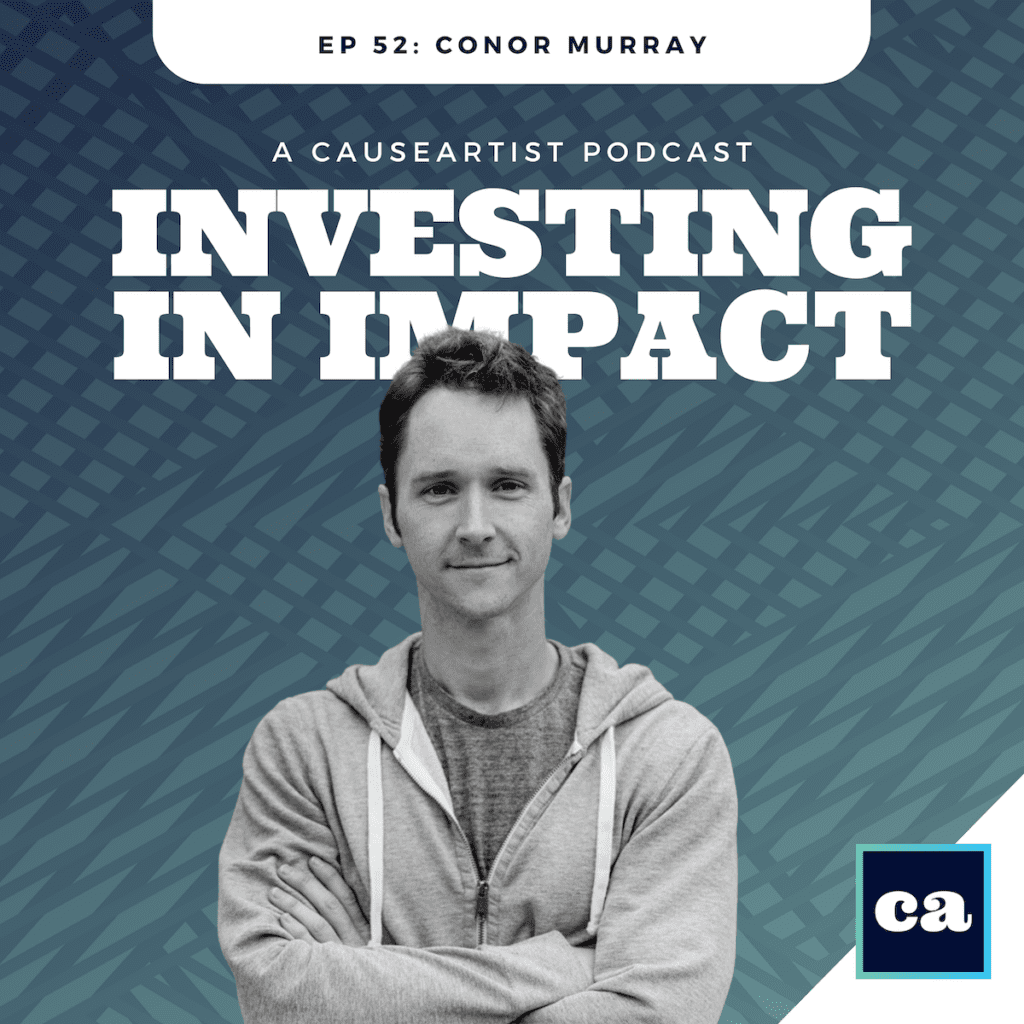
Aligning capital with social and environmental values is a critical driver of widespread change.
- Conor Murray, on why OpenInvest existsMurray grew up in Ireland in a Catholic family, and somewhere along the way the catechism turned into a curiosity about moral philosophy - not as rebellion, but as a second framework for the same old questions. That curiosity followed him to MIT, where he studied mathematics and computer science and, almost as a tell, picked up minors in economics and philosophy.
It is the rare engineering resume that lists ethics next to optimization. For Murray, the pairing was never decorative. The math taught him how to move money efficiently. The philosophy kept asking where it should go.
He started in financial technology at Morgan Stanley, then moved to Bridgewater Associates - the largest hedge fund on earth - where he led teams of engineers responsible for portfolio construction and optimization. The systems he owned optimized investments across the firm's funds and dozens of separately managed accounts totaling more than $150 billion.
Nearly a decade on Wall Street taught him two things at once: how to build investment infrastructure that actually works at scale, and what a healthy, productive culture looks like up close. He would later spend both lessons on a company of his own.
On June 29, 2021, J.P. Morgan agreed to acquire OpenInvest. Terms were never disclosed. The startup that pitched investors on a different relationship with their money became the engine inside America's largest bank.
OpenInvest kept its brand and its team. The goal: give J.P. Morgan advisors a way to help clients personalize portfolios around environmental, social, and governance priorities - and report on the impact.
Clients increasingly want to know the ESG footprint of what they own. OpenInvest's wager was that this stops being a niche and becomes the default. Murray now runs that bet at the scale of a global bank.
Murray leads with transparency and a deliberate refusal to hand people finished answers. He runs weekly standups, holds office hours, and works what he calls the meta level of a problem - prodding teams to think rather than solving things for them. The underlying idea he describes as employee actualization: give people the holistic support to reach their full potential, then get out of the way.
He is allergic to performative productivity. People, he argues, do their best work when they feel they have moved something that matters - not when they have warmed a chair from nine to five.
"Employees shouldn't feel like they have to be chained to their desk from 9-5 to be seen as productive."
"The number one thing that makes people feel motivated is feeling like they've made progress on their most impactful projects."
His favorite maxim, upgraded: not just "know thyself" - "edit thyself."
His MIT degree pairs hard math and computer science with minors in economics and philosophy - the engineer who formally studied ethics.
He credits mindfulness meditation as a genuinely transformative practice, and treats it as a leadership tool rather than a wellness perk.
He has cited his wife Emily, whom he had known for 16 years at the time, as a crucial support system through the startup grind.
An ESG startup with Andreessen Horowitz and Y Combinator on the cap table - serious Silicon Valley pedigree pointed at socially responsible investing.
The goal was never a niche product for the virtuous few. It was to make values-based investing the default - effortless enough that everyone's money quietly votes its conscience.
- The OpenInvest thesis, in one breath