A medical alert button looks like an answer to a very specific question: what if someone falls and cannot reach the telephone? Yet the more interesting question arrives after the button is pressed. Who answers? What do they ask? And does help necessarily mean an ambulance? Connect America has built a business around that small interval between asking for assistance and deciding what assistance should be.
- The service: medical alerts, round-the-clock response, remote monitoring and care analytics.
- The shift: CareCompass adds registered-nurse triage to the familiar help-button call.
- The business: families buy reassurance; health plans and providers buy support for care at home.
A button with a judgment call behind it
In August 2026, the company launched CareCompass, putting real-time nurse triage inside its personal emergency response system, or PERS. A registered nurse can assess symptoms, discuss appropriate self-care and arrange emergency escalation when necessary. The proposition is straightforward: a person should be able to ask for help before knowing which kind of help to request.
“CareCompass introduces a smarter first step,” chief executive Janet Dillione said in the launch announcement. The company says nearly half of PERS interactions involve health concerns that may not require an emergency medical services response. That makes the button useful for an awkward category of experience: something feels wrong, but its seriousness is unclear.
The infrastructure underneath is decidedly human. Connect America describes dedicated U.S. and Canadian response centers, backup arrangements between locations and an interpreter service covering more than 140 languages. It advertises an average answer time of 20 seconds. An average is no promise about an individual call, but it reveals what the company is selling: availability at the moment someone needs a conversation.
The company was assembled, one capability at a time
Founder Ken Gross established Connect America in 2004. When Rockbridge Growth Equity announced its acquisition in January 2011, the business had more than 75,000 customers. Falcon Investment Advisors supplied subordinated debt and preferred equity; Gross retained substantial ownership and stayed CEO. The transaction price was undisclosed. The company already had a platform on which investors believed a larger subscription business could be built.
Acquisitions then changed its reach and its toolkit. Tunstall Americas joined in 2019, bringing additional subscribers and healthcare relationships. In July 2021, Connect America finalized its acquisition of Lifeline’s Aging and Caregiving business from Philips. The following month, it announced the acquisition of 100Plus, adding remote patient monitoring and AI-assisted engagement. These were complementary capabilities: answering an urgent call and supporting care between office visits.
In May 2022, Connect America Home gave that collection an integrated platform identity. The launch combined emergency response, remote monitoring, analytics and supporting services, including virtual assistance and connections to food, transportation and social support. The underlying observation was practical: difficulties staying at home extend well beyond the moment of a fall.

Expansion remains part of the story. An October 2025 letter of intent with Health Impact Alliance proposed extending the Lifeline brand through LifelineConnect, subject to a definitive agreement. The stated five-year ambition was to reach up to one million older adults. That number is a target, not an installed subscriber base. The distinction matters when reading a company whose public story combines acquired history, current services and plans for what comes next.
Two customers, one front door
For an older adult or caregiver, the product begins with something tangible. Connect America offers home systems, mobile devices and smartwatches, with optional fall detection. Its Notify app lets caregivers receive alerts and manage information. Medication dispensers add reminders and scheduled doses. A family can choose services around daily routines rather than expecting one pendant to solve every problem.
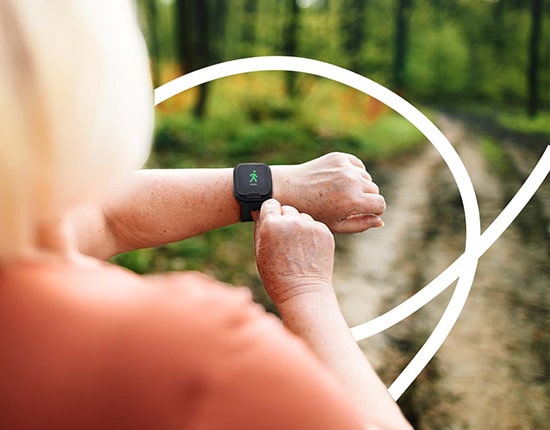
The payer sees another set of concerns. Medicare, Medicaid and commercial health plans want members supported at home, with fewer avoidable hospital visits. Providers need information and staff capacity between appointments. Connect America sells into both worlds, through consumer brands such as Lifeline and Medical Alert and through healthcare relationships. Its website names partners including Humana, UnitedHealthcare and Trinity Health.
Medical Alert’s advertised mobile-system starting rate. Checked October 17, 2026. Plan terms and optional features affect the total.
Medical Alert’s mobile offer illustrates the recurring-service model. Enterprise agreements have their own economics. For a health plan, the purchase case depends on what the service changes after enrollment: whether members use it, whether staff act on the information and whether care reaches the appropriate setting.
Competitors include Bay Alarm Medical and Medical Guardian. The latter also describes remote monitoring and healthcare services. Connect America’s distinction is the particular combination of established brands, response operations, analytics and clinical routing. Buyers still need to compare device suitability, service terms and actual program performance.
The useful part is what happens next
CareSage turns connected-care information into risk scores and dashboards so teams can prioritize follow-up. A June 2025 company research summary describes a study of more than 370 subscribers pairing PERS, analytics and tailored interventions, reporting 31% lower hospitalization costs. The intervention matters: this is evidence about a package of technology and care, not proof that issuing a device alone produces the same savings everywhere.
The button can start the conversation. Someone still has to do the work that follows.
The same discipline applies to 100Plus. Its cellular devices remove the need for a patient smartphone or Wi-Fi, easing setup. Coverage and regular readings still matter. Its published disclaimer excludes situations requiring an immediate clinical response. Connect America also warns that fall detection misses some falls. Charging, wearing the device and maintaining an appropriate care plan remain part of making these services useful.
For a care organization, those boundaries create an implementation checklist: establish who reviews incoming information, who contacts the member and how urgent concerns are escalated. A dashboard supplies visibility. Reliable follow-up requires assigned responsibilities and enough time to act.
The lesson to copy is a product-design judgment: keep the familiar action, then improve the response behind it. That is an editorial reading of Connect America’s expansion, not a universal formula. It works only when the organization can support the added responsibility. A simpler button creates value when the people and systems answering it can handle a more complicated question.