Consider the afterschool place. To a municipal accountant, it is an expense. To a parent, it can determine whether the working day holds together. In Somerville, Massachusetts, it also became something else: an item residents could choose to fund. The city’s second participatory budgeting cycle allocated $150,000 to expanded afterschool programs. Its implementation record reports 30 additional places at two schools in 2025-2026. A public conversation had acquired a school-day address.
- 311 provides round-the-clock access to non-emergency city help.
- Residents selected six projects totaling $1.045 million in the second budgeting cycle.
- Public dashboards expose the gap between a funded idea and a finished project.
That small transaction offers a way into the City of Somerville. The interesting question is how a local government makes listening operational. Somebody has to answer the request, understand it, price a response, and deliver. Each handoff gives an otherwise sensible idea somewhere to disappear.
01 / The front door has three digits
Somerville’s constituent-services operation starts with a modest promise: residents should be able to reach someone. Its 311 service works around the clock, with an online portal, an app, live chat, and other channels. Daytime operators include speakers of Haitian Creole, Portuguese, and Spanish; on-demand interpretation extends language access further. Missed recycling, potholes, damaged sidewalks, and troublesome street signals all belong here.
Behind that front door is a tracking system. Representatives route requests to departments, keep records, and look for trends that can inform resource assignments. The administrative detail matters. An isolated complaint asks for an answer. A pattern of complaints invites a different question: what is happening to this service?
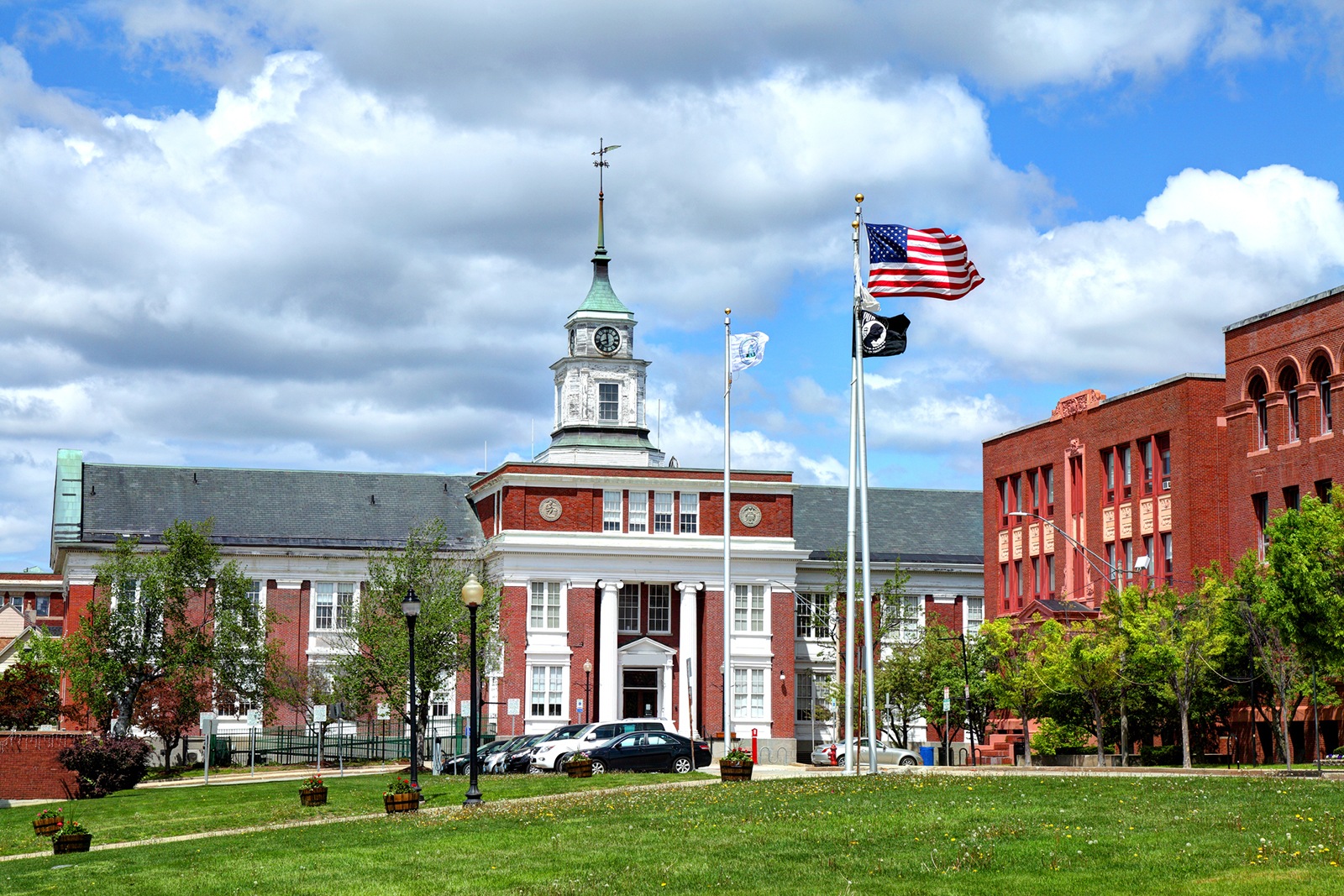
The institution behind the interface has an older history. Somerville separated from Charlestown as a town in 1842 and became a city in 1872. Today its remit includes public safety, schools, streets, public works, and the permissions that keep a dense place functioning. Inspectional Services handles building review and code enforcement. The Licensing Commission handles its own licensing responsibilities. A prospective restaurant owner encounters several kinds of expertise under the same municipal umbrella.
Its users include tenants, homeowners, business owners, children, and visitors. Its finances come through public revenues and appropriations, with fees, grants, and other support. Municipal government has continuing obligations to the people in its jurisdiction. Comparing it with nearby cities can be useful; treating residents as shoppers who can casually switch providers misses how the institution works.
For residents worried about remaining in the city, the Office of Housing Stability offers tenancy case management, help accessing financial assistance, housing-search support, and legal referrals. The practical starting point depends on the problem. A service request, a permit application, and a housing referral enter different workflows.
02 / Give the suggestion a price tag
In 2023, Somerville’s first participatory budget drew more than 900 ideas. Volunteer delegates worked with staff to assess need, impact, feasibility, and cost, producing a ballot of 20 proposals. Residents aged 12 and older could vote. More than 3,500 votes helped select five projects costing $955,000.
The second cycle produced another 20-item ballot from more than 700 ideas. The announced winners spanned afterschool programs, food access, separated bike lanes, composting, pollinator gardens, and rat control. Unallocated money from the first round enlarged the available pot to $1.045 million. There is something pleasingly municipal about that combination: bicycles, butterflies, and the creatures nobody wants near the bins.
“Participatory Budgeting puts the power of public funds directly in our community’s hands.”Katjana Ballantyne, then mayor · May 2025
The amounts clarify the choices. Bike infrastructure received $400,000; food access, $220,000. These are selected allocations, rather than a claim that every dollar has already been spent or every benefit achieved. A winning vote starts an administrative process.
03 / The waitlist is evidence
Childcare illustrates how several civic tools can meet. A broader afterschool needs assessment received responses from 742 families representing 1,046 students. The city’s published dataset says that survey and other information informed a 23 percent expansion in full-time places, adding 244 seats across the system. That wider expansion should be distinguished from the 30 places funded by participatory budgeting.
The latter were delivered through Apollo Afterschool at the Argenziano and Kennedy schools, where waitlists were highest. Here is a concrete problem, a chosen expenditure, and an identifiable service. The record also shows unfinished business: the bicycle allocation remains in planning, while the food-storage project is in procurement. Approval and availability run on different clocks.
SomerStat, the mayor’s innovation and analytics office, supplies another part of this machinery. It maintains public datasets and tracks longer-term goals. Its biennial Happiness Survey has run since 2011. The office’s stated values include checking representativeness and using data alongside context and community knowledge. Complaint counts alone cannot tell officials whose needs have gone unheard.
04 / Even listening has a budget constraint
Climate Forward extends the approach into longer horizons. The plan began in 2018; its 2024 update contains 77 actions, with a public implementation dashboard. A resident can inspect work across buildings, energy, mobility, waste, and community resilience. The dashboard offers a place to examine progress over time.
Money narrows the possibilities. Jake Wilson, who became mayor in January 2026, presented a proposed $394.2 million FY27 budget in June after an initial $5.4 million shortfall. The administration described rising fixed costs and slowing new-growth revenue, approximately five percent reductions in non-personnel operating budgets, departmental reorganizations, and limited staffing cuts. Even a carefully costed proposal must compete with existing obligations.
Nor does feedback stop after construction. In October 2026, the city announced Community Path safety changes after hearing concerns from more than 1,000 users, including speeding and poor visibility. Planned responses included markings, flex posts, and clearer signs. A heavily used public amenity still needed adjustment.
Other communities can borrow the sequence: make entry easy, test ideas with staff, attach money, and publish implementation status. It requires administrative capacity and a way to hear beyond the people already comfortable participating. Somerville gives that lesson an everyday scale. A parent needs a place after school. A neighbor needs a safe crossing. The city’s work is to carry the answer through to the point where someone can use it.