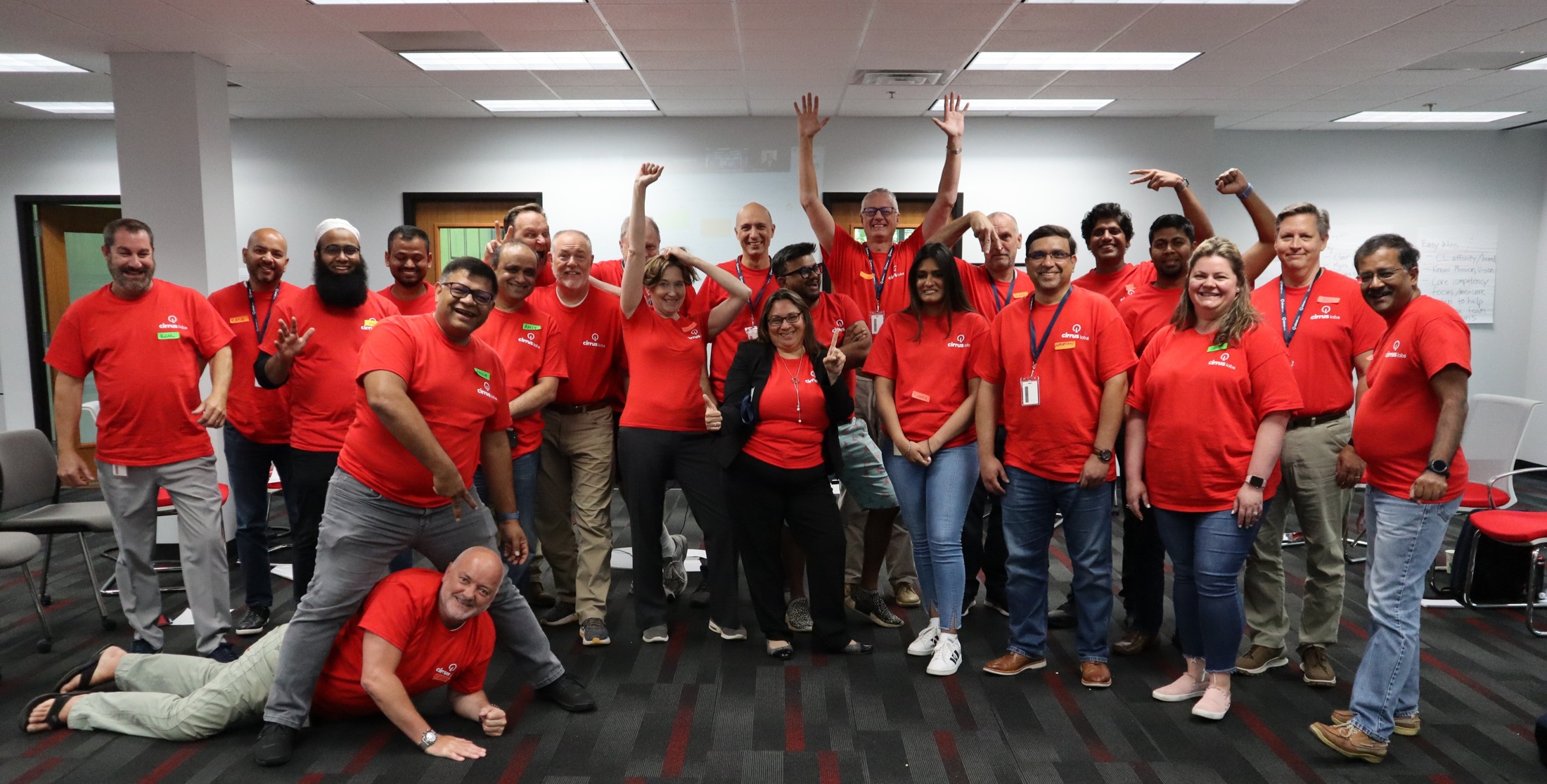
A large American healthcare system had a problem familiar to anyone who has spent a productive morning preparing for an unproductive afternoon: meetings. In CirrusLabs’ account of the engagement, the organization’s difficulties included a heavy meeting culture, weak planning, and unclear accountability. The intervention began with leadership training and a team using Kanban, a way of making work and its progress visible. The company reports training 38 leaders. Before anyone could transform the technology, people needed a workable way to work.
- CirrusLabs connects AI ambitions to data engineering, security controls, and delivery practices.
- Its published work includes healthcare, finance, and global consulting organizations.
- Its Jira app generates backlog drafts; teams review and refine them.
That modest story explains this consultancy better than a parade of futuristic promises. CirrusLabs works in the awkward space between buying technology and getting value from it. Its current pitch centers on responsible enterprise AI. Its older project accounts reveal the underlying craft: connect systems, standardize repeated tasks, and help people make decisions without another round of organizational fog.
First, stop inventing the setup
Consider another customer, an unnamed global consulting and professional-services company. Each project used its own templates and DevSecOps tools. CirrusLabs built a centralized framework that accepted project details, repository information, cloud requirements, and authorized users. An intake could then trigger repositories, infrastructure, delivery pipelines, and security and compliance validation. The important object here is the intake form. Much of the confusion was being manufactured before development began.
A separate cloud-onboarding engagement makes the same point at infrastructure scale. The client wanted IBM Cloud alongside AWS, Google Cloud, and Azure. CirrusLabs says it automated more than 30 policy and security guardrails, provisioned infrastructure, created regional sandboxes, and documented the work. The intervention moved recurring requirements into the environment itself. Compliance became something an engineer encountered while building.
- 01One intakeProject · cloud · permissions
- 02Repeatable setupRepository · infrastructure · pipelines
- 03Built-in checksSecurity · compliance validation
These are company-reported examples, with anonymous customers. Their usefulness lies in the mechanics. A buyer can examine which controls are automated, which steps still require approval, and who maintains them after the consultants leave. Those questions produce a more informative conversation than an abstract promise to accelerate innovation.
A cloud API case adds a useful detail about persuasion. The customer wanted standard infrastructure components but lacked clarity about what to build. CirrusLabs describes a discovery workshop, internal design, and customer review, repeated for potential APIs. The resulting clarity helped the customer articulate the problems internally and secure development funding. Before the budget could move, the proposal had to become understandable. That sequence is worth copying when a technical wish list keeps returning from management without a decision.
The model needs somewhere to live
CirrusLabs now organizes its offer around data architecture, enterprise AI transformation, responsible AI, and governance, risk, and compliance. These services address different parts of the same deployment problem. Data engineering builds usable pipelines. Model work examines performance and explainability. Safety assessment looks for bias and vulnerabilities. Governance assigns oversight and preserves the records needed to inspect decisions.
The combination is the company’s positioning: a customer can connect those disciplines within one engagement. A financial-services modernization case describes legacy data moving into Azure, a shared warehouse for reporting, and Power BI dashboards. That is a concrete foundation for analysis. Adding a clever model to inaccessible or poorly organized information leaves the original problem sitting underneath it.
“The most important thing in our success is the people.”
Naeem Hussain · 2023 interview
In that interview, co-founder Naeem Hussain described a framework running from strategy and team organization through technology, data, and cloud to products. The continuity matters. Today’s AI emphasis builds on an established interest in how organizations deliver software. The subject has changed; the coordination problem remains recognizable.
A backlog, while you wait
There is also a small, tangible product inside the consulting story. CirrusInsightsNow.AI is a Jira Cloud add-on. A user selects a software project, supplies an outline of the desired outcome, and receives generated epics and user stories with descriptions and acceptance criteria. The listing then directs the user back into Jira to review and refine the material.
CirrusLabs introduced the tool publicly in October 2023. The marketplace lists version 1.0.1-AC with a July 3, 2024 release date and a free payment model. That gives a product owner a bounded experiment: use it to draft a backlog, then decide whether the suggestions express the actual problem. A generated ticket still needs someone who knows what should be built. For a team already using Jira, the appeal is straightforward: it can move from a short product outline to editable work items without starting every description from an empty box.
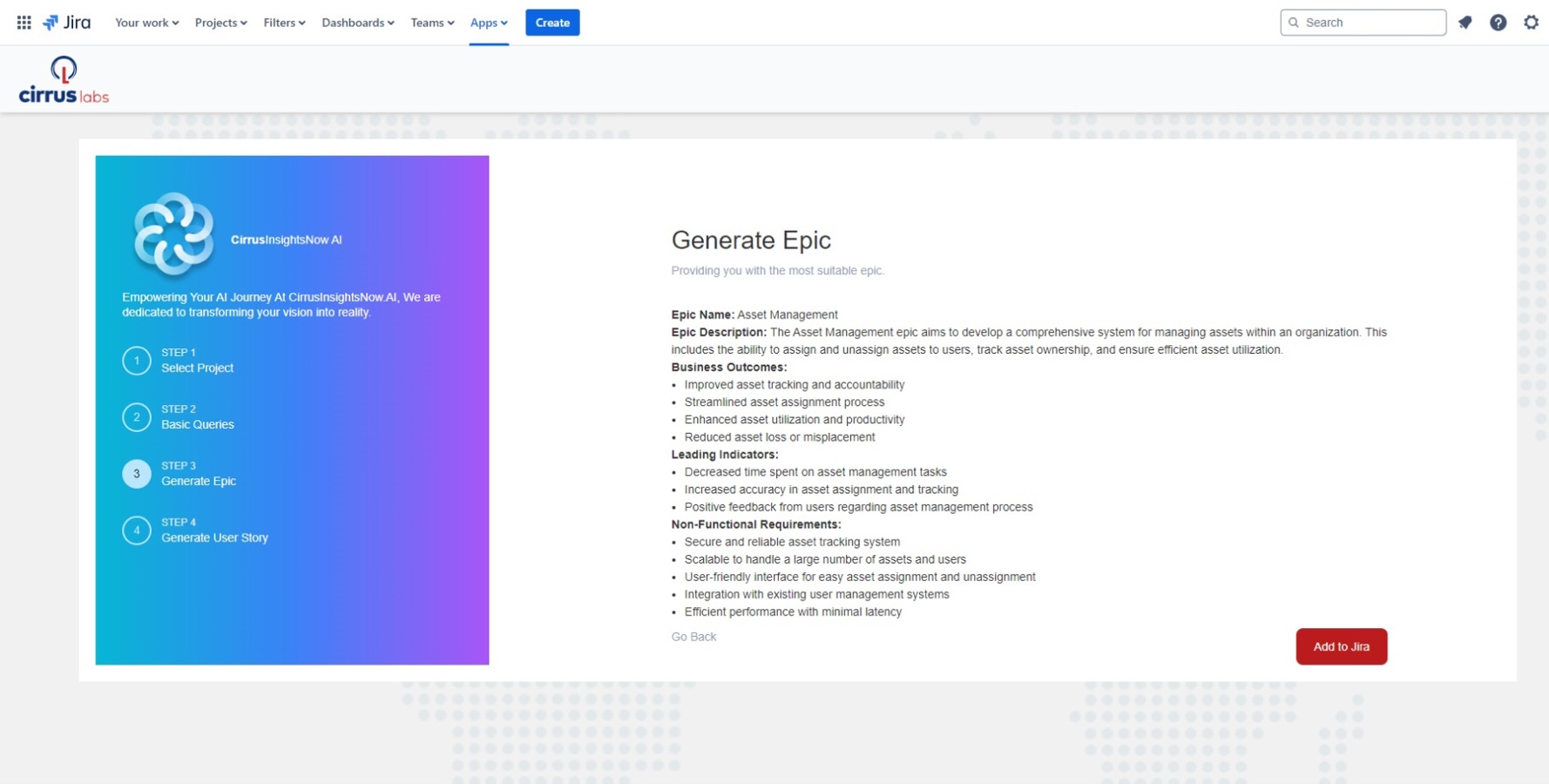
The free app is one entry point. The broader business sells advisory, implementation, training, and managed services to organizations whose systems and obligations require tailored work. A cloud deployment, data migration, or governance program has a different scope from installing a Jira add-on.
A consultancy with its sleeves rolled up
The company’s trajectory helps explain that mix. In March 2019, CirrusLabs announced its acquisition of Axxis Solutions, adding cloud-application expertise around Salesforce, Shopify, and AWS. Inc. records placements on its Inc. 5000 list in 2019, 2020, and 2021. Regional expansion followed: its 2023 ScienceLogic partnership supported AIOps and channel development in the Middle East, Turkey, and Africa.
In June 2024, CirrusLabs announced an 8,000-square-foot Bangalore office with an area for client collaboration and demonstrations. A November 2025 company post described a buildathon involving teams from seven countries. The picture is of a services organization investing in delivery capacity and technical learning while adding products of its own.
For a buyer, the alternatives include an internal platform team, a specialist consultancy, or a larger systems integrator. CirrusLabs’ appeal rests on joining engineering and organizational work. Its public examples are most relevant to businesses where fragmented tools, regulated processes, and competing teams make implementation difficult.
Copy the sequence
The healthcare engagement offers the most portable lesson: start with a visible working team. The project-framework case adds another: standardize what repeats. The cloud work supplies a third: turn requirements into checks that run. Together, they suggest a practical order for an AI initiative. Identify the operational blockage, prove a better routine, then automate the parts that deserve repetition.
That order requires access to systems and people willing to own decisions. An organization that refuses to change approvals, share usable data, or maintain controls gives this approach little room to work. CirrusLabs’ interesting proposition is the attention it pays to that ordinary machinery. The demo may attract the meeting. The machinery determines what happens afterward.