She found Khaled Hosseini, Bryan Stevenson and Trevor Noah before the rest of the world did. Then a corporation closed her imprint - so she took the name back and started over.
Walk into the offices of Spiegel & Grau today and you will not find a museum. You will find a small independent publishing house putting out 15 to 20 books a year, recording original audio, producing podcasts, and lining up film and television deals before a manuscript is even bound. The company is named after two people who can finish each other's sentences. Cindy Spiegel is one of them.
That much is the easy part to explain. The harder, stranger fact is this: she has co-founded a company called Spiegel & Grau twice. Once inside one of the largest publishers on earth, and once - after that same publisher shut it down - from nothing, as an independent press. Most people, handed that ending in 2019, would have called it a career. Spiegel and her partner Julie Grau called it a beginning.
What makes a person rebuild the exact thing that was taken away? To answer that, you have to look at the books. Not the sales figures, the books themselves - because for thirty years the through-line of Spiegel's work has not been a genre or a category. It has been a question: does this book speak to the moment we are living in, and can it lend a reader some perspective and some hope?
She does not work alone, and never has. The independent Spiegel & Grau is run by Spiegel and Grau as co-CEOs, but they built the house with a deliberate bench of veterans: a president who also directs film and television, an associate publisher who runs audio programming, a chief operating officer, editors and a marketing team. The shape of the org chart is itself a statement. This is not two people freelancing under a familiar name. It is a fully formed publisher, sized small on purpose, designed so that a book can move from page to audio to screen without ever leaving the building.
An editor's resume is not a list of jobs. It is a list of writers nobody had heard of yet. Here are a few she bet on.
Also in the editing column over the years: Yuval Noah Harari, Anne Lamott, Yann Martel, Dan Pink, and the debut careers of Gary Shteyngart, Chang-rae Lee, Philipp Meyer, ZZ Packer and Danzy Senna.
Read that list again and notice what it isn't. It isn't a single lane. A novel of postwar Afghanistan sits next to a death-penalty lawyer's memoir, which sits next to a sweeping work of popular history, which sits next to a comedian's coming-of-age in apartheid South Africa. The connective tissue is not subject matter. It is ambition - the sense that each book is trying to do something larger than entertain, and that a reader will close it seeing the world a little differently than before. That is the bet Spiegel has made over and over, and it is the reason the same names keep turning up on prize lists and on screens.
It started at Riverhead. In 1994 she was one of four founding editors of a brand-new imprint at Penguin, and within a few years she and Grau were running it as co-editorial directors and co-publishers. The early Riverhead list reads now like a who's who of a literary generation: Junot Diaz, Nick Hornby, Chang-rae Lee, Gary Shteyngart, and the manuscript that became The Kite Runner. Acquiring James McBride's The Color of Water - a memoir that would sit on bestseller lists for years - was a Riverhead-era decision. Building a list like that is not luck repeated a dozen times. It is taste, applied with discipline, by someone willing to be early.
The Kite Runner arrived as the United States went to war in Afghanistan. A novel about Kabul suddenly became a way for millions of readers to understand a place on the front page. Spiegel has been candid that no editor engineers that. Timing and the world's attention decide a book's reach as much as the book does.
The honest version of the job, then, is not picking winners. It is recognizing the writing that deserves to win and then being ready when the moment finds it. She has watched demand swell for wisdom books, for prescriptive self-help, even for poetry - people, she has noticed, started sharing poems on social media to cope when the news got hard.
This is the rare publisher who treats the reader's emotional weather as market data without ever sounding cynical about it. When the headlines turn grim, people reach for spiritual books and for verse. Spiegel reads that not as a trend to exploit but as a signal of what books are for. A galvanizing book at the right time can do real work in a person's life, and her catalog is full of evidence: Just Mercy reshaped how a generation talks about justice; Between the World and Me became required reading almost overnight; Orange Is the New Black jumped off the page and onto millions of screens.
When a corporation closes an imprint, the usual script is grief, a severance package, and a new title somewhere else. Spiegel and Grau wrote a different one. They rebuilt the company as an independent press and surrounded themselves with industry veterans - a president running film and television, a director of audio programming, a COO. The design was deliberate: keep books at the center, and let everything else - audio, podcasts, screen adaptations - orbit around them rather than replace them.
It is a quiet rebuke to the idea that the future of stories lies anywhere but in the writing. The independent Spiegel & Grau opened its doors with a first-look deal with Amazon Studios and a partnership with the podcast company Lemonada Media. The books come first; the media ecosystem follows. That ordering is the whole philosophy.
There is something almost stubborn about it, in the best sense. Spiegel holds a master's in comparative literature from Berkeley and an English degree from Penn. She reads for a living and has for her entire adult life. The corporate world decided her imprint had run its course. She decided it hadn't. Both can't be right, and the bestseller lists have been siding with her.
The proof came fast. The independent house's debut title, Catherine Raven's Fox and I, was a memoir about a scientist living alone in Montana who strikes up a friendship with a wild fox - hardly an obvious blockbuster. It went straight onto the New York Times bestseller list. Since then the list has grown to include Margaret Renkl's The Comfort of Crows and Shelley Read's Go As a River, a revised edition of Melody Beattie's Codependent No More, and a forthcoming second novel from Kathryn Stockett. Fifteen to twenty books a year, each chosen by hand, each meant to last. For a company that was supposed to be finished in 2019, that is a remarkable amount of life.
It would be easy to call all of this a comeback. It is closer to a continuation. The corporate version of Spiegel & Grau and the independent one share a name, two founders, and a single conviction that has never wavered: that a book is the durable thing, and everything else - the audio, the podcasts, the film deals, the org chart, the market read - is in service of the writing. Cindy Spiegel has spent three decades proving that conviction pays. She is not done proving it.
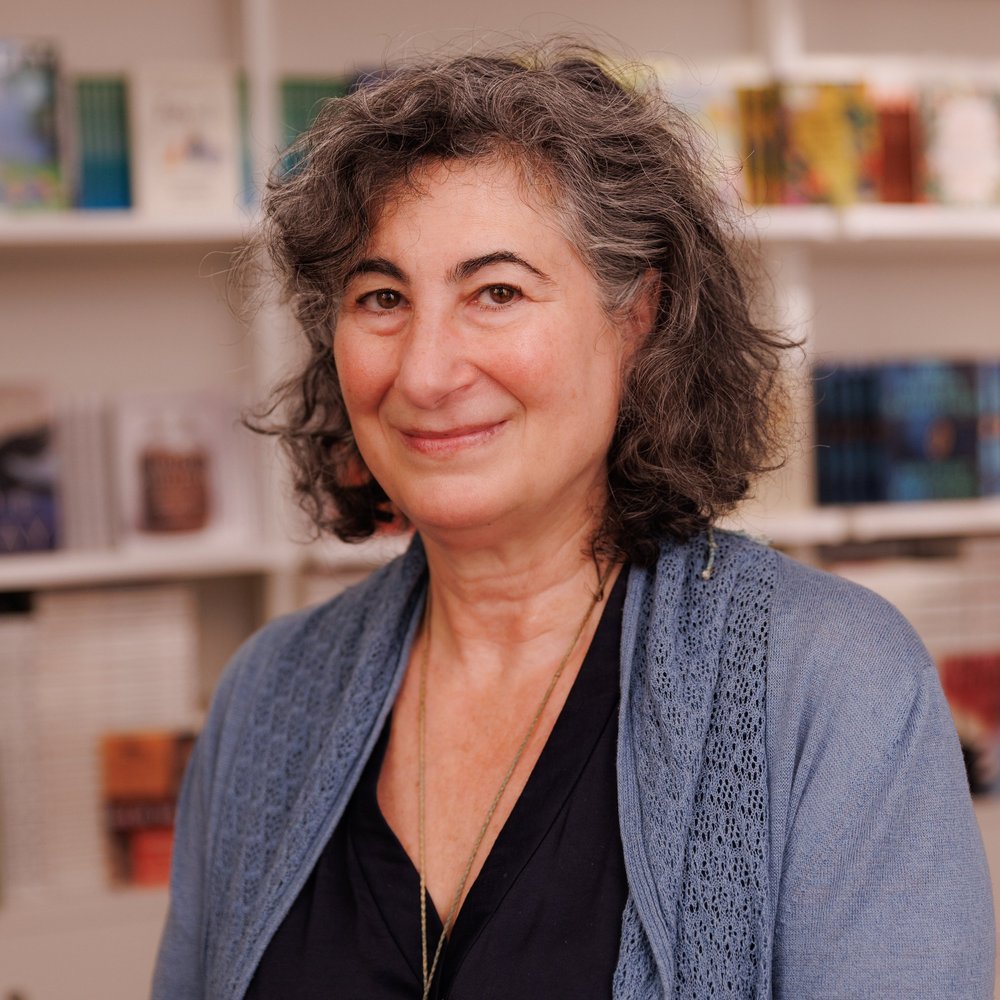
She was born Celina. The publishing world knows her as Cindy.
She will not publish a novel with a talking dog - while cheerfully admitting any genre can transcend expectations.
She chased Justin Davidson's Magnetic City after running into the idea at her son's school fundraiser.
She sits on the board of the Archangel Ancient Tree Archive and the advisory board of Columbia Global Reports.
She co-edited the anthology Out of the Garden: Women Writers on the Bible.
She and Julie Grau have run three companies together. The shorthand: they finish each other's sentences.
Sources: spiegelandgrau.com · Wikipedia · Kirkus Reviews · Publishers Weekly · Publishing Perspectives · Jane Friedman · UPenn Creative Writing · Community of Writers.