On the day Christopher O'Malley became chief executive of Compuware, he decided the appointment was not the most important news. A customer had come back. The account had once left for a competitor; now it believed the old mainframe-software company mattered again. For a new CEO, this was an unusually useful piece of symbolism. Titles are conferred in conference rooms. Trust returns through the front door carrying a purchase order.
It was December 2014, and Compuware had just been taken private and divided. O'Malley inherited the mainframe business, a substantial company tied to a computing platform that pundits had been burying for decades. The firm itself had been shrinking. By his later account, it had not introduced a new product in 15 years. Its development habits belonged to the long calendar: large plans, waterfall cycles, old complaints waiting in old queues.
O'Malley's answer was not to make the mainframe fashionable. Fashion would have been too much to ask of a machine whose glamour resides mostly in never losing your bank balance. He made it faster to change. Compuware promised customers useful product improvements every 90 days. Then the company put itself in the uncomfortable position of having to keep the promise in public.
The technical degree, the salesman's ear
O'Malley was born in Mound, Minnesota, in 1963. He studied computer science at the University of Minnesota, graduating with honors in 1985. In a later conversation with the author and technologist Gene Kim, he joked that he had begun on the righteous path of computer science and then gone to the “dark side” of sales. The line is funny because it identifies the productive tension in his career. He understood the machinery, but he learned to listen for the customer.
He joined CA in 1988 and stayed for nearly a quarter-century, moving through sales leadership, mainframe management and cloud software. He became executive vice president and general manager of CA's mainframe business, then led cloud products and solutions. In 2011 he took over Nimsoft, the monitoring-software company CA had acquired. After leaving CA, he founded Christopher Ventures and led the big-data company VelociData.
This route made him bilingual in a way that mattered. He could speak about code, tools and infrastructure, but he judged them through value, delivery and belief. Enterprise software is full of people who can explain a system and rather fewer who can persuade an exhausted organization to change one. O'Malley built his reputation in the gap.
“You all work at the pleasure and service of your customers.”Christopher O'Malley, on the measure that comes first
A promise small enough to measure
When O'Malley arrived at Compuware in July 2014 to run mainframe operations, the business presented a tempting excuse. Mainframes were old, customers were conservative, and transformation would naturally take years. He rejected the alibi. His thesis was that startup habits, Agile development and DevOps could restart an established company. Beanbags and hoodies were beside the point. The practical goal was to shorten the distance between hearing a problem and putting an answer in a customer's hands.
The power was not a single release. It was the accumulating evidence that the next one would arrive.
Cadence turned aspiration into evidence. A skeptical customer could dismiss the first delivery as theatre. The second was harder to ignore. Nine quarters into the program, O'Malley could point to new products, updates to classic tools and integrations with modern development systems. Compuware's software began fitting into the workflows younger developers already used. The mainframe had not changed its personality. The experience of working on it had.
Inside the company, he searched for what he called “passionate explorers,” employees willing to see a route beyond familiar misery. The phrase contains his preferred mixture of romance and impatience. He argued that leaders had to repeat the transformation story constantly because any vacuum would pull an organization back toward habit. Town halls every two weeks were not excessive in his view. They were a way of keeping gravity from winning.
Some changes were made gloriously literal. In a 2019 conference conversation, Kim recalled visiting Compuware after 14 tons of data-center equipment had been hauled away. The company moved work that differentiated it to the mainframe and consumed other capabilities from the cloud. A strategy memo can be forgotten. An emptied room is harder to misread.
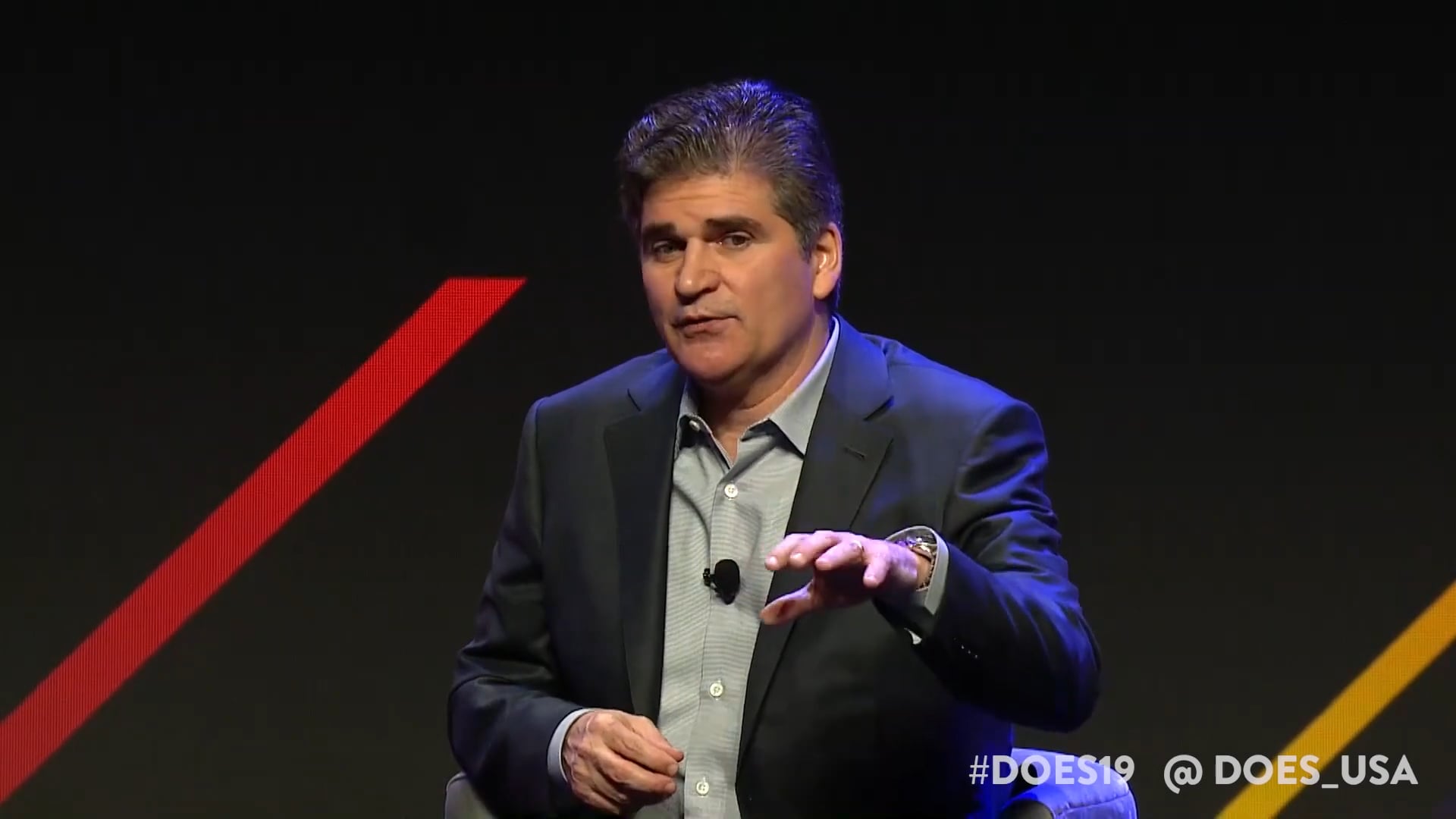
The turnaround did not depend on pretending conflict had disappeared. O'Malley could be bracing about resistance. Change, he said, was necessary to compete in the age of software. But his more useful insight was that facts could convert a conscientious objector. Show that a new way produced better work, invite the skeptic into the learning, and let results close the argument. This was persuasion by shipment.
He reduced the corporate scorecard to three linked measures. Customer satisfaction came first because it answered whether the work mattered. Employee engagement followed because disengaged people could not keep improving that work. Financial performance came third, less as an independent miracle than as the result of getting the first two right. It was a tidy formulation for a leader fond of colorful language. More important, it prevented the transformation from becoming a technology pageant. A faster pipeline that customers did not value was merely faster waste. A clever tool that employees could not use was an expensive ornament. Speed counted only when it traveled all the way to someone with a reason to care.
From the machine room to the security operations center
In March 2020, BMC announced that it would acquire Compuware. O'Malley had led the company for roughly six years. The old vendor had become a prominent advocate for bringing Agile and DevOps to mainframe development, and its regular releases were no longer an improbable stunt. They were simply how the company worked.
Recognition arrived along the way, though it reads more like a map of his constituencies than a trophy shelf. Crain's Detroit Business put him among the local names to know in technology. Sigma Chi named him a Significant Sig in 2017. DevOps.com recognized him as a DevOps evangelist in 2019, and The IT Services Report included him among government IT executives in 2020. The range is telling: Detroit business, fraternity service, software delivery and public-sector technology. O'Malley had made a specialized subject legible in several different rooms.
He joined LogRhythm's board in 2021 and became its president and CEO in early 2022. Cybersecurity offered different acronyms but a familiar organizational problem: security teams faced too much data, too many alerts and impatient customers. O'Malley revived the quarterly clock under a phrase that could double as an operating manual: “Promises Made. Promises Kept.” LogRhythm delivered successive updates to its SIEM, network detection and user-behavior products, and introduced Axon, a cloud-native security operations platform.
The language was characteristically abundant. Customers were not merely dissatisfied; they were “beautifully, wonderfully dissatisfied.” Innovation promises had to “matter.” An editor might remove an adjective. An operator could see the trick: attach emotion to a schedule, then attach the schedule to working software. O'Malley's rhetoric was loudest where he wanted the organization to remember.
A mature company does not become young by talking faster. It becomes responsive by shortening the distance between promise and proof.
In July 2024, LogRhythm and Exabeam completed their merger. The combined business took the Exabeam name, and O'Malley became its CEO. The match brought LogRhythm's data integrity and installed base together with Exabeam's behavioral analytics and AI-driven security operations technology. It also handed him the difficult work that follows every triumphant merger announcement: combining teams, products and expectations while customers continue needing protection on Monday morning.
His final public chapter shifted toward artificial intelligence. In April 2025, while elevating Steve Wilson to chief AI and product officer, O'Malley argued that AI could not be bolted onto a platform as decoration. The language belonged to the moment, but the managerial idea was vintage O'Malley. Technology earns its place through the work it improves. A label is not a delivery.
Retirement, with the metronome still audible
O'Malley retired in October 2025. Pete Harteveld, a colleague across several companies and then Exabeam's chief revenue officer, succeeded him. The transition closed more than three decades of executive leadership and a final sequence that had taken O'Malley from the LogRhythm board to its CEO's office, through a merger, and into the top job at the combined company.
The corporate record is only one rhythm in his life. Christopher and LeMarie O'Malley founded the O'Malley Foundation in 1998. It has supported college scholarships connected to his Minnesota hometown, youth performing arts, Catholic charities, church restoration and a national concerto competition with Midwest Young Artists Conservatory. Its stated mission is to promote beauty and truth through the arts and educational opportunity. Software executives do not often leave the stage discussing concertos, but timing has many respectable forms.
His management legacy is less secret formula than stubborn practice: listen to customers, make a promise specific enough to embarrass you if missed, give willing employees a story and a role, then return with proof. Repeat before the organization can congratulate itself for too long.
This is why the returning customer from his first day at Compuware matters. The transaction was evidence that a company associated with decline had become relevant to someone who had already decided to leave. O'Malley spent the next decade applying the same argument to software companies and technologies that other people found convenient to dismiss. Old machines, old firms, old habits: none of them move because a leader announces a transformation. They move when the next beat arrives on time.