He puts wind turbines on rooftops and asks a simple, awkward question: why should the grid be the main act?
There is a box on a rooftop in Liverpool that looks like an industrial air conditioner. It is not. It is a 36-kilowatt wind turbine, and it belongs to a Royal Navy building - the first in the United Kingdom to wear one. The box is the product Chris Griffin has been chasing, in one form or another, for the better part of two decades.
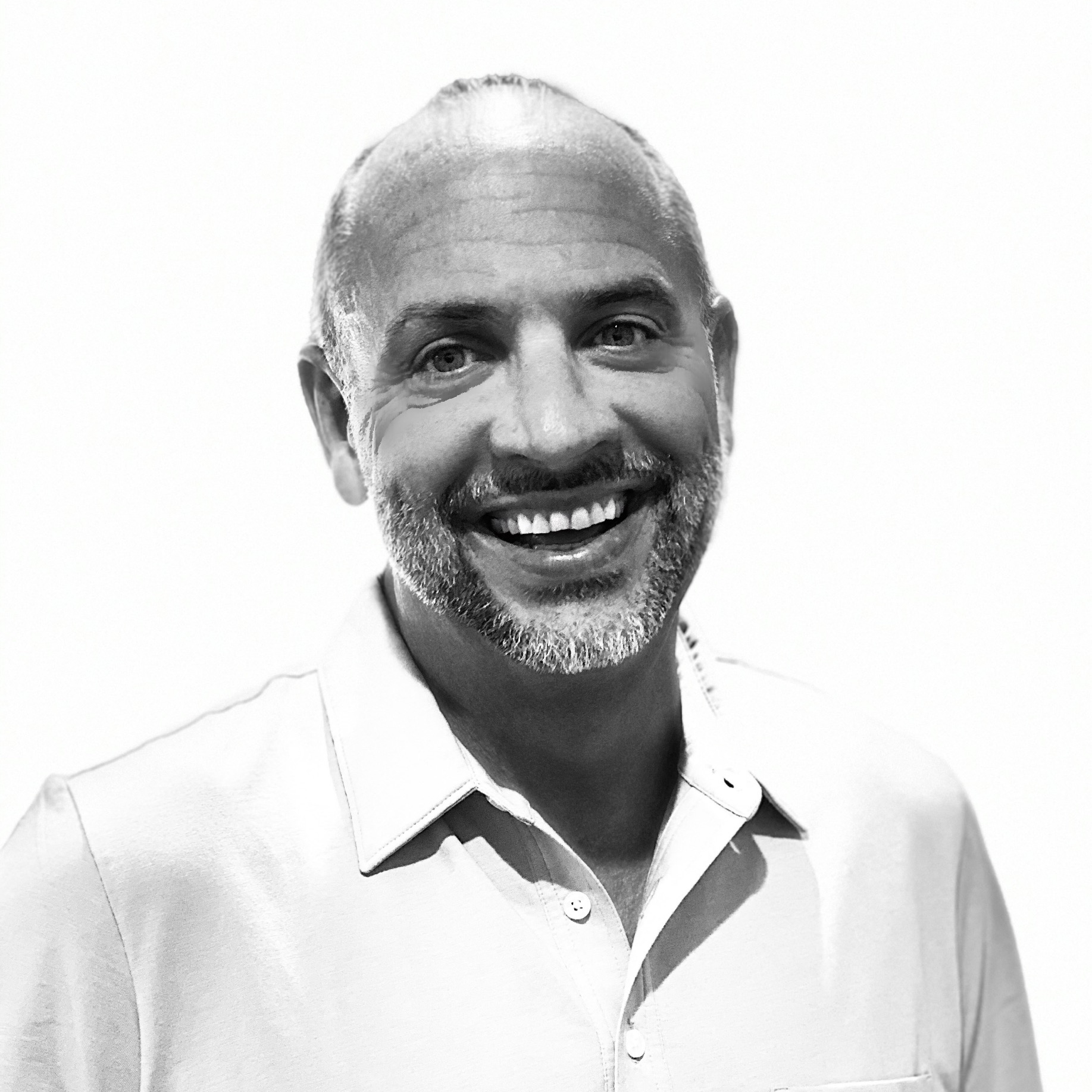
Griffin is the co-founder and CEO of Hover Energy, a Dallas company that builds what it calls the Wind-Powered Microgrid. The trick is not the turbine alone. It is the array: a row of vertical-axis machines set along the windward edge of a roof, using the building itself as a sail to accelerate the air, paired with solar and storage so a commercial property can make and keep its own electricity.
His pitch reverses the usual order of things. Most clean-energy companies sell you a way to feed the grid. Griffin wants the microgrid to be the primary source and the grid to be the backup - the spare tire, not the engine.
We've always believed the future of energy lies in decentralized, resilient systems that work locally and connect globally.- Chris Griffin, on Hover Energy's expansion abroad
Most energy products are sold on a spec sheet. Griffin's got tested by a hurricane. When Ian came through in the autumn of 2022, one of Hover's rooftop systems took gusts clocked at 105 miles per hour and kept its footing. For a company selling resilience, that single fact does more work than any brochure.
Resilience is the whole argument. A microgrid that islands itself - that can disconnect from the larger grid and run on its own - is worth most precisely when the larger grid fails. Texans who remember the lights going out in a winter storm understand the value without a slide deck. Griffin built a company around the moment the power is supposed to die and does not.
The turbines are deliberately undramatic. Vertical-axis, low-noise, boxy. They are designed to disappear into a skyline rather than dominate it - closer to rooftop HVAC than to the giant white pinwheels you pass on the highway. That is on purpose. Building owners want power, not a landmark.
Wind hits the windward edge of the roof and speeds up.
An array of 36kW turbines captures the accelerated flow.
Solar panels add daytime generation to the mix.
Storage + controls island the building so it runs on its own.
How the Wind-Powered Microgrid turns a roof into a power plant.
He studied aerospace engineering at the University of Virginia, then earned an MBA from its Darden School. Wings first, balance sheets second.
Before clean energy he ran money: VP of investment banking at Morgan Stanley, head of derivatives at Chapdelaine, municipal securities at Smith Barney.
He kept circling back to power - a cellulosic ethanol venture in 2007, a waste-to-energy company in 2010, then Regenedyne, the IP that became Hover.
He is also a licensed pastor at Gateway Church, ordained in 2014. The man who models grid resilience also keeps a Sunday calendar.
The interesting thing about Griffin is the order of his resume. An aerospace degree gives you the instinct to ask how air moves across a blade. A finance career gives you the instinct to ask who pays for it and when. Clean energy has plenty of people with one or the other. Griffin spent years collecting both before pointing them at the same rooftop.
His finance years were spent on Wall Street tables - M&A and restructuring at Morgan Stanley, derivatives at Chapdelaine, municipal bonds at Smith Barney, a stint as director of finance at IBEAM Broadcasting. He held Series 7, 63 and 66 licenses for over twenty years. Then he started building energy companies instead of financing other people's.
Natural Citrus Products Corp. in 2007 chased an early U.S. cellulosic ethanol plant. Perfectly Green in 2010 took on waste-to-energy distributed power and earned him a speaking slot at the United Nations. In 2011 he stepped in to restructure Regenedyne; its intellectual property was acquired by Hover in 2015. The rooftop turbine had finally found its company.
Along the way he picked up a Stanford certificate in energy efficiency and innovative technologies in 2021 and a LEED accreditation in 2017 - the credentials of someone who keeps studying the thing he already sells.
MBA from UVA's Darden School of Business.
Finance career: Morgan Stanley, Smith Barney, IBEAM, Chapdelaine & Co.
Founds Natural Citrus Products Corp. for cellulosic ethanol.
Launches Perfectly Green; speaks at the United Nations.
Regenedyne IP acquired by Hover Energy.
Rooftop microgrid survives 105 mph Hurricane Ian gusts.
Full-scale production begins; UK Ministry of Defence innovation award.
Alliance with Alternus targets 50 MW; Series C closes.
Our unique wind-driven generating technology and proprietary control systems differentiate the reliability and cost of traditional solar-based offerings.- Chris Griffin
The Royal Navy building was a statement. Putting an American startup's rooftop turbine on a UK military site - and winning the British Ministry of Defence's Sanctuary Award for Innovation in 2023 - turned a regional clean-energy company into something with an export.
To run the international push, Hover brought in fresh UK leadership and leaned on local partnerships rather than parachuting in from Texas. In 2024 it struck a strategic alliance with South Carolina's Alternus Clean Energy, targeting an initial 50 megawatts of projects over 15-year contracts, and the two later moved to scale deployments for blue-chip clients.
Griffin's framing stays consistent across borders: local generation, global connection. Make power where it is used, and let the wires be a convenience rather than a dependency.
Figures drawn from public reporting and company statements.
A rooftop Hover system held through 105 mph Ian gusts - the kind of test you cannot stage.
His turbine became the first wind-powered microgrid on a UK Royal Navy building, in Liverpool.
Hover won the British Ministry of Defence's Sanctuary Award for Innovation in 2023.
A licensed pastor since 2014, he preaches resilience in more than one sense of the word.
A UVA Crew Team and DKE man - he learned to pull in sync long before pitching investors.
The turbines are designed to look like rooftop HVAC and run quietly - power without the spectacle.
Griffin's ambition is unusually blunt for an energy executive: flip the hierarchy. He wants on-site microgrids to be the default and the central grid to be the fallback - decentralized, resilient, and built where the power is actually used. In an interview he argued plainly that microgrids should be the primary source, with traditional grids serving as backup. The rooftop box in Liverpool is one data point. He is collecting more.