A publicist can spend an evening surrounded by cameras and still do his best work outside the frame. Chet Mehta knows the paradox well. The guests arrive dressed for notice. The backdrop repeats a sponsor's name. Photographers call for one more look. Somewhere just beyond the flash, somebody has measured the line, prepared the names, chosen the outlets and decided what the night should mean after the room empties.
Mehta has made a career in that somewhere. He is the founder and CEO of PR DEPT, the Los Angeles entertainment and lifestyle agency he opened in October 2012. The company works across premieres, products, festivals, streaming experiences, consumer brands and cultural organizations. Its visible output is coverage. Its actual craft is arranging the conditions from which coverage can happen.
This is less mystical than the word “buzz” suggests and more human than a reach graph admits. A reporter needs the right facts. A photo editor needs a clean image and accurate caption. A guest needs to move through a crowded arrival without getting stranded. A client needs the evening to serve a purpose beyond being well attended. Mehta's public advice returns to those practical needs with the regularity of a stage manager checking the doors.
The weekend between employee and founder
Mehta is a Southern California native and a first-generation Indian-American. He studied Communication and Media Studies at the University of Southern California from 1998 to 2002, an education rooted in the same city where he would build his firm. His first foothold in Hollywood publicity came as an assistant to Ronni Chasen, a veteran publicist whose client list crossed film, music and awards campaigns. In a relationship business, he began close enough to watch how relationships were tended.
From February 2007 through October 2011, Mehta worked at ID Public Relations. That five-year stretch included helping to create early attention for The Twilight Saga before the first film and working on Stand Up to Cancer. He then spent nearly a year as a director at Sunshine Sachs. The chronology is neat. The handoff was neater: he finished there on a Friday and opened PR DEPT on Third Street the following Monday.
There is no incubation montage in that story, no ceremonial pause between one identity and the next. There is a weekend. By the end of 2012 the new shop was already moving through TV Guide's Hot List party, an exhibition tied to The Dark Knight Rises, and fragrance launches associated with Jessica Simpson and Rihanna. Founding a company is often presented as a leap. Mehta's version looks more like keeping pace while changing lanes.
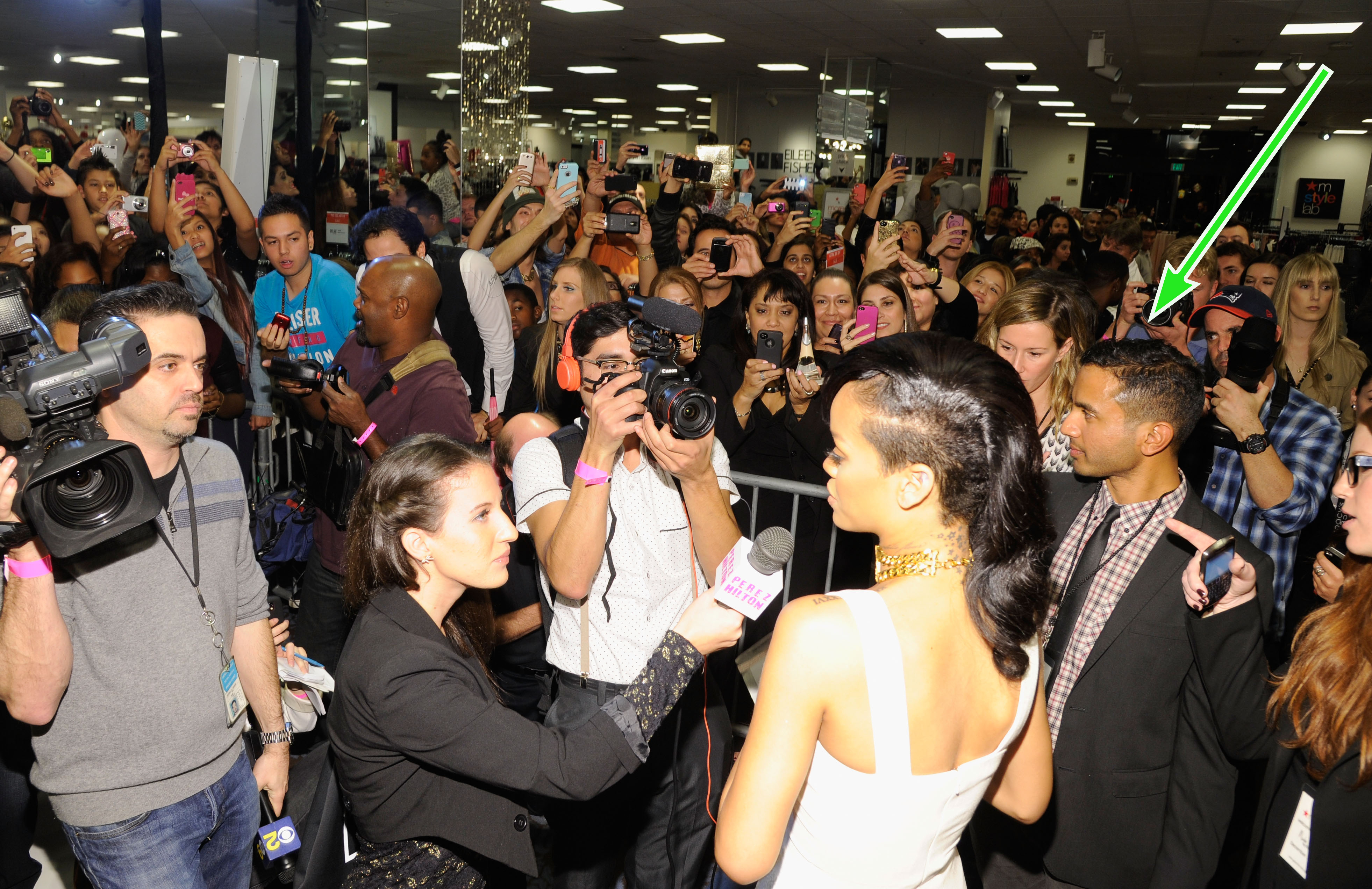
A glamorous picture has unglamorous plumbing
Mehta's most revealing comments are about logistics. Send the image link to photo editors early. Include captions, key names and the required facts. Seek outlets whose work travels through syndication. Arrange meaningful pre-event coverage when attendance or ticket sales matter. None of this sparkles. All of it helps the sparkle circulate.
“A red carpet should reflect the PR strategy.”Chet Mehta on designing an arrivals line
That sentence quietly restores purpose to a piece of event furniture. If the goal is a calm, controlled carpet, Mehta has advised inviting a focused set of photo agencies with wide reach. He recommends advance walk-throughs, realistic capacity and a publicist at the top who can control traffic. Even writing down arriving guests' names, rather than shouting them, matters. Accuracy is hospitality for the press.
The lesson scales. A live experience is a chain of handoffs: organizer to guest, guest to camera, camera to editor, editor to audience. Weakness at any handoff shortens the distance the story can travel. The publicist's job is to remove friction without sanding away what made the event worth seeing. It is stagecraft for distribution.
How one night acquires a second life
The same cemetery, a new reason to look
Cinespia offers a particularly Los Angeles test of that method. Its outdoor screenings at Hollywood Forever Cemetery are already visual: lawn, mausoleums, palms, picnic blankets, a huge screen under the night sky. The setting almost pitches itself. Almost is where the work begins.
In 2025, Mehta described PR DEPT's relationship with Cinespia as entering its twelfth season. He was celebrating a new national feature and wrote that landing major coverage after so many years of telling the brand's story “never gets old.” The short remark contains a difficult professional fact. A familiar client is easier to understand and harder to make newly legible. The publicist must know the history without being trapped by it.
In May 2026, Cinespia marked its 25th season with a substantial Los Angeles profile looking back across 650 movies. Mehta shared it and thanked both the writer and his colleague Lailani De Leon. The thanks matter. His public posts regularly name the teammates, client executives and reporters around a result. Publicity is sometimes caricatured as proximity to famous people. His feed reads more like a rolling set of credits.
That instinct also reveals how Mehta appears to understand influence. It is not a substance one person stores in a vault. It moves through networks. A colleague finds the angle. A client supplies access. A photographer makes the picture. A journalist gives the idea a form an audience can enter. Credit is therefore more than courtesy; it is an accurate map of how the result came to exist.
The map has widened with the firm. PR DEPT's public portfolio crosses fashion, film organizations, streaming services, travel, podcasts, music festivals and Los Angeles nonprofits. Mehta's role has stretched from working a carpet to directing an agency, but the operating question remains recognizable: what does each person need from the next? The answer may be a quote, a photograph, a guest, a quiet introduction or simply enough time to prepare. Publicity earns its theatrical reputation at the front door. Its durability is built in the exchange behind it.
When the venue is already iconic, novelty cannot come from pretending it was just discovered. It comes from a fresh anniversary, a new image, a cultural connection or a clearer view of the people who keep it alive.
From a fictional crime scene to a mountain in Las Vegas
PR DEPT's more recent work shows the range of rooms Mehta now helps stories escape. The agency supported publicity for Hulu's immersive Only Murders in the Building experience in New York, where fans entered a fictional crime scene. It worked on Expedia Group's Unpack '24 travel-trends launch. In Las Vegas, Mehta and the team contributed to publicity around Paramount Mountain, a 75-foot activation erected for Super Bowl LVIII.
These projects are built to be photographed, but a photograph is not self-explanatory. A mountain on the Strip needs a connection to Paramount's worlds. A themed pop-up needs a route from fan delight to a reporter's angle. An industry festival needs a conversation that deserves to continue after the panel ends. At the 2024 SCAD Savannah Film Festival, Mehta moderated a discussion on representation with leaders from GLAAD, Amazon MGM Studios and IndieVISIBLE. The publicist who normally prepares other people to speak was briefly the person moving the conversation along.
Across these assignments, spectacle changes while the architecture remains. Define the audience. Decide what image carries the idea. Give collaborators clear roles. Supply enough context for the next person in the chain. Think about tomorrow while everyone else is still looking at tonight.
The party is temporary. The relationship with the person covering it is not.
The long game wears a wristband
PR DEPT describes its work in terms of customized campaigns, transparency with clients, cultural timing and long-term planning. Those phrases could sit on any agency page. Mehta's career gives them specificity. The firm has remained active since 2012. The Cinespia relationship spans seasons, not posts. His own commentary celebrates repeat coverage, colleague contributions and old relationships producing a fresh opening.
This patience does not oppose speed. Publicity is full of deadlines measured in hours. Mehta's founding story itself is a study in velocity. The more useful distinction is between moving quickly and thinking briefly. He can do the first without surrendering to the second.
That may be the most transferable idea in his work. Attention is rented, but trust can accumulate. A usable caption helps one story today and makes tomorrow's email more welcome. A controlled press line serves the current event and protects a reputation. A thoughtful thank-you records who did the work. The small courtesies become infrastructure.
At the end of the night, the backdrop comes down. The guest list becomes recycling. The camera cards leave in different pockets. Mehta's job is to make sure the meaning leaves too - intact, legible and ready for a much larger room.