Breaking
FORMERLY THRIVE+ | NOW CHEERS
35M+ DOSES SOLD •
1M+ CUSTOMERS SINCE 2014
U.S. PATENT US 10,736,870 B2
#1 ALCOHOL-RELATED WELLNESS BRAND ON AMAZON
SHARK TANK SAID NO — THEN CAME $4.1M
1,200MG DHM PER DOSE
FORMERLY THRIVE+ | NOW CHEERS
35M+ DOSES SOLD •
1M+ CUSTOMERS SINCE 2014
U.S. PATENT US 10,736,870 B2
#1 ALCOHOL-RELATED WELLNESS BRAND ON AMAZON
SHARK TANK SAID NO — THEN CAME $4.1M
1,200MG DHM PER DOSE
The Scene
It's 11 p.m. somewhere, and someone is reaching for a Cheers.
There is a small ritual happening tonight in roughly twenty thousand stores and a million-plus homes. A person who plans to have a few drinks reaches for a black-and-yellow packet first. They are not trying to drink more. They are trying to wake up tomorrow without negotiating with their own head. That packet is Cheers, and the company behind it has spent more than a decade arguing a single, slightly inconvenient idea: that drinking and taking care of your health do not have to live on opposite sides of the room.
Cheers is an alcohol-related health and wellness company based in Houston. It sells supplements - Restore, Relief, Hydrate, Protect, Multi - built around dihydromyricetin, a botanical extract its founder found in a research journal before he was old enough to legally test it on himself. The pitch is unglamorous and oddly specific: support your liver, replace what alcohol strips out, feel like a functioning adult in the morning. The category it competes in is full of gummies and vibes. Cheers brought a patent.
"Cheers tackles two of the most evidence-supported mechanisms for why you feel bad after drinking."
Dr. Michael Do, MD, MBA
The Problem They Saw
An entire industry sold the night out. Nobody owned the morning after.
Alcohol is one of the most consumed products on earth and one of the least examined. People will read every ingredient on a protein bar, then drink something that reliably wrecks their sleep, dehydrates them, and taxes their liver - and treat the consequences as a personality flaw rather than a chemistry problem. The "cure" market was a graveyard of greasy breakfasts, gas-station pills, and folklore.
The real gap was not a better hangover remedy. It was the absence of anyone treating alcohol's downsides as a health question worth taking seriously, with studies and dosages instead of slogans. That gap is the tension Cheers has threaded through everything since: can you build a credible health brand inside a category that mostly sells fun and looks away from the receipt?
"Drinking and health were never supposed to share a sentence. Cheers spent a decade putting them in the same paragraph."
The wager, in one line
The Product
Five products, one stubborn premise.
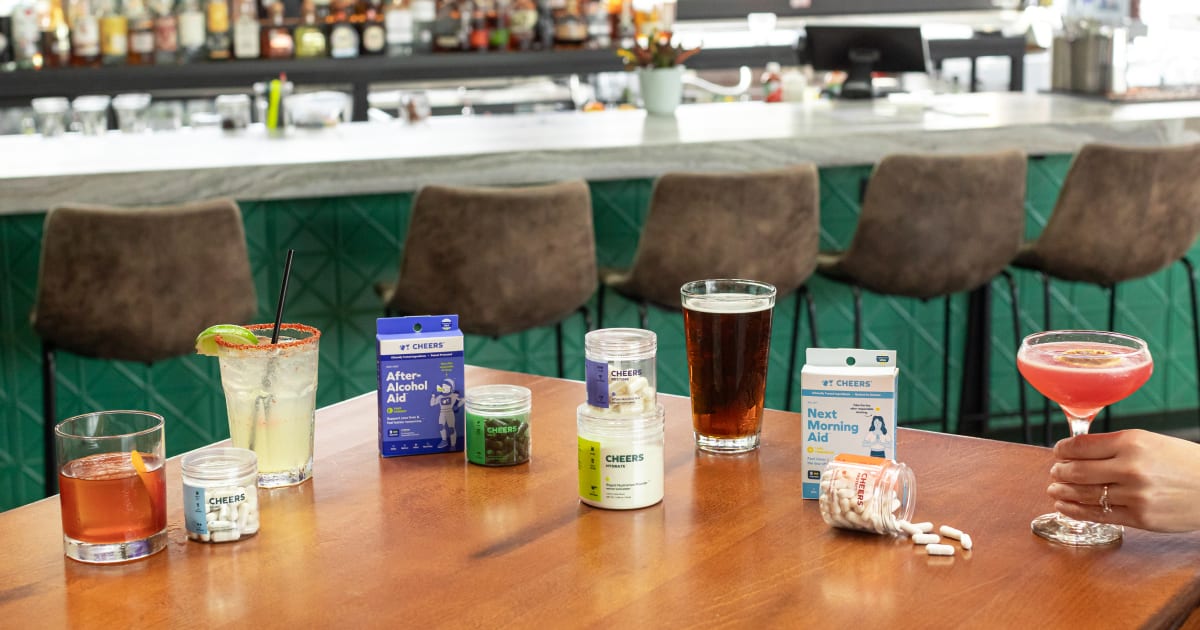
The line is organized around when you need it, not what's trendy. Restore is the flagship - 1,200mg of DHM per dose, plus L-cysteine, prickly pear, B-vitamins and ginger - taken while or after drinking. Everything else fills in the timeline of a night out and the day that follows.
Flagship
Restore
After-alcohol aid with 1,200mg DHM, L-cysteine, prickly pear, B-vitamins and ginger.
The Day After
Relief
Next-morning aid for the part of the evening you'd rather not remember.
Hydration
Hydrate
Oral rehydration solution with electrolytes for alcohol-induced dehydration.
Daily
Protect
Daily liver support supplement for the long game, not just the long night.
Foundations
Multi
A multivitamin formulated for people who, realistically, are going to drink.
CAPTION: Yes, one of them is literally a multivitamin "for drinkers." That is either the most honest product positioning in wellness or the most. We can't decide.
The Proof
The numbers that make skeptics pause.
A good story is not evidence. Cheers knows the audience for an "alcohol health" brand arrives pre-skeptical, so it leans on the boring, verifiable stuff: a granted U.S. patent, third-party testing, FDA-registered manufacturing, and a sales record that's hard to fake.
From dorm-room idea to eight figures
// Reported / projected annual revenue, USD. Approximate.
Figures are drawn from public reporting and company statements and are approximate. The 2021 valuation was reported near $49M. Revenue is rounded.
Distribution tells the same story from another angle. What began as a direct-to-consumer site and an Amazon listing now sits on shelves in major retail and convenience channels - helped by an exclusive partnership with Lil' Drug Store Products. Membership in the Consumer Healthcare Products Association put Cheers in the room with mainstream healthcare brands, which is a strange place for a "hangover company" to end up, and exactly where it wanted to be.
"Mark Cuban passed on the deal. Then he taught them how to sell. The check would have been worth less."
On the Shark Tank afterlife
The Mission
Responsible drinking, treated as a product category.
Cheers frames its mission as empowering people to enjoy alcohol responsibly while protecting their health - through products that are studied and through education most brands in this space avoid. The company is not anti-alcohol. It is anti-pretending. The premise is that adults will keep making the choice to drink, and that they deserve tools designed by people who took the chemistry seriously instead of selling them a charcoal pill and a wink.
It's a narrow lane on purpose. Powell has talked about building "the leading alcohol-related health company" rather than chasing the broader supplement market. Narrow, in this case, is the moat: a patent, a decade of data, and a brand people actually trust at the exact moment they're least inclined to read labels.
Why It Matters Tomorrow
Back to that 11 p.m. ritual.
Return to the person reaching for the black-and-yellow packet before their first drink. A decade ago that gesture didn't exist. There was no credible product to reach for, and no permission to admit you cared. Cheers built both. The packet is small. The shift it represents is not: a generation that wants to keep its social life and its bloodwork, and now has a thing it can put on the counter that says so.
Whether the category stays Cheers's to lead is an open question - the alternatives are circling, from Flyby to More Labs to ZBiotics. But the company already did the hard part. It made "alcohol" and "health" sit in the same sentence without flinching. Tomorrow morning, a million people will quietly find out whether it worked. That's the only review that matters, and it's the one Cheers built the whole company to earn.
CAPTION: The product you hope you won't need and take anyway. Insurance, basically, for people who like to say yes.