Profiles in Founders
Brooks Powell
He read about a plant extract for a homework assignment. Then he spent the next decade convincing the world it mattered.
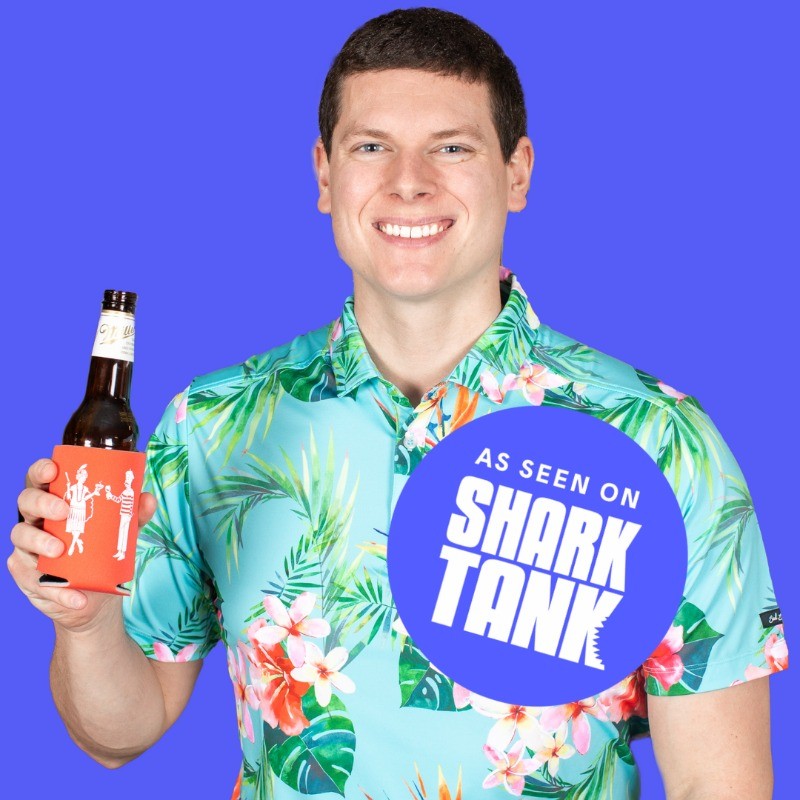
Brooks Powell. The homework that didn't stay homework.
He read about a plant extract for a homework assignment. Then he spent the next decade convincing the world it mattered.
Brooks Powell runs Cheers, a Houston consumer-health company built on a single ingredient most people can't pronounce: dihydromyricetin, or DHM. He did not inherit it, buy it, or stumble into it at a trade show. He found it in a stack of research papers while writing about alcohol for a Princeton neuroscience class.
That detail is the whole story in miniature. Most founders chase a market and reverse-engineer a product. Powell did the opposite. He fell for an idea first, then went looking for a way to ship it. Years later he would say it plainly: "The business is merely the vehicle for the idea." For him that is not a slogan. It is the operating manual.
The idea was deceptively simple. Academic work, including research out of UCLA, suggested DHM could blunt some of alcohol's rougher edges. Powell read it and saw two things at once. One was a product. The other was a behavior - the chance to nudge people toward drinking more thoughtfully. He chased both, and he has been chasing them ever since.
Today Cheers is an 8-figure brand that has shipped more than 13 million doses. But the part worth lingering on is how unglamorous the beginning was. The first orders went out from his parents' living room in Houston, packed and labeled by hand. There was no warehouse, no ops team, no playbook. There was a college kid, a thesis-grade obsession, and a grandfather willing to write a $20,000 check.
"Only find something worth doing. And anything worth doing is worth overdoing."
"You can't ever let the cart get ahead of the horse."
In 2018, Powell walked into the Shark Tank with a product then called Thrive+ and an ask: $400,000 for 10 percent of the company. He walked out with nothing. Every investor passed. Mark Cuban, who would later become a recurring character in the brand's lore, declined to write a check but handed over something arguably more useful - a blunt lesson in how to actually sell the thing.
Most founders treat a no from television as a verdict. Powell treated it as a note. He rebranded Thrive+ into Cheers, sharpened the story, and in 2019 closed a $2.1 million seed round. The capital the Sharks refused to provide turned out to be the capital he didn't need. By then the company was already profitable and growing.
What separates Powell from the wave of supplement entrepreneurs who came and went is the patent. While still at Princeton, he did something most undergrads never think to do: he partnered with his own professors through sponsored research agreements to develop a permeabilizer technology that improves how the body absorbs DHM. Then he negotiated an exclusive license on it from the university. He turned a class he was taking into intellectual property he owned.
He was also, briefly, the bottleneck in his own supply chain. There was almost no DHM in the United States at the time, so Cheers became the first to import the ingredient at scale. The category Powell wanted to compete in didn't have shelves yet. He had to build them.
Powell is not built for the 5 a.m. founder-hustle photo op. He wakes after eight, describes himself as "basically a zombie" for the first hour, and does his sharpest work in the evening when the inbox goes quiet. He blocks 9 to 11 each morning as "white-space" time - no meetings, no Slack, just strategy and product. The man who scaled an 8-figure brand guards two hours a day for the unglamorous act of thinking.
His leadership philosophy runs against the grain too. He hires for trajectory, not resume - betting on where a person is heading rather than where they've been. He is suspicious of credentials and of what he calls the "institutional imperative," the reflex to defer to experts simply because they are experts. On his own authority he is disarmingly modest: as CEO, he figures, you only need to be about 90 percent as smart as most of the people in the room. The other job is building a team that covers the gaps you can't.
There's a streak of contrarian taste running through it all. Powell likes to point out that the best companies aren't always the sexy ones - sometimes the winning move is automating a problem nobody wants to talk about. He'll cheerfully cite an automatic litter box as one of the best hundred dollars he ever spent, not as a joke but as a thesis: solve a real, boring problem completely and people will pay you forever.
His reading list tells you where his head is. He recommends "The Outsiders" by William Thorndike, a study of CEOs who ignored conventional wisdom and won by doing the opposite of their peers. He quotes Warren Buffett on ignoring yearly noise in favor of four- and five-year averages. Powell is playing a long game in a category built on short nights, and he knows it.
Powell on building Cheers, the DHM bet, and what the Sharks got wrong.
▶ BrandBusters Ep. 17 - Brooks Powell on YouTube