A house closes twice. First comes the visible closing: pens, signatures, a wire transfer, keys passed across a table or a digital prompt marked complete. Then there is the other closing, the one that has been happening for days or weeks in offices the buyer may never see. Names are matched. Ownership is traced. Old liens are examined. Exceptions are cured. Funds are controlled. Documents are recorded in the right county, in the right order, under the right rules.
Charles Chacko built his career in that second room. An attorney trained at East Tennessee State University and New York Law School, he worked in real-estate law before co-founding OS National in 2013. The company took a category famous for paper, caution and county-by-county variation and treated it as an operating challenge: keep the legal judgment, organize the handoffs, add technology where repetition allows it, and make the customer feel less lost.
It is a founder story with almost none of the usual scenery. There is no garage mythology. The decisive objects are title searches, deeds, mortgages, escrow instructions and insurance policies. Yet the underlying question is familiar: where does an industry force customers to carry complexity that a better system could absorb?
01 / The hidden roomOwning the moment before ownership
Title work has a peculiar relationship with attention. When it goes well, it nearly disappears. A buyer is not hoping for an engrossing afternoon of curative research. A lender does not want a suspenseful debate over an unreleased lien. The desired experience is boring in the most flattering sense: accurate, secure and on time.
That makes title easy to underestimate. It also makes it fertile ground for an operator. The work contains repeatable stages, but the files are not interchangeable. Each property brings a history. Each state supplies its own rules. Each underwriter has standards. The trick is to standardize the journey without pretending the exceptions have vanished.
Chacko's legal practice gave him a close view of those exceptions. His work covered national banking institutions, servicers and investors across residential and commercial assets. He focused on sales, acquisitions, development, construction, title insurance, settlement and escrow. In other words, he learned the machinery from inside the machine.
His education helps explain the combination. Chacko earned a B.S. from East Tennessee State University and a J.D. from New York Law School. The sequence matters less as credential collecting than as a way of seeing: examine the system, understand the rule, then decide what the facts permit. Real-estate law rewards that habit because a closing is both technical and personal. The document must be correct; the people still need to know what it means.
That dual demand shaped the business opportunity. A national lender wants consistency across thousands of files. A family buying one home wants attention to this file. Serving both requires an operation that can be large without becoming vague. The system must remember the transaction number and the human reason behind it.
02 / The proving groundThree thousand homes, five states, one closing system
The assignment that made Chacko an industry name arrived early. In late 2013, OS National supported the title work for Invitation Homes 2013-SFR1, a $479 million securitization made up of more than 3,000 single-family properties in five states. The deal helped create a new class of bonds backed by rental homes.
The headline number is large. The real difficulty hides in multiplication. More properties mean more searches, more possible defects, more deeds, more mortgages, more recordings and more chances for a small discrepancy to become an expensive delay. Chacko's team coordinated that procession and issued the title policies at the end of it.
HousingWire named Chacko to its Rising Stars list in 2015. He was 36, and OS National had already served as lead title agent on single-family rental transactions totaling more than $10 billion. His response was brief and category-specific: he said he was honored, called it an exciting time in the single-family rental market, and placed OS National at the front of the industry.
There is a revealing restraint in that answer. The accomplishment was not framed as personal theater. It was a market opening and a company's position inside it. That is how operators often talk: less about the spotlight, more about whether the machinery is ready for the next load.
03 / The climbTwenty-two people become a national operation
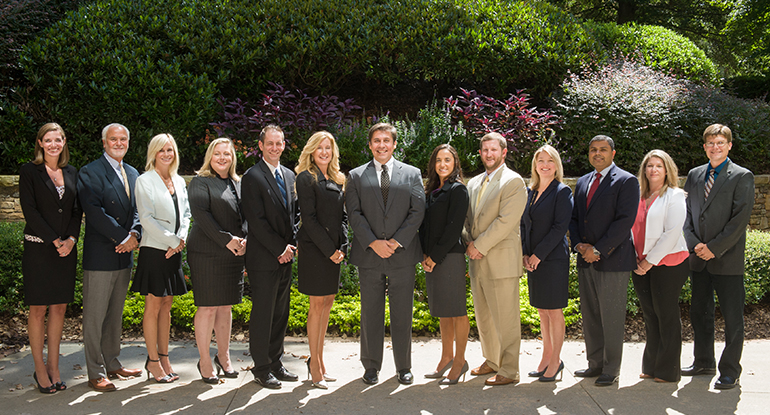
OS National began with 22 employees. By its fifth anniversary in March 2018, the company had more than 250 people across four states, with offices spanning Atlanta, Texas, Phoenix and Las Vegas. Chacko used the anniversary to thank the original crew and the larger team that followed. He described a future of continued service, “high-touch, boutique services” delivered on a widening map.
The phrase sounds almost contradictory at national scale. Boutique suggests familiarity; national suggests process. OS National's operating wager was that the two could coexist. Central coordination could reduce confusion. Local expertise could handle the peculiarities that refuse to fit a universal checklist. Technology could carry status and routine work while attorneys, underwriters, escrow officers and closers took the consequential decisions.
The customer-first language was not decorative. In title, uncertainty is part of the product whether a company acknowledges it or not. The buyer wonders where the wire went. The seller wonders whether a document recorded. The agent wonders whether Friday's closing will remain Friday's closing. A useful platform does more than collect fields. It makes responsibility visible, creates a single point of contact and turns silence into a next step.
By the following year, the workforce had passed 500. One of OS National's customers had been watching closely. Opendoor had worked with the company since 2016 as it tried to make buying and selling a home feel more like a coherent digital transaction. The farther Opendoor moved into mortgages and home purchases, the harder it became to treat closing as somebody else's backstage problem.
04 / The acquisitionThe paperwork becomes strategic
On September 4, 2019, Opendoor acquired all of OS National. The consideration totaled $41 million: $34.3 million in cash and $6.7 million in common stock. The stated logic was vertical integration. Putting settlement, escrow and title alongside Opendoor's existing products could create a more continuous buying experience and reduce transaction costs.
How the $41 million deal was composed
Chacko emphasized shared values: customers first, appreciation for employees and an appetite for doing the work well. He also sounded like a founder who understood that acquisition was not a finish line. The industry was changing, he said, and the combined organizations could help drive that change.
OS National did not dissolve into a logo. It remained the title and escrow arm inside a public real-estate company, keeping the regulated infrastructure required to conduct business across state lines. By the end of 2025, OS National and its subsidiaries were licensed as title agents in 28 states, as escrow agents in six, and authorized for title-insurance business in five more states where entity or individual licensing was not required.
05 / The second actKeep the judgment, automate the waiting
Chacko's work has widened beyond OS National. He joined the board of Title Resources Group in 2023, linking an agency operator to an underwriter's view of risk and policy. He also serves as vice chairman of the Fellowship Christian School board of trustees, where he has served since 2020.
Those board roles place him on opposite sides of a useful spectrum. Title Resources Group sits inside the commercial architecture of insurance and underwriting. A school board deals with budgets, oversight and a community close enough to recognize every decision. Both ask for governance rather than performance: attention to risk, patience with process and a willingness to be accountable after the meeting ends.
His more recent public language returns to the same operating division he has worked on for years. OS National is automating routine and high-volume tasks so its people can spend their attention on customers at consequential financial moments. It is a sensible frontier for applied technology: not replacing judgment, but clearing the desk around it.
The useful lesson from Chacko's career is not that every old industry needs an app. It is that software becomes valuable when it respects the real shape of the work. Title is a sequence, a set of controls and a collection of exceptions. A digital button at the end is pleasant. A system that knows who must act next is transformative.
Homeownership still arrives with ceremony. Someone takes a photograph with the keys. Someone steps through a new door. Chacko chose the less visible threshold: the moment law, money, records and trust agree that the door belongs to them. There are flashier places to build. Few are more literal about making movement possible.