Picture two daughter cells, born from the same parent and treated with the same cancer drug. One dies. The other lives. A laboratory that measures their RNA at the end gets two results; it may never see the fork in the road. Cellanome's researchers watched it happen in A549 lung cancer cells treated with an EGFR inhibitor. In the company's account of the experiment, the surviving sibling acquired a protective expression state. The little drama matters because the story is in the sequence of events, not merely the final inventory of molecules.
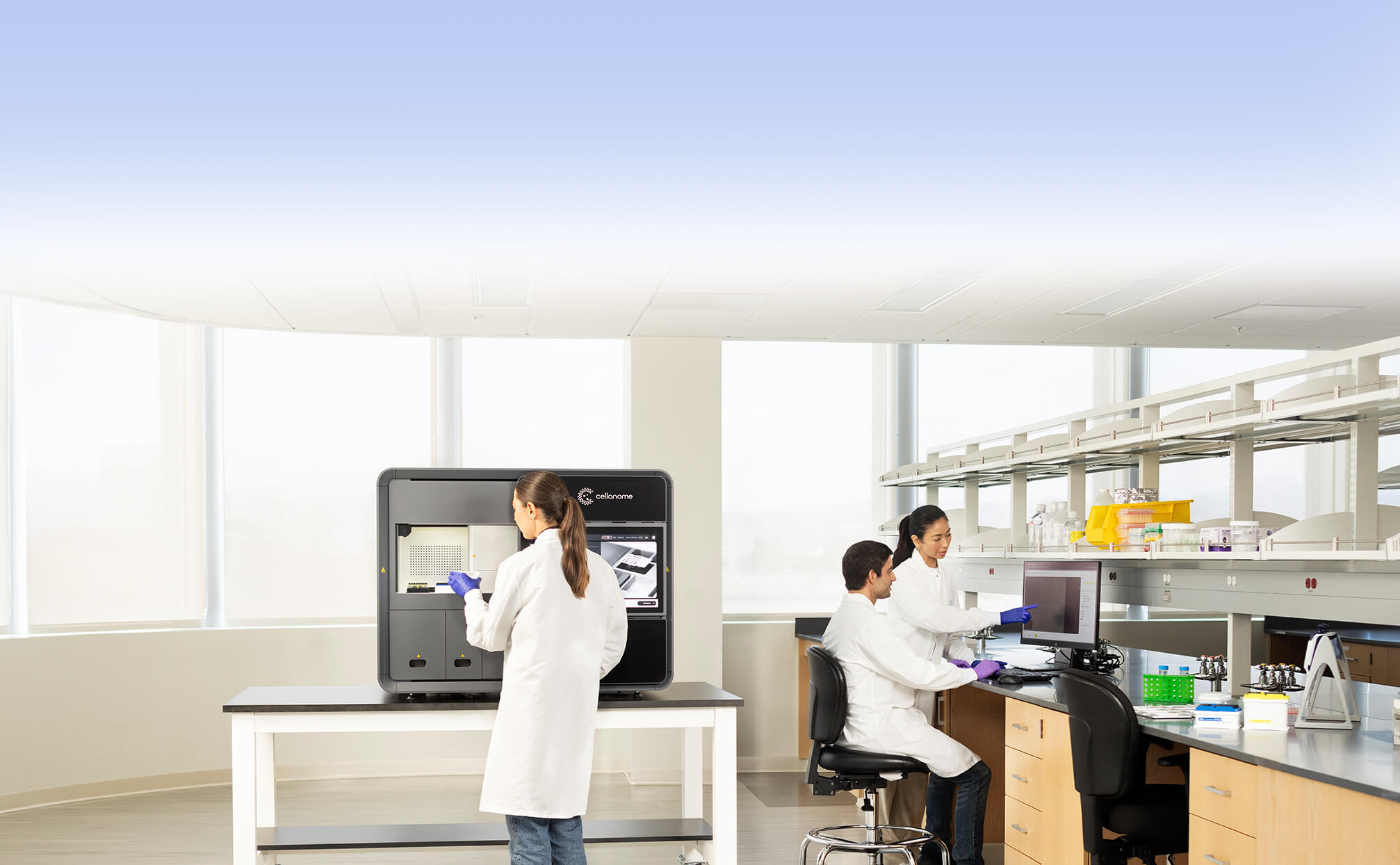
Cellanome, founded in 2020 by Mostafa Ronaghi, sells a way to keep that sequence intact. Its R3200 platform cultures cells, supplies reagents, takes brightfield and fluorescence images, and captures RNA. A scientist can follow a particular living cell or a defined group, apply a perturbation, and later connect what happened on camera with molecular data from those same cells. This is a research tool for labs, drug developers and service providers, rather than a diagnostic test for patients.
The short version
- The product: R3200 instrument, programmable flow cells, kitted assays and cloud analysis.
- The trick: CellCage enclosures hold living cells in place while media and reagents pass through.
- The buyer's question: Does seeing the same cell over time change which mechanism, drug target or cellular interaction a lab would investigate?
The cell atlas gets a clock
Single-cell sequencing has been excellent at sorting cells into molecular states. It has been less suited to answering what a given cell did before it was sequenced. Conventional live imaging can preserve that history, but it often lives in a separate experiment from the sequencing data. Match the two by statistics and you have an inference. Match them cell by cell and you have a record. Cellanome's commercial wager is that this difference is worth an entire instrument.
The enabling object is small. CellCage enclosures are permeable microenvironments formed by micro-3D printing around selected cells. They can contain a single cell or a chosen ensemble, including cells that need to remain attached. In the R3200, tens of thousands of enclosures can be addressed as media, drugs and stains flow past. Scientists can watch division, shape, movement and interaction across days, then recover RNA or a CRISPR guide readout. The continuity matters as much as the throughput: the experimental subject stays identifiable.
One cell, one continuous case file
The problem with a perfectly good portrait
Gary Schroth, Cellanome's chief scientific officer, has described an intellectual reversal. After years of RNA sequencing, he had come to treat the transcriptome as the phenotype. Then Cellanome experiments measured function and RNA in the same cells. In one adipogenesis study, RNA clusters did not cleanly separate cells with high and low lipid accumulation. A model trained on the measured lipid outcome chose 85 predictive genes; fewer than 10 percent overlapped with the leading cluster markers. The clusters were valid. They were answering a different question.
“And yet atlases are portraits, not films.”Gary Schroth, Cellanome chief scientific officer
That observation is the company's sharpest argument. If a research team wants to know which immune cell kills repeatedly, which tumor cell withstands a drug, or when a neuron changes shape, an endpoint assay can miss the decisive moment. It is also a lesson anyone running an experiment can copy without buying this machine: choose the outcome first, then choose the measurement. A tidy cluster plot can be a beautiful answer to the wrong question.
What a customer actually gets
The R3200 is a platform rather than a lone microscope. The instrument automates culture, reagent delivery, imaging and RNA capture. Flow cells hold the enclosures. Kitted assays cover RNA sequencing and CRISPR readouts, among other workflows. The cloud software plans runs and joins imaging and sequencing data for exploration. Cellanome also offers assay services, so a lab can commission a dataset rather than house the instrument. Its LinkedIn page describes both routes, along with collaborative development of new applications.
Psomagen provides a concrete route in. It added an R3200 to its single-cell service portfolio in March 2026. Later, it ran a grant program with Cellanome as a co-marketing partner, offering two selected US research teams an experiment valued by Psomagen at up to about $25,000 each. That figure is the promotional value of a defined service package, not a published instrument price. The package's terms still put sample shipping and excluded treatments on the researcher.
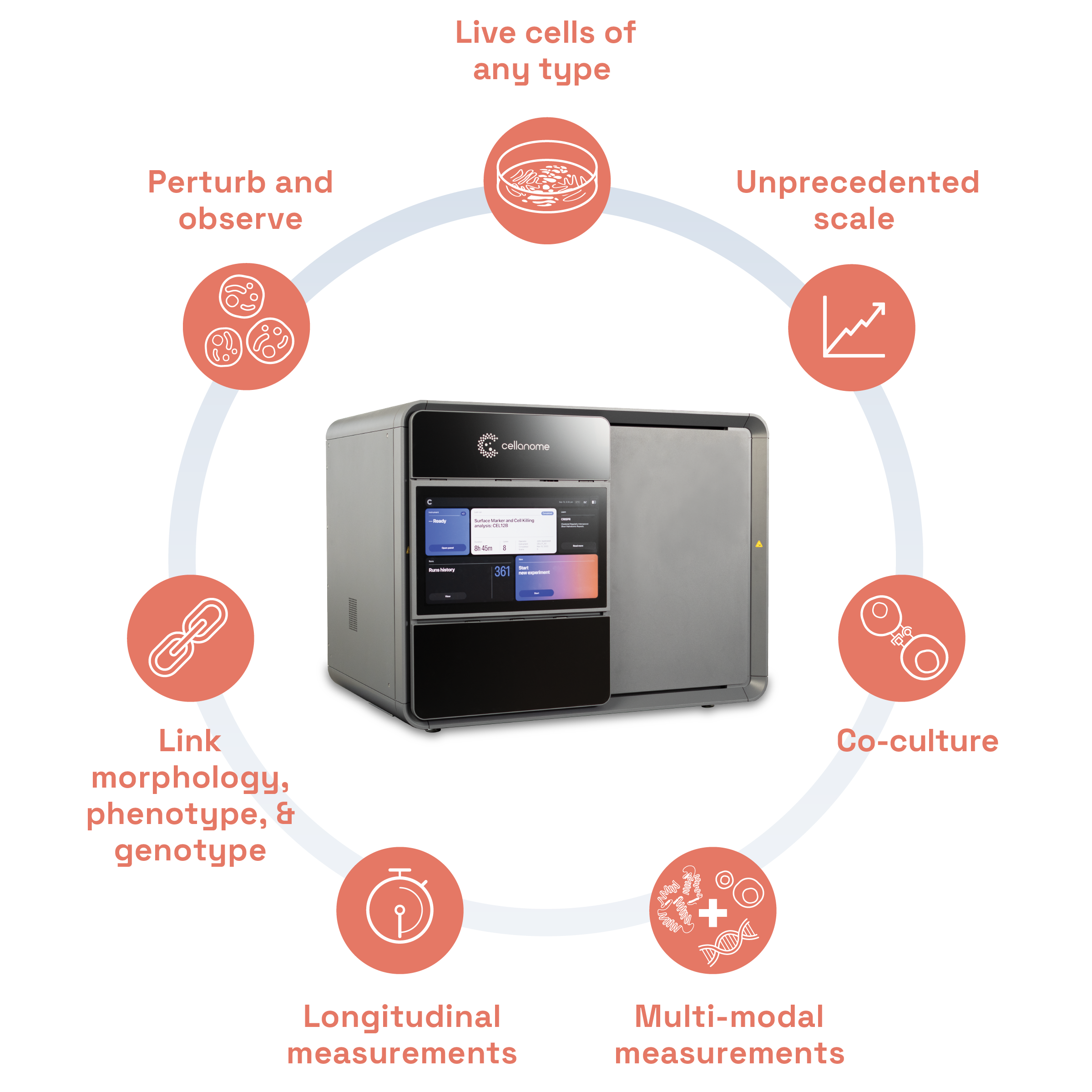
Its users sit where cell behavior is consequential: academic groups, biotech companies and pharmaceutical researchers studying oncology, immunology, neurobiology, aging and drug response. A researcher probing cell therapy potency can assemble defined effector and target cells; a cancer lab can vary when it gives a drug; a neurobiology group can keep adherent cells in a setting closer to their ordinary shape. These are experiments, not promises of better therapies. Cellanome's public material does not give a customer count or routine list price.
The average can be an accomplice
A 2026 preprint by Cellanome scientists and collaborators at Weill Cornell Medicine and Houston Methodist Research Institute makes the idea tangible. It isolated defined CAR-T and target-cell combinations and filmed thousands of interactions. The researchers could distinguish killing speed, repeat killing, movement and cooperative effects. A bulk co-culture assay can report that targets died. It cannot say which cell kept killing, or whether a pair worked better together. That is Cellanome's position beside conventional imaging, bulk assays and endpoint single-cell sequencing: it sells the missing link between action and molecular state.
The reported work is still early-stage research. The CAR-T report and the broad platform description are bioRxiv preprints, not final clinical evidence. A lab considering the system should ask whether its biological question truly depends on following the same cells, whether its cell type behaves well in an enclosure, and whether the added imaging and analysis alter a decision. If an endpoint measurement already answers the question, the extra machinery may add expense and complexity without much new insight.
A machine built around a change of mind
Ronaghi and the company's leadership came from the genomics world; DFJ Growth, which said it led the Series B round, points to Ronaghi, CEO Omead Ostadan and chairman Jay Flatley's Illumina experience. Cellanome says it moved from concept to first platform shipment in roughly four years with less than $80 million and began broad commercialization in the first quarter of 2026. A June securities filing reported $75.93 million sold in a later offering. The amount of capital underscores how hard this kind of integrated biology hardware is to build; it says little by itself about how broadly labs will adopt it.
The distinctive idea is pleasantly stubborn. A cell is not obliged to behave like the average of its neighbors, or to obey the story its last RNA readout suggests. Cellanome has built a way to let it demonstrate that in public. The next test is commercial and scientific at once: how often will watching the whole film make researchers change the ending of their own experiment?