Breaking
NOW: Economics editor at The Bulwark Co-anchors "The Weekend: Primetime" on MS NOW Launched the "Receipts" newsletter, Nov 2025 11 years a Washington Post columnist Six-time Gerald Loeb Award finalist Started out as a theater critic NOW: Economics editor at The Bulwark Co-anchors "The Weekend: Primetime" on MS NOW Launched the "Receipts" newsletter, Nov 2025 11 years a Washington Post columnist Six-time Gerald Loeb Award finalist Started out as a theater critic
Economics · Journalism · Broadcast

Catherine
Rampell

She argues with receipts. The chart goes up; the talking point goes down.

The Bulwark MS NOW ex-Washington Post ex-New York Times Princeton '07
Catherine Rampell

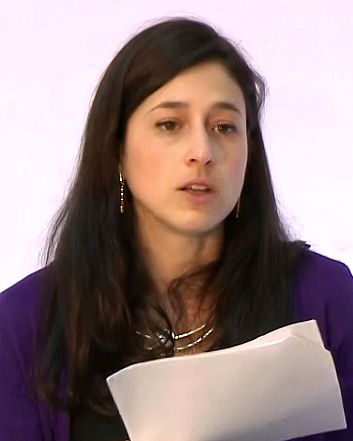
"Bring me the spreadsheet." Rampell, mid-argument.

The Dispatch

She named her newsletter "Receipts." It wasn't a metaphor.

Open most economics commentary and you get adjectives. Open Catherine Rampell's and you get a chart, a footnote, and a quietly devastating "here's what the data actually shows." In November 2025 she launched Receipts at The Bulwark, a weekly newsletter built on exactly that premise: politicians and pundits make claims about inflation, immigration, jobs and trade, and someone should keep the source documents handy. She does. The name is a promise about method.

That same year she became a prime-time anchor. She co-hosts The Weekend: Primetime on MS NOW, the network formerly known as MSNBC, where the work is to take a balance sheet and make it land on television without dumbing it down. It is a strange combination of jobs, the newsletter and the soundstage, and it is the most natural thing in the world for someone who has spent two decades insisting that the numbers are the story.

Most people who reach a national op-ed page never leave it. Rampell did the opposite. After 11 years and a syndicated column carried by papers across the country and abroad, she took a buyout in the summer of 2025 and rebuilt the operation around her own byline: a newsletter she controls, a broadcast slot where she sets the frame, and a public-radio segment for good measure. The institutions changed. The instinct did not. Wherever she lands, the first question is the same. What does the evidence say, and who is hoping you won't check?

By the Numbers
11
Years at the Washington Post
Gerald Loeb finalist
2007
Princeton, Phi Beta Kappa
150K+
Bluesky followers
The throughline from reviewing Broadway to anchoring an economics segment is the same instinct: watch closely, then tell people what is really happening on the stage. // On a career that looks like a detour and isn't
The Beat

An anthropology major who became America's data conscience.

Here is a detail that explains more than any title: Rampell did not study economics. She graduated from Princeton in 2007 with a degree in anthropology and a 150-page senior thesis called "Hawk the Vote: Marketing Voting to American Youth." Anthropology is the discipline of watching what people actually do versus what they say they do. Swap "people" for "the economy" and you have her entire beat.

She arrived at the trade by an even odder door. Before she was an economics reporter and editor at The New York Times, she was a theater critic there, plus a columnist for the Sunday Magazine. The pivot from the arts desk to the data desk was not a reinvention so much as a change of subject. The eye stayed the same.

While still at Princeton she worked as a research assistant to Alan Krueger, the labor economist who would later chair the Council of Economic Advisers. That apprenticeship shows. Her columns lean on the same toolkit a serious economist uses: administrative data, careful definitions, and a refusal to let a vivid anecdote stand in for a trend.

From 2014 to 2025 she was an opinion columnist for The Washington Post, syndicated nationally and internationally through the Washington Post Writers Group. Her subjects were immigration, the cost of living, trade policy, taxes, and the gap between economic rhetoric and economic reality. She did the same work on screen as a commentator for CNN and a special correspondent for PBS NewsHour.

In July 2025 she took a buyout and left the Post after 11 years. By November she had landed at The Bulwark as economics editor with Receipts, and on MS NOW as a weekend anchor. She also contributes to public radio's Marketplace and sits on the advisory boards of the Journal of Economic Perspectives and BYU's American Family Survey, the kind of unglamorous service roles that economists, not pundits, tend to take.

The résumé reads like four careers. It is really one job done in different rooms: translate the numbers, then defend the translation.

The Method

How to win an argument without raising your voice.

There is a recognizable shape to a Rampell column. It opens not with outrage but with a claim someone powerful has made, usually about jobs, prices, immigrants or trade. Then comes the awkward part for the claim: the data. She reaches for the same administrative series and survey microdata that academic economists use, and she is fussy about definitions, because most bad economic arguments survive only as long as nobody pins down what the words mean. By the end you are left with a number and the uncomfortable distance between it and the rhetoric.

This is harder than it looks, and rarer than it should be. Plenty of commentators can find a statistic to decorate a conclusion they already hold. Rampell tends to do it the other way around, which occasionally puts her crosswise with people who assume an economics columnist must be carrying water for one team or the other. She is willing to tell either side that its favorite story does not survive contact with the spreadsheet.

Immigration is the beat where this shows most clearly. It is a subject built for heat and short on light, and she has spent years on the unglamorous task of separating what the labor-market and fiscal data say from what the campaign ads claim. The same approach travels to inflation, to the cost of childcare, to tariffs, to the federal budget. The topics change; the discipline does not.

It helps to remember the apprenticeship. Working for Alan Krueger as an undergraduate meant absorbing a particular research culture: be suspicious of clean stories, look for natural experiments, treat a striking anecdote as a hypothesis rather than a proof. Translate that habit from the seminar room to the op-ed page and you get a writer whose strongest move is restraint. She would rather show you the chart than tell you how to feel about it, on the theory that a reader who sees the evidence will get there on her own.

The Footprint

Bylines and broadcasts, by outlet.

A rough map of where her work has appeared over two decades, print and screen combined.

Washington Post
2014-2025
New York Times
reporter, critic, columnist
MS NOW / MSNBC
anchor, 2025-
CNN
commentator
PBS NewsHour
special correspondent
The Bulwark
econ editor, 2025-

// Bar length is illustrative of tenure and role, not a precise measure.

The Long Way Round

From research assistant to prime time.

2007
Graduates Princeton, Phi Beta Kappa, in anthropology. Has worked as a research assistant to economist Alan Krueger.
pre-2014
Economics reporter and editor at The New York Times, plus Sunday Magazine columnist and, earlier, theater critic.
2014
Joins The Washington Post as an opinion columnist and member of the Washington Post Writers Group.
2014-2025
Syndicated columnist; economic and political commentator for CNN and special correspondent for PBS NewsHour.
Mar 2025
Named co-anchor of "The Weekend" on MS NOW (formerly MSNBC).
Jul 2025
Accepts a buyout and leaves The Washington Post after 11 years.
Nov 2025
Becomes economics editor at The Bulwark and launches the weekly "Receipts" newsletter.
Hardware

Awards that reward arithmetic.

2021

Online Journalism Award

For Commentary, recognizing a body of opinion writing built on reporting rather than assertion.

2010

Weidenbaum Center Award

For Evidence-Based Journalism, an honor that might as well have her name engraved in advance.

6× finalist

Gerald Loeb Award

The most prestigious prize in business and financial journalism, six times a finalist.

The fastest way to lose an argument with Catherine Rampell is to bring a feeling to a footnote fight. // The reputation, in one line
The Margins

Things that don't fit in a résumé.

The Next Page

Why leave the biggest room for a smaller one.

The move from The Washington Post to The Bulwark looks, on paper, like trading down. A legacy masthead with global reach for a digital upstart. Read it the other way and it tracks with everything else about her. The Bulwark gave her an economics desk of her own and a newsletter where the receipts go straight to readers without an intermediary. Receipts is the column reimagined for an era when audiences follow people, not buildings, and when the most valuable thing a journalist owns is a direct line to the people who trust her arithmetic.

Pair that with the anchor chair at MS NOW and the contributions to Marketplace, and a strategy comes into focus. She is assembling a platform that lets her do one thing across print, audio and video: explain the economy honestly and make bad arguments expensive. The advisory roles at the Journal of Economic Perspectives and BYU's American Family Survey are the quiet half of the same project, keeping one foot in the research world that taught her the trade. The ambition is not a bigger megaphone. It is a more accountable one.