A bank balance is a wonderfully confident number. It tells a business owner exactly how much money is sitting in an account. It is less forthcoming about the tax bill approaching, the customer paying late, or the supplier who expects to be paid on Friday. CashDirector has built a business around the gap between having money and knowing how much of it is already spoken for.
The Polish company brings bookkeeping and financial management into online banking. Customers can issue invoices, organize expenses, match payments and work with an accountant without treating each task as a separate expedition. Banks can offer the platform under their own branding. The entrepreneur recognizes the bank; CashDirector does much of the work behind the accounting experience.
That arrangement makes the company interesting beyond its software. Selling useful tools to small firms is one problem. Reaching those firms at an affordable cost is another. CashDirector’s answer is to work with institutions that already have the account, the login and an established relationship.
The bank gets another reason to be opened
At FinovateFall in 2018, CashDirector described its product as a virtual CFO distributed through financial institutions. Its presentation reported 55,000 registered small-business users, two large banks signed and $1 million in annual recurring revenue. Those are historical company figures, but they show that the banking distribution strategy was already operating years before the current enthusiasm for AI assistants.
The product addresses two customers at once. The business owner wants less administration and a clearer view of cash. The bank wants a more useful business account and more opportunities to serve the company attached to it. Accounting information can add context to transactions: an unpaid invoice describes expected money, while a supplier bill describes a future obligation.
CashDirector’s US materials explicitly connect that information with lending, customer management and tax-savings deposits. These are the commercial incentives behind the friendly dashboard. A business account that helps an owner run the company has more reasons to be used than an account that simply moves money.
“We operate under a private-label model.”
Patrycja Strzelecka, speaking to Forbes Poland in 2021; translated from Polish
CashDirector now says it serves more than 300,000 entrepreneurs and is connected to seven Polish banks. The figures describe its reported reach, rather than a count of paying software subscriptions. Its market position sits at the intersection of banking distribution, accounting software and professional services. Understanding all three is essential to understanding the company.
More of the business.
The bank brings the relationship. CashDirector brings the accounting tools. The owner brings the invoices.
Before the robots, there were accountants
Rafał and Patrycja Strzelecki arrived with experience of the work they wanted to automate. Their earlier business, Extor, provided outsourced accounting and was sold to TMF Group in 2016. CashDirector dates its founding to 2012 and grew from the earlier SuperKsięgowa product. The new venture developed alongside the established business, rather than appearing fully formed after its sale.
Forbes reported in 2021 that the founders invested €2 million from the Extor sale into CashDirector, with early backing from Luma Ventures. Their stated ambition was to bring financial-management capabilities associated with corporations within reach of small firms. The founders are also married, adding a domestic dimension to a partnership built around other people’s books.
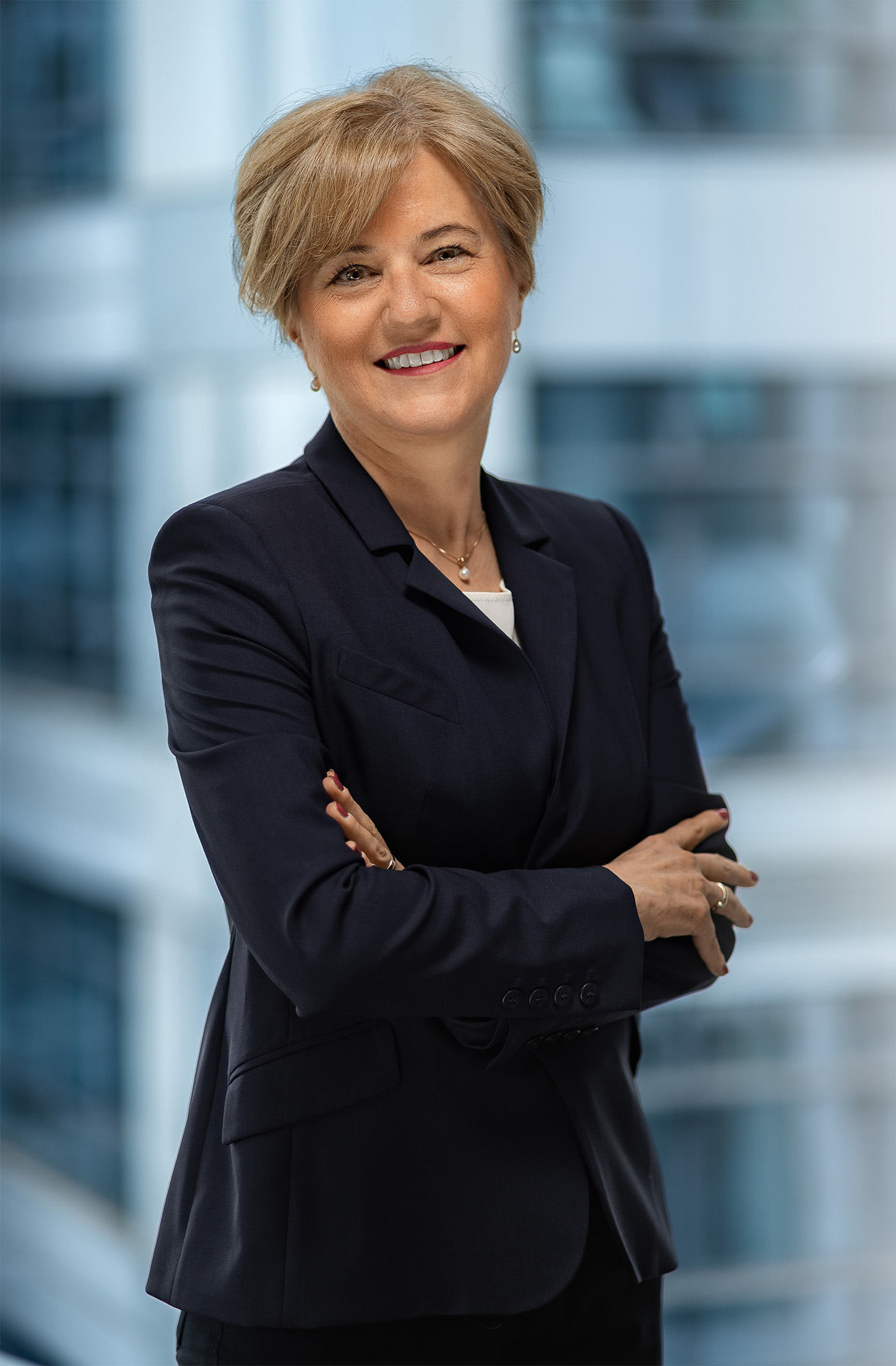

There was a useful lesson in the early development. In an interview with Kobiety Internetu, Patrycja described testing mistakes and said she would spend more time getting feedback from users, beginning earlier. Professional expertise could tempt a team to assume it already knew what customers needed. A functioning feature could still be confusing.
Working with a bank also changed the product: the team developed single sign-on, transaction exchange and additional security. Her account describes patient adaptation, with an existing business helping fund experimentation. The lesson a founder can copy is specific: put a prototype in front of its intended user before professional confidence hardens into an interface.
The invoice gets a second job
CashDirector’s current application gives the invoice several jobs beyond recording a sale. It can be issued electronically, tracked for payment and matched against incoming money. At the business level, the software offers payment planning and a forecast of cash requirements over the next four weeks. For an owner, the useful question becomes which commitments will arrive before the money to cover them.
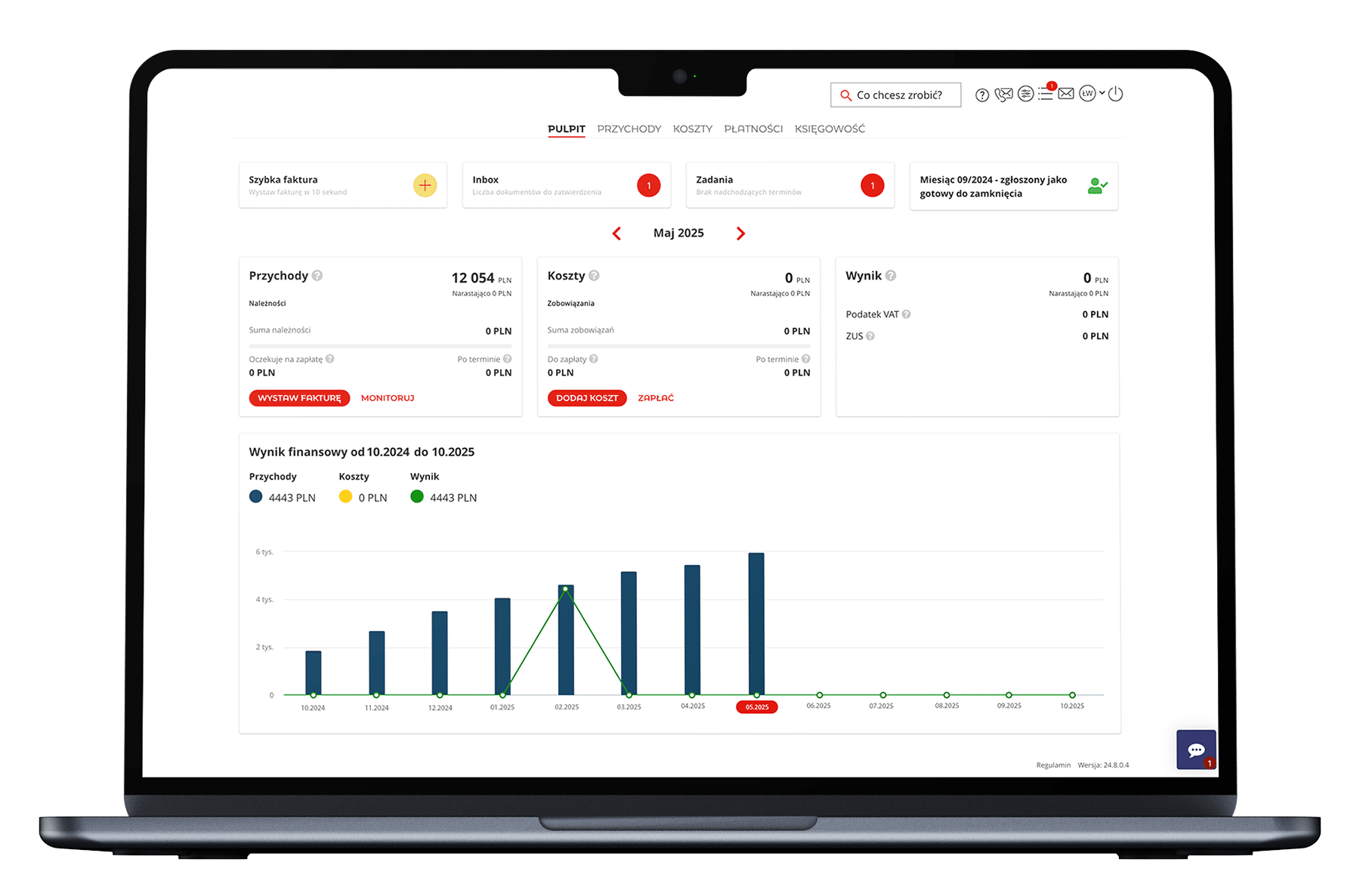
Its management tier adds document approval, different access permissions and budget controls. These are practical distinctions for a company with several people spending or approving money. A solo contractor may need to know whether an invoice was paid; a small company may also need to know who approved the expense and which budget should absorb it.
Editorial illustration of the advertised workflow. Available functions depend on the package and banking connection.
The accountant remains part of the offer. CashDirector’s sole-proprietor service includes a named professional who handles declarations, explains obligations and prepares payments. Its company service extends to fuller accounting and reporting. The technology organizes the work; customers can pay for someone to carry out and explain it.
That division matters when assessing the “virtual CFO” description. The platform can make routine information easier to obtain, but the offer is broader than a software subscription. CashDirector sells a relationship with an accountant as well as access to a screen. The public service pages make human contact a selling point.
Free at the door, paid by the job
The September 2026 public price page begins with unlimited KSeF invoicing at zero złoty. Self-service accounting is listed at PLN 10 net per month. Accounting with a dedicated professional starts at PLN 159 for a sole proprietor and PLN 485 for a company. These are different levels of work, with different responsibilities and package limits.
Paid prices exclude VAT. Package scope and partner-bank offers vary.
The cheapest human-supported sole-proprietor package is narrowly defined: the detailed service page lists three documents and one flat-rate tax category, with VAT accounting costing extra. It should not be mistaken for unlimited accounting for every kind of firm. A useful buying decision starts with document volume and the work required, then compares the relevant package.
Bank-distributed offers have their own schedules. mBank’s current simplified-accounting page lists online Komfort at PLN 229 net monthly for up to ten documents, and Premium at PLN 495 for up to forty. The practical implication is straightforward: compare the actual offer available through the customer’s bank, including additional-document charges, rather than assuming every CashDirector package has the same price.
For CashDirector, the ladder creates recurring income from software and services. For the customer, it allows a modest starting point and room to add help. Forbes identified iFirma, wFirma and inFakt among the established Polish online-accounting alternatives. CashDirector’s bank relationships give it a distinct route to customers in an already populated market.
PLN 12 million for the work behind the screen
In May 2020, EEC Magenta announced a PLN 12 million investment in CashDirector. The stated purposes were product development, broader distribution and expansion into Western Europe. Legal adviser Eversheds Sutherland also documented the transaction. The amount is a concrete financing milestone, rather than a valuation or a measure of what it cost to build the entire company.
The timing placed the investment in the first months of the pandemic. EEC’s announcement described free consultations, webinars and a hotline helping Polish entrepreneurs navigate support measures. It also highlighted DocTransfer, a way to exchange documents digitally with an accountant. A routine document-sharing feature had become particularly useful when face-to-face handovers were difficult.
Industry recognition accompanied the banking work. Celent’s official 2018 award list names mBank as its Small Business Banking winner. CashDirector points to that recognition in describing its implementation history. The distinction belongs to the bank’s initiative; it is also evidence of the setting in which CashDirector had chosen to compete.
A new obligation, in a familiar place
On January 22, 2026, mBank announced unlimited invoicing integrated with Poland’s national electronic-invoicing system, KSeF, in cooperation with CashDirector. Business customers could access it after logging into online banking, without installing a separate application. The announcement also described support for the system’s certificate-based connection.
This is a clear example of the distribution model doing useful work. A changing administrative requirement gives an owner a reason to seek a tool. The bank can put that tool where the owner already manages payments. CashDirector supplies the accounting capability, while the banking relationship supplies the point of access.
The American proposition uses a different opening: preventing an unwelcome tax surprise through regular estimates and savings planning. CashDirector’s US website addresses banks, small businesses and accounting practices together. The local presentation changes, but the proposed relationship is recognizable: organize the financial information early enough that the owner and accountant can act on it.
The model depends on participation. A forecast needs timely records; a bank connection needs supported functionality; an accounting package needs to fit the business using it. A company seeking only occasional invoice creation can stay at the simplest end of the offer. The richer value appears when invoices, payments and professional advice become part of the same working routine. That is the daily habit CashDirector is trying to earn.
Open the books
Explore the product, meet the founders and watch the original pitch.