On a Dubai weekend, a used-car sale can become a small bureaucracy with upholstery. A seller takes photographs, fields calls, guesses at a price and negotiates with strangers. A buyer wonders what happened beneath the bonnet before the listing existed. Then come the test drive, loan, insurance, payment and ownership transfer. The classified ad is the easy part. CarSwitch Arabia built its company around everything that happens next.
Founded in 2016 by former McKinsey consultants Imad Hammad and Ali Malik, CarSwitch began as a marketplace for inspected cars sold directly by their owners. The proposition sat between two familiar options. A basic classifieds site offered reach but left both parties to improvise. A dealer offered convenience but introduced its own inventory economics and margin. CarSwitch kept the private-party transaction, then wrapped it in inspection, photography, buyer screening and people who knew where the paperwork went.
The messy middle is the market
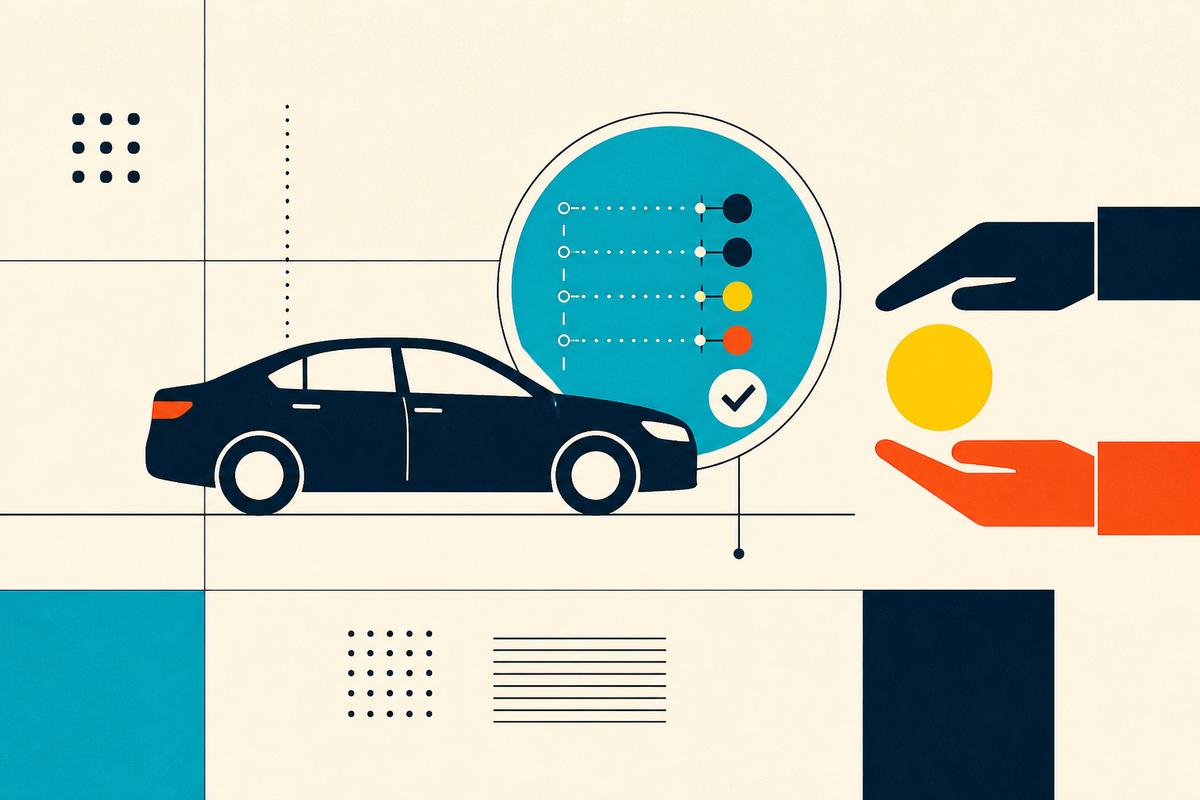
Marketplaces are often described as matching engines. That description misses the stubborn work. A match is only useful if it survives doubt, scheduling and payment. CarSwitch sends an inspector, produces a condition report and photographs the vehicle. It publishes the listing, handles inquiries, filters prospective buyers and can attend test drives. If buyer and seller agree, the service can help with finance, insurance, secure payment and transfer.
That makes the company a managed marketplace, a category with more operational weight than a notice board. Software organizes the process, but inspectors, advisers and logistics staff carry it into the physical world. The product is not merely a web page showing a Nissan Patrol. It is a sequence that makes an irregular, high-value exchange behave more like a routine purchase.
For sellers, the pitch is saved time without immediately surrendering the car to a wholesaler. They gain access to end buyers while CarSwitch absorbs the interruptions. For buyers, the attraction is structured information and a guide through an unfamiliar transaction. The marketplace also serves dealers, but its defining idea remains the inspected owner-to-buyer listing.
“The platform's transaction based model, as opposed to simply advertising, pushes us to focus on building an exceptional experience.”Imad Hammad, founder and CEO, 2018
A report you can argue with
The 200-point inspection is CarSwitch's most legible trust device. It turns a general assurance - “good condition” - into a long series of claims that can be checked. Early company material promised photographs of scratches alongside the mechanical assessment. The report does not abolish risk, and a careful buyer can still seek an independent opinion. Its value is that both sides begin with a shared document rather than a seller's adjective.
The same logic applies to valuation. An owner usually knows what they paid and what they hope to receive; neither is a market price. In 2024, CarSwitch said its app's valuation engine had been upgraded with AI, transaction records and real-time market data. That guidance can narrow the distance between optimism and a workable listing. It also gives the marketplace a useful feedback loop: transactions improve pricing guidance, and better guidance can improve transactions.
In 2018, Hammad said the service sold a car in fewer than three test drives on average, with some sold sight unseen. It is an unusually revealing marketplace metric. Fewer test drives suggest better-qualified buyers, more credible listings or both. Every avoided appointment saves the seller an evening and the platform a staff hour.
The customer is often buying more than transport. A new resident may be learning local registration rules while choosing a first car. A family may need financing and a dependable seven-seater before the school run. A departing expatriate may care as much about completing the sale on time as squeezing out the last dirham. These are not edge cases around the marketplace; they explain why process has value. CarSwitch's advisers effectively translate between the urgent timetable of a seller and the caution of a buyer.
That also explains the breadth of the inventory. The platform is not organized around rare collectibles or one luxury niche. It carries the familiar working vocabulary of Gulf roads - Toyota, Nissan, Mitsubishi, Mercedes, BMW, Ford and dozens more. Its expertise lies less in celebrating the machine than in documenting condition, finding a plausible price and keeping the exchange moving. A glamorous car can still have an unglamorous loan clearance problem.
Trust has a business model
CarSwitch earns money around the transaction rather than relying only on advertising. Its terms and product pages describe fees associated with inspection, listing and assisted sale services. Financing, insurance, warranty and dealer products create additional revenue opportunities. The exact mix is private, but the incentive is visible: the company benefits when a sale advances, not simply when an ad collects impressions.
This model is also expensive to operate. A pure classifieds business can add another listing at very low marginal cost. A managed marketplace must schedule a person, move them through a city, standardize their work and support the customer afterward. CarSwitch has responded by giving users different service paths and automating more of the funnel. Its app has introduced self-service offers alongside a more assisted “Smooth Switch” package.
Illustrative service intensity: listings at one end, vehicle ownership and retailing at the other. CarSwitch occupies the operational middle without making the original private-seller model disappear.
That middle position shapes the competitive set. Dubizzle, DubiCars and YallaMotor compete for attention and inventory. Facebook Marketplace offers a looser peer-to-peer alternative. Instant-buy services compete on speed. Certified dealers such as Al-Futtaim Automall sell reassurance through owned or controlled stock. CarSwitch's distinction is not that it alone can show a used car online; it is the attempt to combine a private sale's price discovery with a concierge's process.
From Dubai logic to Saudi scale
Dubai was a practical laboratory. It has high internet use, a large expatriate population and a steady churn of vehicle ownership. Hammad has also described the UAE as a regional center for car transactions. After raising early capital from Glowfish Capital and Dubai Angel Investors, CarSwitch closed a reported $7.3 million Series A in December 2019. The company officially launched in Saudi Arabia in 2021 after a soft opening, taking its inspection and assisted-transaction model into a much larger geography.
The Saudi marketplace now presents thousands of listings across Riyadh, Jeddah and Dammam, along with financing or payment partners and localized ownership guidance. Expansion is not simply a matter of translating buttons. Inspection density, travel time, payment customs and transfer procedures all affect the service. The repeatable asset is the workflow; the operational details must still be rebuilt city by city.
Publicly visible scale gives the effort some shape. CarSwitch says it has inspected more than 130,000 vehicles and facilitated more than $500 million in sales. LinkedIn lists the company in the 51-to-200 employee band, with roughly 118 people attached to the page when this profile was prepared. Those are substantial numbers for a business that began by sending someone to look closely at a stranger's car.
The next inspector may be software
The newest chapter is less about inspecting metal than inspecting conversation. In 2025, Hammad presented CarSwitch's transition from a high-touch, human-powered service toward an AI-assisted platform. An event recap credited automation with a 14 percent buyer conversion rate and a 25 percent workforce reduction. The figures offer a glimpse of the tension inside managed marketplaces: the human layer creates trust, but too much manual work limits scale.
CarSwitch's own posts show the awkwardness honestly. One seller bot reportedly made an assumption about a customer's husband; the company said it changed the bot to ask fewer questions and make no such assumptions. It is a small, funny example with a serious lesson. Automating a transaction is not only about retrieving a price. It means managing tone, ambiguity and the odd ways people describe cars they have lived with for years.
The likely destination is not a marketplace without people. It is one where software handles repetitive qualification, pricing and follow-up while specialists concentrate on inspections, exceptions and decisions that require judgment. That could lower the cost of the managed model without turning CarSwitch back into the classifieds site it set out to exceed.
The useful invention was not putting cars on the internet. It was putting a process around the moment two strangers decide to exchange one.
What customers can actually do
A buyer can browse inspected inventory, compare condition and price guidance, request a test drive, make an offer and seek help with a loan, warranty, insurance, payment and transfer. A seller can request a valuation, choose a service tier, arrange an inspection and let the platform manage much of the lead handling. Neither side is required to become an amateur dealer for the weekend.
The promise is modest but useful: fewer unknowns, fewer appointments and fewer pieces of paperwork handled alone. CarSwitch cannot make an old car new, and its inspection cannot convert judgment into certainty. What it can do is make the evidence visible and the sequence understandable. In a market where the expensive mistakes often occur after the search results appear, that is a sensible place to build.