A credit card account has a birthday. That small fact sits at the center of an unexpectedly useful idea: before deciding whether a portfolio is healthy, check how old its accounts are. A newly acquired customer and a customer who has been paying for three years are telling different stories. Mix them together, and a reassuring average can conceal an expensive mistake.
- CAPITAL Services helps institutions originate, manage and service card programs.
- Its ViPR system examines profitability down to individual accounts and acquisition groups.
- The useful lesson: measure what customers become, alongside what they cost to acquire.
CAPITAL Services has built a business around making those differences visible. The South Dakota company operates behind payment programs, supplying the analytical and operational work a bank needs after deciding to offer cards. Its brochure describes servicing more than one million accounts nationwide. The interesting part is what it tries to learn from each one.
The average has something to hide
The name of its proprietary reporting system, ViPR, sounds like something that should have fangs. It expands to Vintage Profitability Reporting. A vintage is a group of accounts opened during the same period. Tracking those groups separately lets a portfolio manager compare customers at equivalent points in their lives as cardholders.
Imagine two acquisition campaigns. One has had twelve months to generate payments, losses and service requests; the other has had two. Their current results are hardly a fair contest. CAPITAL’s vintage-analysis paper explains how separating account groups helps reveal changes that the combined portfolio can obscure.
ViPR takes this approach into account-level profitability. CAPITAL’s solutions brief describes segmentation, forecasts of when groups become profitable, pro formas and analysis of the drivers behind returns. That makes the account’s birthday commercially useful: managers can distinguish a young portfolio still developing from an acquisition strategy producing disappointing economics.
Win the right customer, at the right price
For a bank, acquiring an account is the beginning of an expense and revenue relationship. CAPITAL’s acquisition paper combines two questions: how likely is someone to respond to an offer, and how likely are they to default? A promising campaign must reckon with both. A pile of applications alone cannot answer the profitability question.
“get them at the right price”CAPITAL’s acquisition white paper, on adding accounts
The company develops proprietary scorecards from customer, payment and performance information. Its data paper describes testing candidate models before choosing one, then monitoring results as accounts develop. This is a practical qualification to the appeal of predictive analytics. Historical patterns become useful when the sample fits the population and the model keeps being checked.
There is a habit here that other businesses can copy: keep acquisition groups identifiable and revisit their economics at comparable ages. Then feed what happened back into the next decision. CAPITAL applies that habit to lending; the underlying discipline is useful anywhere an inexpensive acquisition might become an expensive relationship.
A banking group’s backstage crew steps out
CAPITAL began in 1998, initially concentrating on card portfolio work for affiliated banks. Its July 2013 announcement identified First National Bank and First Savings Bank, alongside CAPITAL, as Farrar Group companies. That announcement marked a deliberate move into a wider financial-institution market.
The change was an expansion of an established operation. At the time, CAPITAL reported servicing roughly 670,000 accounts for more than 150 institutions. Management’s explanation was straightforward: the portfolio methods developed inside its banking relationships could be useful to other institutions. By year-end 2016, reported accounts had reached 820,000.
A historical scale marker. Account volume alone does not establish portfolio returns.
That history helps locate the business in the market. It sells institutions a combination of analysis and execution. A bank can use outside capabilities rather than assemble every specialist function itself. CAPITAL’s named client programs include Legacy, Taz, Blaze and Show, associated with the banks listed on its website.
The work after the envelope arrives
Someone must answer when a cardholder disputes a bill. Someone must handle collections, watch for fraud and keep account access working. CAPITAL’s managed services cover live-agent calls, voice-response systems, online management, disputes and settlement. Its compliance operation follows federal and state regulatory developments.
The breadth matters to its proposition. Marketing brings in customers; servicing encounters what those customers actually do. Profitability reporting gives managers another way to evaluate the resulting portfolio. CAPITAL brings these functions into the same service offering, with scorecards and financial modeling alongside the day-to-day work.
Ownership remains a separate choice. CAPITAL’s receivables paper distinguishes agent arrangements, sponsorship and owning the card assets. More ownership brings more control, revenue exposure, expenses and risk. Its affiliate CAPITAL Preferred Credit offers funding alternatives. For comparison, Elan advertises an agent program that funds operations and assumes credit risk. The structure deserves as much attention as the software.
A new office meets an unwelcome variable
The physical business offers a useful counterpoint to all these models. CAPITAL’s Sioux Falls headquarters project broke ground in November 2019. The location decision considered where employees lived and the amenities around Dawley Farm Village. Growth had made the old workplace a poor fit for the company’s plans.
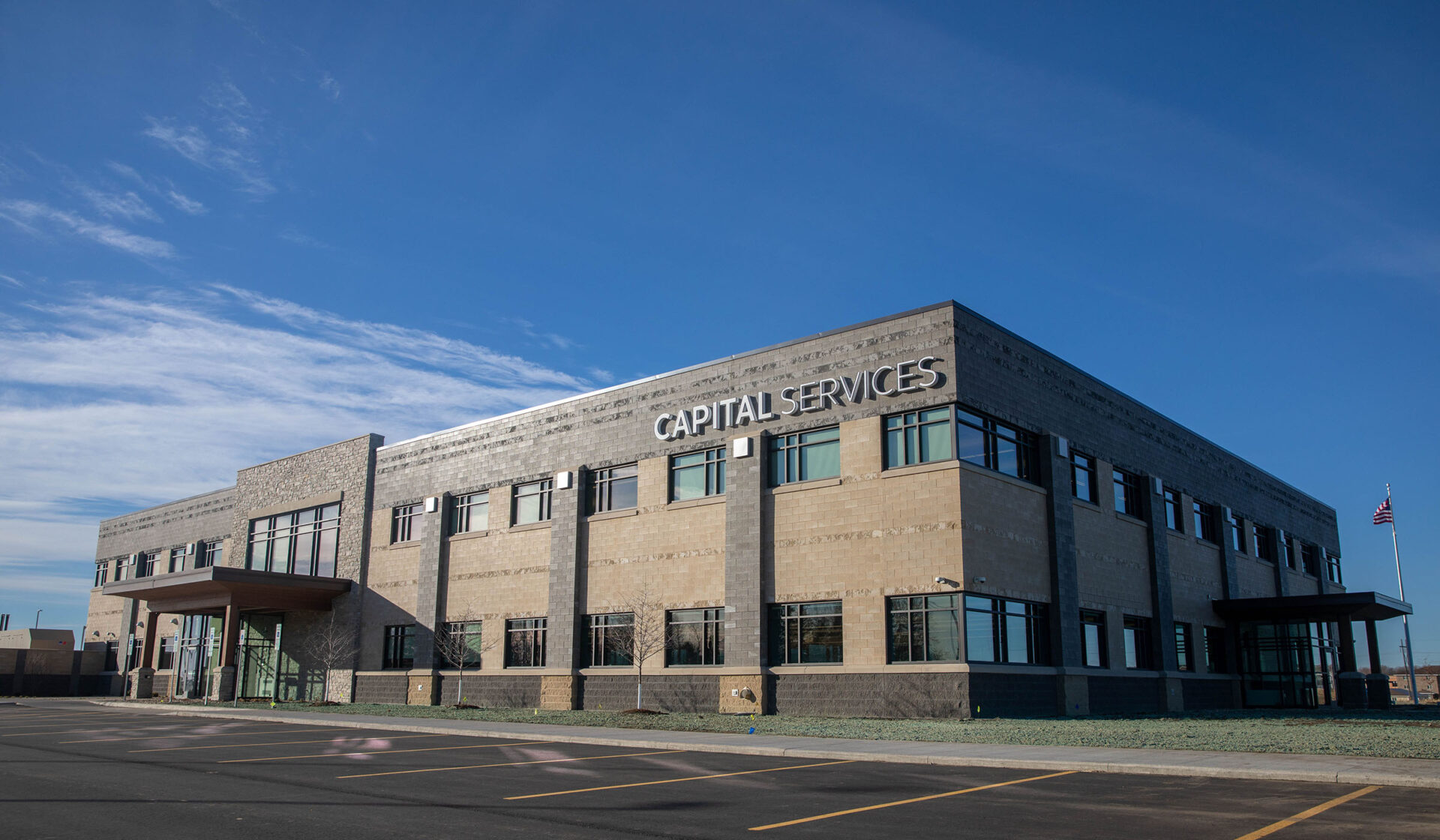
A sponsored workplace feature published in December 2020 documented an awkward complication: furniture proposals were arriving as COVID hit. The company revised layouts and added workstation panels. Spaces designed for informal gathering could not immediately be used as intended. A plan built for collaboration had to accommodate distance.
The company’s stated culture has an operational side: its careers page lists education assistance, employee development and a 6% employer retirement-plan match. Its CAPITAL Cares program organizes community involvement, including support for local United Way agencies. Those choices fit a business that needs people to stay, learn and handle complicated customer situations. A scorecard may guide a decision; the customer who calls about a disputed bill still needs someone who can listen and explain what happens next.

There is a fitting detail in the leadership story, too. Alfred Furth joined as a portfolio analyst in 2007 and became chief executive in January 2023. At CAPITAL, the person studying the accounts eventually ran the company. The card itself is a small object. Understanding everything that happens around it is the larger job.