Before Candice Matthews Brackeen was helping other people get funded, she ran out of money herself. Hello Parent, the app she had built around communication between parents and schools, closed. The lesson was expensive enough to be useful. In 2017, while leading a new accelerator in Cincinnati, she could talk to founders about failure without borrowing somebody else’s anecdote.
“We ran out of funding,” she said of Hello Parent. There is very little romance in that sentence. No mysterious pivot, no triumphant exit concealed behind a tasteful announcement. A business needed money, and the money stopped. Matthews Brackeen carried the experience into work that would eventually include entrepreneur education, a venture firm, a national conference and testimony before Congress.
Her career since then has followed a recurring question: what happens to a promising person when the people with resources never quite look in their direction? She has pursued the answer through institutions with addresses, budgets and application forms. The resulting story has plenty of big rooms. It begins with people trying to find one another.
A table in Cincinnati
Matthews Brackeen grew up in Toledo and came to the University of Cincinnati to study economics. She was a first-generation college student. Two families from her region helped pay for her education, an intervention she later described as part of a life shaped by allies as well as her own determination. She graduated in 2004. Before she became someone who assembled networks, she had benefited from people willing to extend theirs.
Building Hello Parent brought the local startup economy into closer view. In her account, she applied to an accelerator and was rejected, later learning that it had never admitted a person of color. Another program accepted her as its first participant of color. An individual application could feel intensely personal while revealing something much larger about who had previously been welcome.
In 2015 she started Cincinnati’s Black Founders Network, which held monthly gatherings for African-American entrepreneurs. The meetings made it possible to compare experiences. Members began discussing how to help founders in other cities with fewer connections or resources. A meetup had become a place to work out a more ambitious response.
A fictional college, a very real curriculum
Hillman Accelerator launched in 2017 with Matthews Brackeen, former Cincinnati Bengals linebacker Dhani Jones and entrepreneur Ebow Vroom as co-founders. The name contained a local reference to Cincinnati’s seven hills and a television reference to Hillman College, the fictional historically Black institution in A Different World. Someone had managed to fit geography, ambition and a good cultural reference into one sign.
The original plan was practical: a 16-week curriculum, help with business modeling, access to customers and investment through an associated fund. Its offices were to occupy the fourth floor of the National Underground Railroad Freedom Center. For an organization concerned with access and economic possibility, the address carried some weight before anyone opened a spreadsheet.
The support came partly from organizations already in Cincinnati’s startup economy. CincyTech, Cintrifuse, The Brandery and the University of Cincinnati’s commercialization accelerator agreed to redirect portions of their state support toward Hillman’s operating costs. Matthews Brackeen was getting existing institutions to make room in their budgets for people who had been missing from their networks.
- 2015Black Founders Network meets monthly
- 2017Hillman Accelerator launches
- 2020Lightship Capital’s fund launch
- 2022Black Tech Week comes to Cincinnati
- 2027Columbus hosts the next chapter
The business plan comes to dinner
The enterprise grew by acquiring work that other people had already made valuable. NewMe, founded by Angela Benton in 2011 to support entrepreneurs of color, came under the Hillman-associated organization’s ownership in a deal announced in January 2019. Benton stayed involved as an adviser. The acquisition brought an established community and a recognizable name into the operation Matthews Brackeen was building.
The NewMe bootcamp format was unusually intimate. Small groups of founders lived together for a week, ate together and had their business strategies examined by experienced entrepreneurs, lawyers and creative strategists. It is harder to hide behind a polished pitch when everybody has been sharing the same kitchen. In 2019, confirmed support of $1.2 million was announced for the following year’s programming, intended to let at least 100 Black founders participate without paying tuition.
Her own advice to accelerator applicants was refreshingly ordinary: understand the customer, assemble a small team and try selling the product before applying. She also urged applicants to draft their answers in a document and spell-check them. The person talking about changing the investment economy still wanted you to proofread. Apparently the revolution would have an application deadline.
“Know your customer. Build a small team.”
Candice Matthews Brackeen, advice to accelerator applicants, 2019
An investor with a map of her own
Lightship Capital gave Matthews Brackeen and her husband and business partner, Brian Brackeen, a way to invest directly in companies. Its 2020 fund launch focused attention on founders and regions traditional venture networks frequently overlooked. The Foundation’s education and community programs and the venture firm’s investments addressed related needs through different organizations.
She was explicit about the investment objective. Supporting overlooked founders came with an obligation to return money to the fund’s investors. The opportunity depended on finding businesses other investors had failed to understand or reach. A founder’s distance from a familiar coastal network could leave a good company underexamined.
That approach also demanded time. She and Brian spent weeks near founders to understand their routines. Familiarity had to be earned through contact with the actual business. The combination of education, relationships and investment gave her several ways to learn about a company before deciding what help, or capital, it needed.
Cincinnati offered more than a home base. Its established companies, university and public entrepreneurship programs could supply customers, partners and expertise. Her proposition asked investors to take those assets seriously. A business did not become less interesting because its founder could get home without crossing a bridge in San Francisco.
The conference where she met her husband
Black Tech Week had already mattered personally before Lightship acquired it. Matthews Brackeen first traveled to the Miami gathering with a group from her founders network. On a later visit she met Brian, along with investors who would become important connections. The conference had demonstrated its ability to alter a life before she took responsibility for its future.
Lightship Foundation acquired the event in 2022 and brought it to Cincinnati. Felicia Hatcher and Derek Pearson had founded Black Tech Week; Matthews Brackeen’s role was to carry an existing asset into its next stage. Her own experience as an attendee helped explain why she wanted to preserve it.
She put particular emphasis on matchmaking. In 2023 she described roughly 200 investor-founder meetings at the previous year’s event and plans to extend that activity across three days. Corporate introductions could lead to partnerships and customers as well as financing. A conference badge was useful if it helped someone start a conversation that would otherwise have been difficult to arrange.
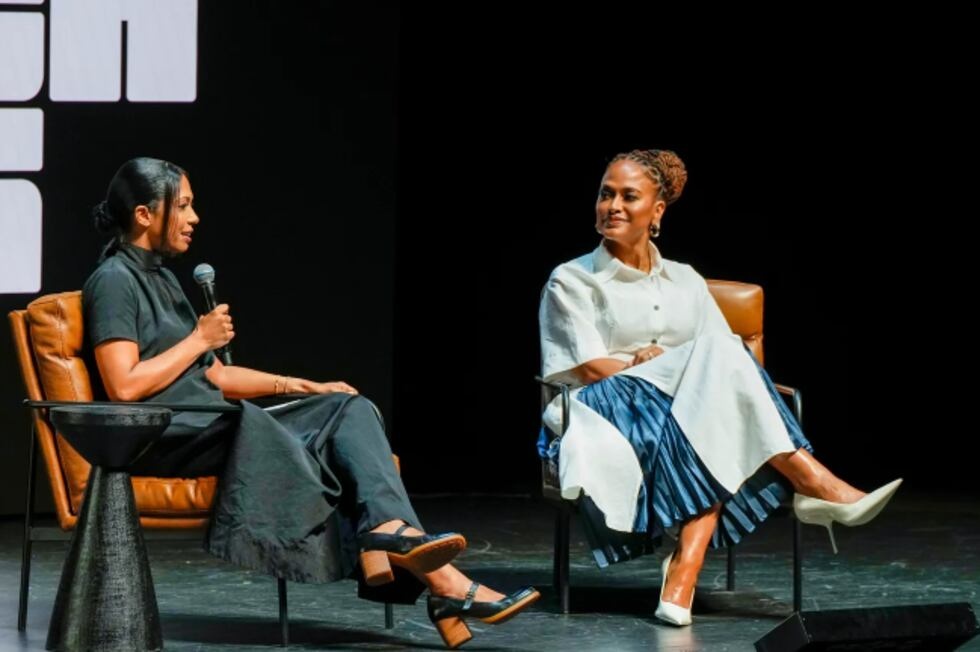
Room to think, courtesy of Frank Lloyd Wright
The idea of putting people together took an architectural turn when she and Brian acquired Cincinnati’s Boulter House, designed by Frank Lloyd Wright. Their plans called for a residence for underrepresented students, artists, designers and entrepreneurs, with fellowships and programming intended to create time and space for creative work.
It was an appealingly literal expression of her method: find a resource, give it a purpose and invite people in. The University of Cincinnati’s account of the project placed it within a broader collaboration involving Lightship and the Cincinnati Innovation District. A house with architectural significance could also become part of the city’s entrepreneurial infrastructure.
In 2024, Cincinnati recognized her as a Black History Month honoree. The city’s resolution connected her work in technology with her civic involvement and the plans for the house. Her public identity had expanded well beyond the founder of an app, even while her work kept returning to the circumstances that had made that first company difficult to build.
The CEO who needed persuading
The job title took longer to settle. In 2022, Matthews Brackeen said she had previously preferred “founder” or “executive director” to CEO. “I didn’t feel that I’d earned it,” she explained. The admission puts a human scale on a career often presented as a succession of organizations and achievements.
She also had a life outside the argument about capital: children, a cat, cooking and football. Her NFL enthusiasm included trips to Indianapolis to watch the scouting combine. There is a useful corrective here for anyone tempted to turn a person into a mission statement. Sometimes the business leader would quite like to discuss the draft.
In December 2022, the Bengals named her their inaugural Inspire Change Changemaker Award recipient. The recognition included a donation for a social justice nonprofit. For someone who cared about both Cincinnati’s entrepreneurs and its football team, the overlap was unusually agreeable.
Following the money one level higher
By March 2025, she was explaining another obstacle to the House Financial Services Committee. Regional fund managers themselves could struggle to raise money. Anchor, the fund-of-funds initiative she described, aimed to support managers in the heartland, Midwest and South. The problem she had encountered as a founder had reappeared further up the investment chain.
Her proposed remedy included asking public investment funds to consider first-time managers rather than excluding them automatically. She also discussed reducing the additional fee burden associated with a fund investing in other funds. These were arguments about how capital reached the people responsible for allocating it. Her ambitions now extended from helping a startup prepare its pitch to changing who could finance the investor hearing it.
The next visible destination is Columbus. Announced in September 2026, Black Tech Week’s move brings the conference there in July 2027. Cincinnati remains central to her story, while the gathering she helped grow travels to another Ohio city with its own corporations, university connections and entrepreneurs.
The distance from Hello Parent is considerable. The question underneath her work is still recognizable: who gets the chance to make a business work? Matthews Brackeen has kept answering with specific arrangements - a monthly meeting, a curriculum, a shared house, an investor introduction. Each gives someone a place to begin. The rest, as she has reason to know, still has to be built.
Keep the conversation going
Her work, her words, and a few longer conversations.
- Lightship Foundation
- Lightship Capital
- Black Tech Week: Columbus 2027
- LinkedIn: profile & essays
- X / Twitter
- Hello Parent and the first Hillman class
- Hillman’s 2017 launch
- Her Ohio story: podcast conversation
- NewMe acquisition
- NewMe bootcamp funding and format
- Lightship Capital: investment approach
- Black Tech Week: 2023 Q&A
- Football, family and the CEO title
- Bengals Changemaker Award
- University of Cincinnati recognition
- Boulter House and the Innovation District
- Cincinnati’s 2024 recognition
- March 2025 congressional testimony
- Columbus host-city announcement
- Her advice to accelerator applicants
- Watch: CincyTech conversation
- Watch: 2019 VentureDinner interview