Brillius Technologies lives in the plumbing of modern business. The Pleasanton, California company recruits technical workers, puts specialists into client teams, modernizes cloud systems and tries to make software releases less dramatic. If a bank, retailer or health company has developers waiting on operations, security arriving too late, or a deployment process held together by tribal knowledge, Brillius wants the call.
That is a useful but crowded line of work. Accenture, Cognizant and Infosys can arrive with armies. Staffing firms can fill seats. Specialist DevOps consultancies can tune a pipeline without asking for a three-year transformation program. Brillius has spent roughly a decade occupying the middle: small enough to sell hands-on attention, broad enough to supply people and take responsibility for delivery work.
In May 2026, it made a more interesting move. Brillius launched two software platforms: Brillius AI Labs, an upskilling product for engineers, and Brillius Legal Desk, an AI-enabled legal automation suite. The first product provides the clearest window into the company's strategy. It takes lessons learned around software delivery and sells them back as a repeatable learning system - structured courses, isolated browser labs, a context-aware AI instructor, quizzes, progress tracking and mock interviews.
The first thing to crack was the old name
Brillius used to be Formac. By early 2022, the label no longer fit the sales pitch. The company had begun with DevOps and cloud optimization, added clients and staff, and wanted to extend into data services and a broader digital-transformation portfolio. Management did not describe a ruined product or a failed fundraise. The mismatch was quieter: the work had moved on while the brand stayed put.
The January 2022 rename was management's answer. President Ram Naresh said the organization wanted a more modern identity without abandoning its technical heritage. The Facebook handle still reads “formacinc,” a tiny bit of corporate archaeology hiding in plain sight. Everything else moved toward Brillius - a name intended to carry staffing, cloud, data and newer technologies without sounding pinned to the first service line.
“For us, from an organizational perspective, this is only a name change to symbolize our dynamic future.”Ram Naresh, President of Brillius, on the 2022 rebrand
What changed the company's mind was expansion. Formac had become too narrow for what management wanted to sell. The lesson is portable: a rebrand earns its keep when the underlying offer has already changed. Paint applied before the business changes usually produces a prettier version of the same confusion.
The business beneath the orange “B”
Brillius still makes its living in services. Its contingent-workforce arm connects startups and enterprises with technology professionals, then emphasizes how those workers fit into client teams. The consulting side covers DevOps, DevSecOps and cloud transformation. In practical terms, that means continuous integration, release automation, automated testing, monitoring, microservices, infrastructure management, security embedded through the development cycle, and cloud planning and migration.
The customer is usually not buying a shiny object. It is buying fewer handoffs, faster releases, better visibility and less 2 a.m. detective work. Brillius describes clients ranging from startups turning a concept into a market-ready product to enterprises scaling a workforce. Its site reports more than 100 clients and displays the logos of Verizon, CVS Health, Kaiser Permanente and Western Union. Those logos indicate the market it courts, though the site does not publish detailed case studies for each name.
Where Brillius fits
One company, three ways to sell technical capability
The business model follows those lanes. Staffing produces placement or contract revenue. Consulting produces scoped project and managed-services revenue. Prices are negotiated, so there is no public rate card for moving a company's infrastructure or rebuilding its delivery pipeline. The software layer adds a route to recurring, self-serve revenue. Brillius AI Labs offers a free trial and publicly lists its Model Context Protocol path at $49.99; broader course and enterprise pricing can vary.
Revenue itself is less crisp. Supplied company intelligence estimates $30 million annually. Public directories range from roughly $9.9 million to a $25 million-to-$50 million band. None of these figures is an audited disclosure. Headcount carries the same fog: supplied data says about 120 people, LinkedIn places the company in its 201-to-500 band, and other directories sit lower. The sensible conclusion is scale, not precision: Brillius is a substantial private services firm, not a tiny agency and not a public integrator.
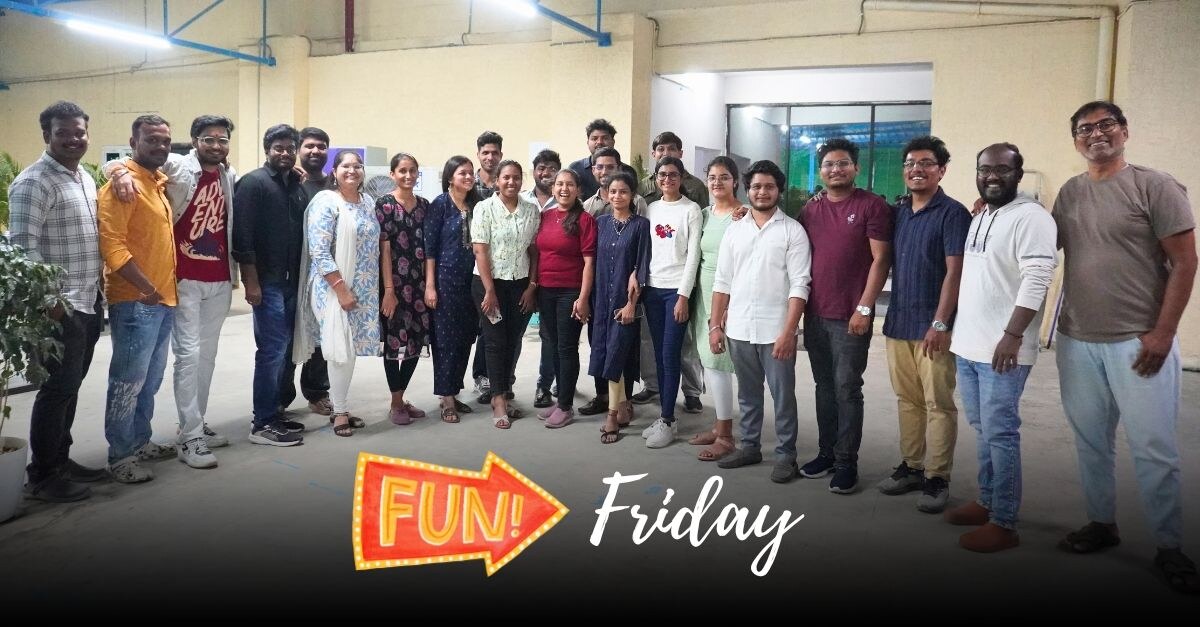
The geography matters. The corporate address is in Pleasanton, while Brillius also lists an office in Hyderabad. That California-India pattern is familiar in technology services: commercial relationships close to U.S. buyers, paired with a larger delivery and recruiting base in India. Brillius's careers material promises flexible hours, limited micromanagement, medical coverage, diversity and room to learn from skilled colleagues. Its social feed supplies the more vivid evidence - Bonalu, Ugadi, Diwali, Independence Day, movie nights and “Fun Friday” games. Culture pages are easy to polish; recurring photos of the same office community are harder to fake. They suggest a company using celebrations as connective tissue for the people who make a staffing-and-services model run.
Why an IT services firm built a classroom
Brillius has a privileged view of the skills gap. Recruiters hear what employers request. Consultants see where systems break. Embedded engineers learn which tools survive contact with a real deployment. AI Labs attempts to compress those observations into a product for working DevOps engineers, site-reliability engineers and IT professionals with at least two years of experience.
The pitch avoids asking them to become data scientists. Existing knowledge of Linux, cloud, networking, CI/CD, monitoring and incident response remains the base. The new layer covers AI-powered observability, anomaly detection, event correlation, log analysis, automated incident response and smarter deployment gates. Brillius estimates six to ten weeks for its AI-Augmented DevOps course and eight to twelve weeks for a broader DevOps-to-AIOps transition with consistent study.
The product is arranged as a loop, not a library. A focused lesson introduces an idea. A live, isolated environment makes the learner execute it. An AI assistant reads the lesson and lab context, offers hints and responds to errors. Quizzes test recall. An interview simulator asks technical questions out loud, evaluates spoken answers and provides transcripts, scores and areas to improve. The interesting choice is to train articulation alongside operation. Knowing how to correlate logs is one skill; explaining the reasoning under interview pressure is another.
This is where Brillius differs from generic course marketplaces. Coursera, Udemy Business and Pluralsight offer enormous catalogs. KodeKloud and cloud vendors go deep on practice. Brillius is narrower: it packages the specific transition from DevOps to AIOps, then connects practice with career rehearsal. Narrowness is an advantage when the buyer recognizes the exact problem. It becomes a liability when a team needs a broad software-engineering curriculum, accredited education or vendor training tied to a particular production stack.
The playbook worth stealing
Service companies accumulate valuable exhaust: recurring client questions, failure patterns, checklists, training documents and the judgment of experienced operators. Most leave it scattered in slide decks and senior employees' heads. Brillius offers a copyable sequence. Pick one repeated transition your customers or workers struggle with. Turn it into a short path. Put the user in a realistic environment. Add help that knows the current task. Measure performance. Then make the learner explain the work.
The same pattern could work for cybersecurity incident response, finance operations, healthcare compliance or industrial maintenance. The software does not need to replace the service business. It can qualify recruits, train consultants, create a lower-cost entry product and reveal which organizations later need hands-on help. In Brillius's case, AI Labs may eventually feed the workforce engine with people whose skills the company has helped validate.
When this playbook breaks
- The underlying work changes so quickly that labs become obsolete faster than the company can maintain them.
- The skill depends on tacit judgment or physical context that a browser environment cannot reproduce.
- The audience lacks the fundamentals. Brillius explicitly aims at experienced operators, not complete beginners.
- The AI helper gives answers too freely, turning productive struggle into autocomplete theater.
- The services team cannot translate its private expertise into a coherent, supported product.
Brillius still has to prove product-market fit publicly. A launch, a follower count and a course catalog do not establish completion rates, job outcomes or durable subscription revenue. The company also carries the usual challenge of a broad services menu: quantum computing, edge computing, generative AI, building-information modeling and green technology all appear in its positioning. Breadth can open doors, but buyers tend to remember a firm for one sharp capability.
The sharpest capability here is the bridge between talent and delivery. Brillius finds people, works beside them and now trains them. Its decade was built around selling technical capacity one team or project at a time. The next decade depends on whether that accumulated know-how can become a product people choose even when no consultant is in the room.