Bret Voith’s senior season ended with a dinner and three useful numbers: 38 goals, 31 assists, 32 steals. At the Harvard Club of Boston, the water-polo team named its co-captain Most Valuable Player. He had scored, supplied other scorers and taken the ball away. A tidy evening’s recognition for a season that had been considerably less tidy.
Years later, when the company he founded was acquired, Voith would again have a result that fitted neatly into an announcement. Tenure Health had joined NCD. He was becoming Chief Strategy Officer. In his own account, however, he made room for the interruptions, the uncertainty and the people who had helped. The interesting distance in his career lies between those clean public milestones and the work required to reach them.
The captain gets another season
Voith came to Harvard from Coral Gables, Florida, and Gulliver Prep. His school career had already included a state water-polo championship, swimming and, pleasingly, a spell as bowling captain. The last detail interrupts an otherwise formidable procession of athletic distinctions. There are several ways to lead a team; apparently, his adolescence allowed for lanes as well as lanes of water.
He arrived at college in 2007 and quickly made an impression. At that year’s Eastern Championship, he was named Rookie of the Tournament and earned a place on the second all-tournament team. The designation was an early individual success within a sport that keeps making individual success dependent on somebody else.
By December 2009, he had already served one season as Harvard co-captain. He was selected again for 2010, alongside Luka Babic. The appointment put him among a small group of recent Harvard players entrusted with the captaincy for more than one season. His junior year had brought 27 goals and an All-Northern Division first-team selection. The next year brought a change around him.
Ted Minnis was taking over as head coach. A returning captain and a new coach occupy an interesting piece of shared territory: one carries experience of the group, while the other is beginning to shape its future. Harvard opened the season at the MIT Invitational, a short journey across Cambridge and a fresh start for the program. Familiar surroundings did not guarantee familiar results.
A score worth reading twice
On September 11, 2010, Harvard lost twice at the Princeton Invitational. Against Cal Baptist, the Crimson fell behind 7-1 in the opening five minutes, recovered to within a goal and eventually lost 15-12. Later came a 14-9 defeat to Princeton, after Harvard had led at halftime. Voith contributed four goals, three assists and two steals across the two matches.
It is an instructive day to keep in the picture. A good individual performance can coexist with a disappointing team result. A comeback can be real and still fall short. Sporting biographies tend to hurry past afternoons like this on the way to the award ceremony. Yet they belong to the same season, and the captain has to participate in both.
The season closed at the Northern Championships with another uneven sequence. Harvard lost to Fordham, beat Connecticut College and then edged Iona 7-6 for fifth place. Voith’s reaction kept the sequence intact: “We ended our season on a strong note.” The consolation had a specific basis. The team had recovered from its first loss and won its remaining two games.
At the December banquet, his MVP award sat alongside recognition for teammates’ improvement, arrival and contribution. Jeff Lee, who matched Voith’s season goal total, received the Coaches Award. Minnis thanked the senior class for its support during his first year. Even the evening devoted to individual prizes remained a group occasion. The captain’s numbers make more sense with those other people still in view.
An education that crossed the map
Voith studied economics at Harvard. In May 2008, an announcement of Asia-related student funding listed him with a McKinsey & Company placement in Shanghai. He was still early in his undergraduate years, already moving between a college team and a business setting on another continent. It is a small entry in a long list of students, but a useful expansion of the picture.
He finished at Harvard in 2011. That year brought the John P. Reardon Men’s Award and the Director’s Award. The latter recognizes service, leadership, character and a commitment to education through athletics. Those criteria broaden the meaning of an athletic distinction beyond the scoreboard. His college recognition encompassed the way he participated in an institution as well as the way he played.
Stanford Graduate School of Business followed, with an MBA completed in 2016. His education also includes a Certificate in Public Management and Social Innovation. The academic route is straightforward enough to put on a résumé: economics, then business school. The professional decisions running alongside it would require a little more explanation than two lines can comfortably provide.
The long route to the announcement
Voith began his career as an investor. Describing the transition in a March 2025 podcast conversation, he placed his decision to pursue operating work in 2013. His experience includes Bain Capital, Alignment Healthcare and Bright Health. The change meant moving toward responsibility for building and running businesses, where an assessment has to become a decision and then a series of actions.
In that conversation, he described joining Bright at an early stage and helping it expand from roughly 20 employees to about 2,000. Those are his account of the organization’s scale during his involvement. They describe a changing workplace as much as a growing headcount: the company an early employee joins is a very different organization from the one that later requires thousands of people to coordinate.
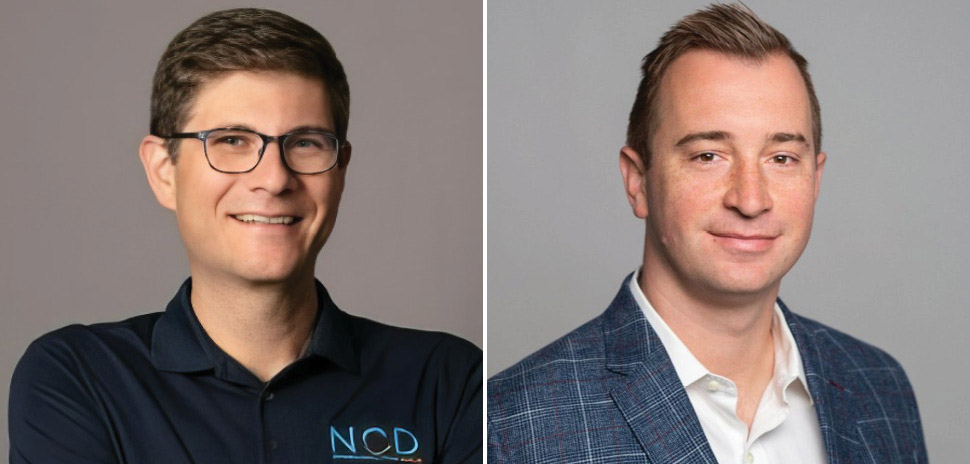
In 2021, he founded Tenure Health. Three years later, NCD acquired it, and the announcement on September 11, 2024, identified him as founder and Chief Executive Officer. His next title would be Chief Strategy Officer at NCD. A company he had led would now sit inside another organization, with another leadership team and a new setting for its work.
When the founder joins another team
Voith’s personal announcement gave the transaction a less polished surface than corporate announcements usually permit. He described a journey that had taken an indirect route. He acknowledged pauses and restarts, and thanked colleagues, advisors, collaborators, friends and family. The acquisition was a milestone reached with other people’s efforts still attached.
There is a practical generosity in leaving those acknowledgments in the story. A founder’s title concentrates attention on one person, while the account of how a company gets anywhere usually disperses it again. Voith’s own version included people who had contributed at different stages, rather than making the closing moment appear self-contained.
“The journey to this point has not been a straight line”
Bret Voith · on the 2024 acquisition
Sam Melamed, NCD’s CEO, offered another perspective on the appointment. In a public post, he described thinking about what a prospective colleague would do for a team’s energy and its capacity to tackle difficult work. Meeting Voith had made him want to find a way for them to work together. The acquisition supplied that opportunity.
It is a colleague’s assessment, and an enthusiastic one. Still, it adds a human consideration to the usual transaction vocabulary. Alongside capabilities, products and plans sits the question of what happens when a particular person enters the room. Melamed made that part of his explanation for bringing Voith into NCD.
Direction, then the daily work
By 2026, Voith’s public roles included both Chief Operating Officer and Chief Strategy Officer. The titles put direction and execution beside each other. One concerns where a business goes; the other entails the ongoing work of getting people and processes to move together. Having both on the same business card leaves relatively little room to blame the other department.
His April 2026 contribution to a management discussion concerned the information teams use to make decisions. He described aligning leaders around indicators that anticipate results, indicators that record them, exploratory analysis and noise. He also described automated dashboards that help the team follow important measures as events unfold. The emphasis was on agreeing what the information means before reacting to it.
That is a concrete glimpse of his present work. The tools have changed considerably since his college score sheets. So have the stakes and the people involved. The old statistics remain interesting on their own terms, without requiring every assist to become a management parable.
A school community, one city north
September 2026 brought a different appointment. Voith and fellow 2007 graduate Saheelan Sinnarajah became the inaugural New York co-chairs of Gulliver Prep’s Raider Network. The initiative brings alumni in the same region together and gives students opportunities to learn from their experience. Its first gathering was announced for October 29 at Grey Heron Apéro Café.
For Voith, the connection reaches back before Harvard, Stanford and his companies. He described enduring friendships and lessons from Gulliver, and invited alumni across classes to help the initiative last. Nearly two decades after leaving school, he was taking on responsibility for another group. The next appointment in this career story comes with a café address and an invitation to join.