In September 2013, Bradford Vieira reached for an unlikely piece of banking equipment: the pay phone. Relationship banking, he wrote, had become about as fashionable as using one. Bankers were collecting information and checking boxes. Business owners wanted someone who understood their businesses. The complaint was pointed, and the timing mattered. That year, Vieira joined the Nashville operation of ServisFirst Bank. He was putting a professional argument next to a professional wager.
The comparison has aged rather well. A pay phone now needs almost as much explanation as a rotary dial. Vieira’s underlying question remains easy to understand: when a business needs its bank, does anybody there know it well enough to help? His career in Nashville has become a sustained attempt to make the answer yes, while growing an operation large enough to do something useful with that knowledge.
By 2022, local assets had passed $1 billion. In 2024, the Tennessee operation expanded into Memphis. Those milestones give the argument some weight. The more revealing part of the story is how often Vieira’s account of building a bank returns to the people who helped him before he was in charge of one.
Before the balance sheet, a coach
Vieira grew up around Nashville, remembering a Brentwood considerably more rural than its present reputation suggests. Belmont supplied both an accounting education, completed in 1997, and a baseball education. The latter came with a teacher he would keep talking about long after college: coach Dave Whitten.
Asked in a 2017 alumni interview who had influenced him most, Vieira chose Whitten. His explanation was personal and direct: “Coach took a chance on me and had a huge impact on my life.” Asked what athletics had prepared him for, he spoke about maintaining ethical standards while managing competing responsibilities. The student’s balancing act, he observed, continues into adult life.
His favorite memory outside baseball involved another sport: the Belmont-Lipscomb basketball rivalry, played in the smaller venues of an earlier era. He missed the intimacy and the stakes those games seemed to carry. It is an appealingly local recollection. A banking résumé has room for institutions and promotions; it rarely accommodates the old basketball game someone still wishes he could attend.
The route into his profession also involved a person. Belmont professor Tommy Wooten helped connect him with First American National Bank’s commercial banking training program. He started in August 1997. Other figures, including professor Howard Cochran and Belmont leader Larry Thrailkill, remained part of his account of the education he received. The pattern is straightforward: an institution mattered because particular people inside it made a difference.
“We win business by reacting quickly.”
Bradford Vieira · Invest: interview, published 2022
The argument becomes an office
Vieira’s subsequent experience included lending and credit roles at SouthTrust Bank and a commercial middle market sales management role at Fifth Third. Those positions placed him inside the practical machinery of banking before he helped build ServisFirst’s Nashville presence. The attraction of relationships would have to coexist with the requirements of credit.
His 2013 essay attacked a recognizable failure of service: knowing what belongs in a file without knowing enough about the business behind it. A checklist has its uses. It is less accomplished at recognizing why an owner is worried or what a company is trying to do next. Vieira wanted the banker’s attention to extend beyond collecting the required information.
The operation began with a smaller footprint than its later address would suggest. Nashville operated as a loan production office before becoming a full-service banking office in 2016. That year, the region exceeded $400 million in assets and reached profitability. The distinction matters. Opening an office establishes a presence; reaching profitability gives that presence a different kind of footing.
There is also a useful distinction in Vieira’s titles. He joined the Nashville operation in 2013. The bank’s annual reports date his promotion to executive vice president and Nashville president and chief executive officer to June 2017. The business developed in stages, and so did his responsibility for it. The finished title can conceal the years spent making the operation work.
First profitable year
Nine years after the 2013 start
Regional milestones at different dates, not total bank assets.
A bigger address, a smaller distance
In 2019, ServisFirst signed on as the first named office tenant at Broadwest, the mixed-use development on West End Avenue. The deal would double its local office space. The plan placed offices across the second floor of the office tower and the branch in the lower building between the development’s towers. A bank concerned with personal attention was acquiring a rather more conspicuous address.
The move followed in early 2021. For Vieira, Broadwest became one visible marker of a growing Nashville operation. A new building makes a tidy photograph of expansion. It tells less about the working arrangement he was trying to preserve inside it: commercial bankers serving customers personally, with access to the resources of a larger bank.
In his account, a limited branch network and an effective online platform belonged together. Customers should be able to handle routine banking from wherever they worked. Personal service did not require making every transaction an outing. There is a pleasant practicality to that distinction. Even a devoted relationship can survive the absence of a journey across town to deposit something.
Speed was part of the proposition too. Vieira’s comparison for larger banks was the aircraft carrier, an organization that cannot easily turn. His preferred advantage was the ability to respond. The image supplies a little nautical drama to commercial banking, but the practical point is modest: a customer with a decision pending notices how long an answer takes.
The local cast matters
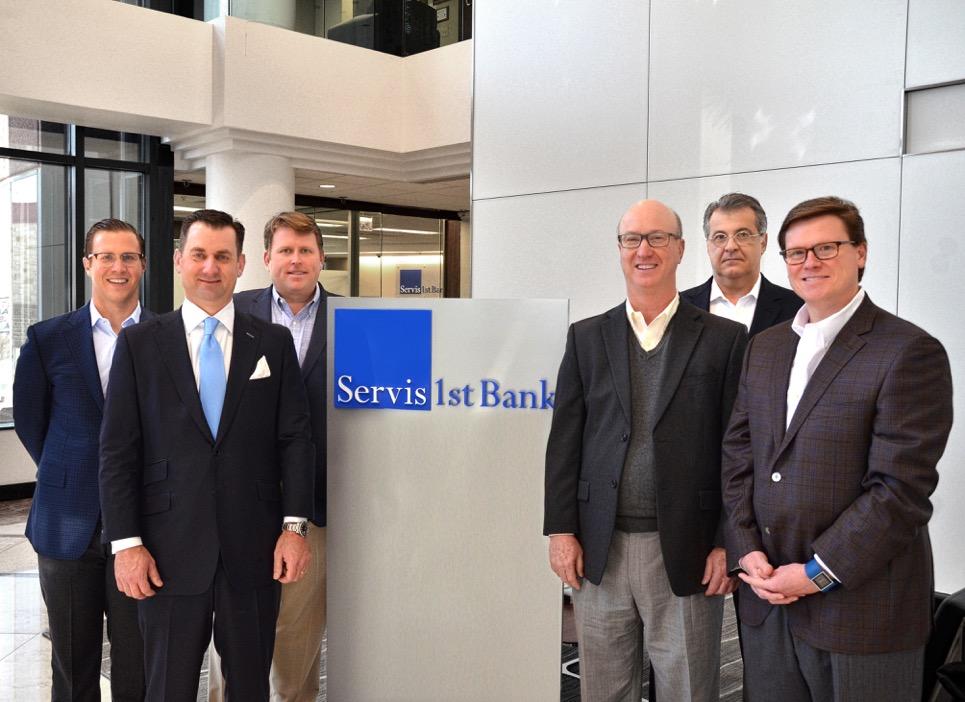
The Nashville board supplies a group portrait of the operation’s local connections. The photograph brings Vieira together with executives including Todd Robinson and Charles Robert Bone. In 2023, the bank added Eric Strickland, president and chief executive of the employee-owned organization 3LS. Regional banking involves a balance sheet, but the people around the table help explain its connection to a place.
Vieira has also made colleagues and board members the subjects of his own public writing. His LinkedIn articles include profiles of Strickland, Robinson, Mary Margaret Bourbeau and Bone. It is a small editorial habit with a useful effect: the executive’s account of his bank contains other people’s careers.
His public updates similarly make room for promotions, work anniversaries and interns. These are ordinary subjects, which is part of their interest. An organization’s culture is often described through grand nouns. A colleague being noticed for another year of work provides something more specific. It gives the claim a name and a date.
There is public discussion beyond the bank as well. Vieira appeared on the banking and finance panel at the 2024 Invest: Nashville leadership summit, alongside executives from other financial institutions. The conversation included technology and artificial intelligence. The advocate for personal relationships operates in an industry that keeps finding new ways to automate a task.
Memphis tests the idea
In March 2024, ServisFirst established a loan production office in Memphis. Joel Smith led the market team. By November, the bank was announcing a permanent office to open in December, with commercial and private banking, retail services and treasury management. The second Tennessee location extended the work beyond Vieira’s home market.
The announcement named the people doing that work, from commercial bankers to branch operations and client relationship staff. The planned team numbered 12. The range of roles is worth pausing over. Personal attention depends on more than the person who makes an introduction. Someone must manage the operation, understand the credit and keep the relationship functioning afterward.
Memphis gave Vieira’s growth approach a practical test in another city: assemble an experienced local team, then give it an office from which to build. The sequence resembled Nashville’s earlier development. A loan production presence preceded the fuller banking operation. The new address followed people already working in the market.
The next hire matters
Looking ahead in a November 2025 interview, Vieira described adding customers and bankers in Middle Tennessee and Memphis. He also mentioned other possible markets, including Chattanooga, Knoxville and Louisville. The condition was finding suitable local leadership. These were possibilities tied to people, rather than a schedule of promised openings.
That condition gives his expansion ambitions a revealing limit. A city can look attractive on a map without supplying the team he wants to put there. In this approach, recruiting becomes part of deciding where to grow. The next market depends, in part, on the next person worth trusting with it.
In August 2026, Vieira appeared among the announced Nashville Titan 100 honorees. Recognition adds a new entry to the career chronology. The older thread is still more interesting: a student remembers a coach’s confidence; a professor helps with an introduction; a banker builds a regional operation whose promise rests on knowing people.
The pay phone has largely disappeared. Vieira’s question has proved more durable. As the operation reaches more customers and more places, the work remains specific: learn the business, build the team and give the person waiting for an answer a reason to keep calling.