The first thing to understand about Boyd Interactive is that the casino is the easy part to photograph. Bright slots, a live dealer, an old Las Vegas name glowing on a phone - there is your picture. The company itself lives mostly behind the screen. It verifies the player, keeps the wallet straight, applies the promotion, checks the location, watches for fraud, connects the games and prepares the records a regulator may want to see. Nobody opens an app to admire a player account management system. Yet that system is a large part of what Boyd Gaming bought.
In March 2022, Boyd agreed to acquire Pala Interactive for $170 million in cash. The deal closed that November. Boyd's filing later recorded $175.2 million in gross consideration, or $167.9 million after the cash it acquired with the business. The distinction is accountant territory. The strategic point is simpler: Boyd had casinos, customers and recognizable names. Pala had a decade of technology and operating practice built specifically for regulated North American internet gaming.
What Boyd actually bought
A proprietary account and gaming platform, managed services, regulated-market licenses and know-how, B2B relationships, consumer operations, and a team headquartered in Toronto. In short: capability, not merely a casino skin.
01 / The productA casino company with two customers
Boyd Interactive sells to operators and plays operator itself. On the B2B side, its platform offers player account management, casino content connections and integrated sports betting. Managed services cover the unfashionable work that determines whether the flashy front end survives: customer support, payments, risk, fraud, compliance and marketing help. Wind Creek used the platform to launch online gaming in Pennsylvania. Kindred used Pala technology in its Unibet expansion. Before the acquisition, Pala said it served businesses in eight American states and Canada.
On the B2C side sit the brands that players actually meet. Boyd Interactive now presents Stardust Casino, Resorts Online Casino, Mohegan Sun Casino and CanPlay as its consumer portfolio. The brands are local by design. Online gambling in North America is not one market with a single switch. It is a collection of states and provinces, each with rules, licenses, tax structures and responsible-gaming requirements that must be translated into product behavior.
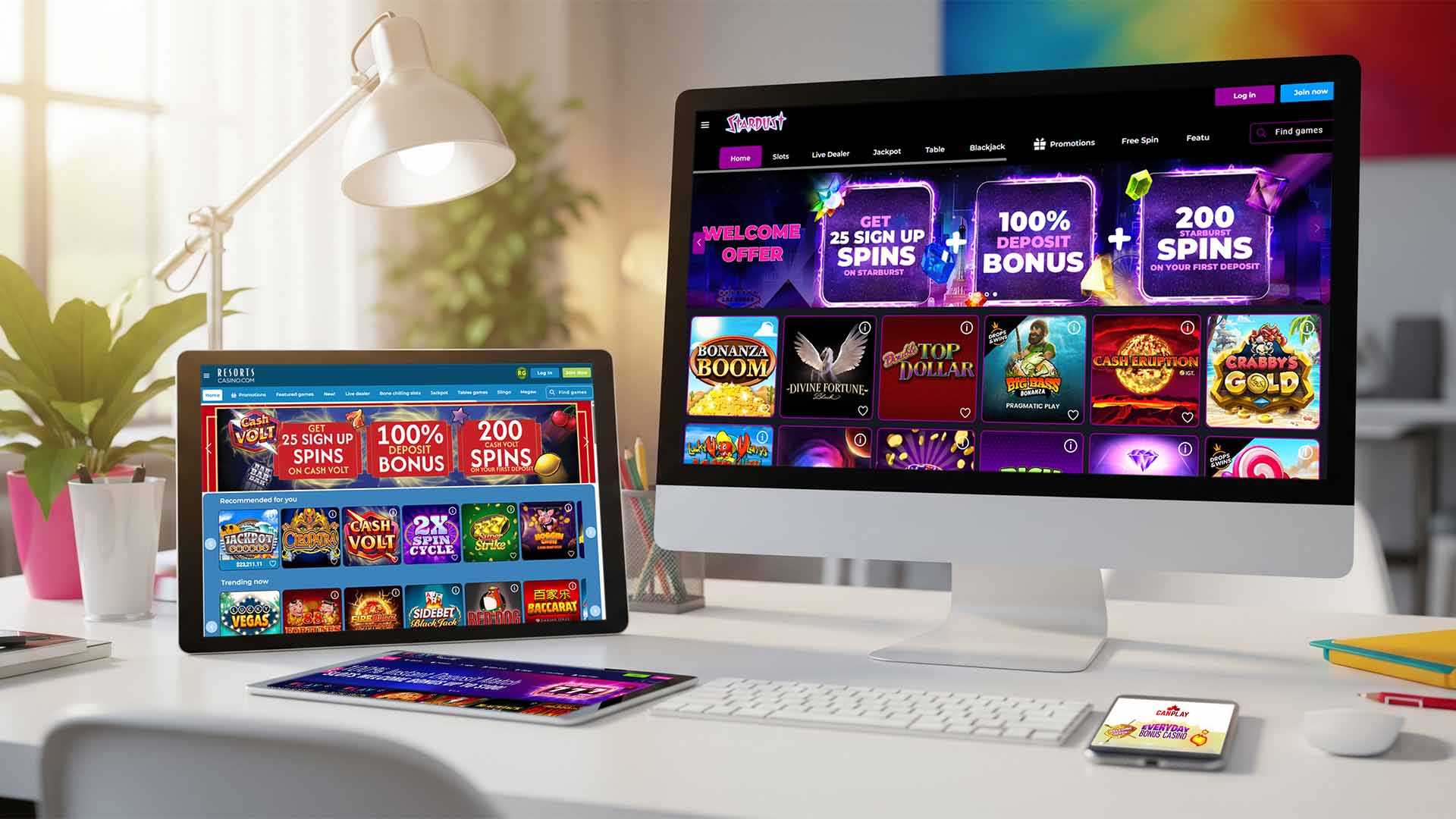
The invisible casino, from screen to regulator
This architecture explains the company's odd position in the market. It competes with technology vendors including EveryMatrix, GAN, Bragg and Light & Wonder. It also competes for players with FanDuel, DraftKings, BetMGM and Rush Street Interactive. Then it buys content from another large platform company, Playtech. In 2023, Playtech agreed to supply slots, table games and live casino shows to Stardust. White Hat Studios followed with a multi-state content deal in 2024. A competitor in one layer can be a supplier in another.
The scarce asset is not another slot. It is the permissioned, working relationship between a player, an operator and a regulator.The strategic logic of the stack
02 / The false startPoker was ready. The market was not.
Pala's early history offers a rare useful failure because management described the constraint plainly. In 2015, its New Jersey poker product was largely ready, but CEO Jim Ryan put the launch on hold. PokerStars was expected to enter the state. More important, the local poker market did not have enough liquidity to make another network obviously attractive. Online poker needs players at the same tables at the same times. A technically finished room with too few opponents is still an empty room.
Pala eventually launched poker in 2017 after rebuilding the product. That was persistence, but it was not proof that the original market concern had vanished. The more durable part of the company became the reusable platform around casino, accounts, sports integrations and managed services. The lesson is wonderfully unromantic: product readiness is not market readiness, especially when the product depends on a live network.
Liquidity, not code
A poker room needs enough simultaneous players. Shipping could not manufacture the market.
A stronger entrant
The expected arrival of PokerStars reduced the appeal of forcing a small launch.
The reusable rails
Accounts, casino, integrations and operations could serve many brands and jurisdictions.
03 / The Boyd turnFrom borrowed distribution to owned operation
Boyd had already put the Stardust name online with FanDuel in 2021. After buying Pala, it changed the arrangement. In May 2023, Boyd relaunched Stardust in New Jersey under its direct control. The former Pala Casino disappeared; its customers, credentials and balances moved into Stardust. Players from the earlier FanDuel-powered version moved to FanDuel Casino. It was a brand shuffle on the surface and a statement of ownership underneath.
Stardust was a clever vessel. The physical Stardust resort had closed in 2006 and been demolished in 2007, but the name still carried Las Vegas memory without burdening Boyd with a currently operating property of the same name. The digital version could connect an old casino story to a new customer relationship. Boyd Rewards gave that relationship a bridge back to the company's physical estate.
Then Boyd widened the hand. In September 2024, Boyd Interactive acquired Resorts Digital Gaming for an undisclosed price. It gained ResortsCasino.com, MoheganSunCasino.com and an unused sports-betting skin, while Resorts Casino Hotel retained the licensing relationship and a cross-promotion agreement. This was not a blank-market launch. Boyd bought operating brands with customers in New Jersey, one of the country's established online casino markets.
The Pala Band of Mission Indians founds Pala Interactive.
A largely ready poker launch pauses over liquidity and competition.
Boyd closes the Pala acquisition and gains the platform.
Pala Casino customers migrate into a Boyd-controlled Stardust.
Resorts Digital adds two more consumer casino brands.
04 / The economicsA number with an asterisk the size of Nevada
Boyd does not publish standalone revenue for Boyd Interactive. Its Online reporting segment is broader: it includes Interactive operations, revenue from market-access agreements with third parties and reimbursements for certain taxes and license costs. In 2025, that segment reported $708.3 million of revenue, up 16.8 percent from a recast $606.2 million in 2024. Boyd said revenue from Interactive operations increased by $32.9 million, driven primarily by the Resorts Digital acquisition, while market-access revenue declined.
Boyd Gaming Online segment revenue
USD millions. Includes more than Boyd Interactive operations.
That mix matters. Market access can be attractive without requiring Boyd to build the consumer product. Owned operations offer more control but also bring promotion costs, customer service and competitive risk. The hybrid model lets Boyd collect economics from both routes. It can be landlord, software operator and casino brand - though not necessarily in every state or every transaction.
05 / The stealOwn the ugly workflow
The copyable move is not “buy an online casino company.” It is to identify the workflow whose difficulty compounds with every new market. For Boyd Interactive, that workflow is the regulated player relationship: one account, many games, jurisdiction-specific rules, money movement, monitoring and service. Once that core works, brands and content can be changed around it. Pala Casino became Stardust. Playtech and White Hat supplied games. The center held.
A second lesson is to separate network businesses from software businesses. Pala's poker hesitation showed that good software cannot overcome insufficient participation. By contrast, a player account platform can deliver value with each operator launch. Founders should ask whether their product improves as their own network grows, or whether it can be valuable to one customer at a time. The financing, patience and go-to-market plan are completely different.
Third, compliance can be a product feature instead of a tax paid at the end. Boyd Interactive says its systems were shaped alongside North American regulation. That claim matters only if the knowledge is encoded in launches, reporting, responsible-gaming tools and repeatable operations. In a regulated category, the boring checklist is often the actual moat.
This playbook will not travel everywhere. It fails where regulation is unsettled, licenses cannot be secured, customer acquisition costs overwhelm lifetime value, or a market is too small to support the required operating overhead. It also weakens if a company lacks trusted distribution. Boyd could connect the stack to brands, a loyalty program and physical casinos. A startup buying equivalent software without a customer channel would own an expensive engine with nowhere to drive.
Boyd Interactive is therefore less a story about digitizing a casino than about deciding which pieces of digitization to own. Games can be licensed. Brands can be revived. Even market entry can sometimes be rented. The account, the operating knowledge and the direct customer relationship are harder to replace. Boyd paid for those pieces, put Stardust on top, and kept shopping.