There is a small deception at the center of every sportsbook app. The bettor sees a team badge, a price and a bright button marked “bet.” The operator sees a storm: data feeds changing by the millisecond, models repricing the market, traders watching liability, a wallet checking funds, software checking location and a regulator deciding which wagers may exist at all. Amelco Limited sells the machinery that keeps that storm behind the button.
The London company is a business-to-business supplier, which explains why its name is less familiar than those of its customers. Fanatics, Hard Rock, Flutter, Entain, Paddy Power, Betfair and the UK Tote Group appear in its public orbit. Amelco does not ask bettors to download an Amelco app. It gives operators the sportsbook, player accounts, casino content, risk tools, mobile interfaces and integrations from which their own apps are made.
A trading desk learned to speak football
Amelco was founded by veterans of the financial sector. Damian Walton, a director since 2007 and an original company secretary at incorporation, is the founder most clearly documented in the public record. The origin matters because fixed-odds betting is a cousin of market making. Both businesses ingest changing information, publish prices, accept exposure and try not to discover risk five seconds too late.
That inheritance became the company’s practical distinction. A conventional software house might begin with screens and databases. Amelco began closer to the trading engine: algorithms, market data, automated pricing, order management and controls. It deployed its first sportsbook in 2010. In 2017 it introduced a multi-tenant white-label version, allowing several brands to operate on a shared core without looking identical to customers.
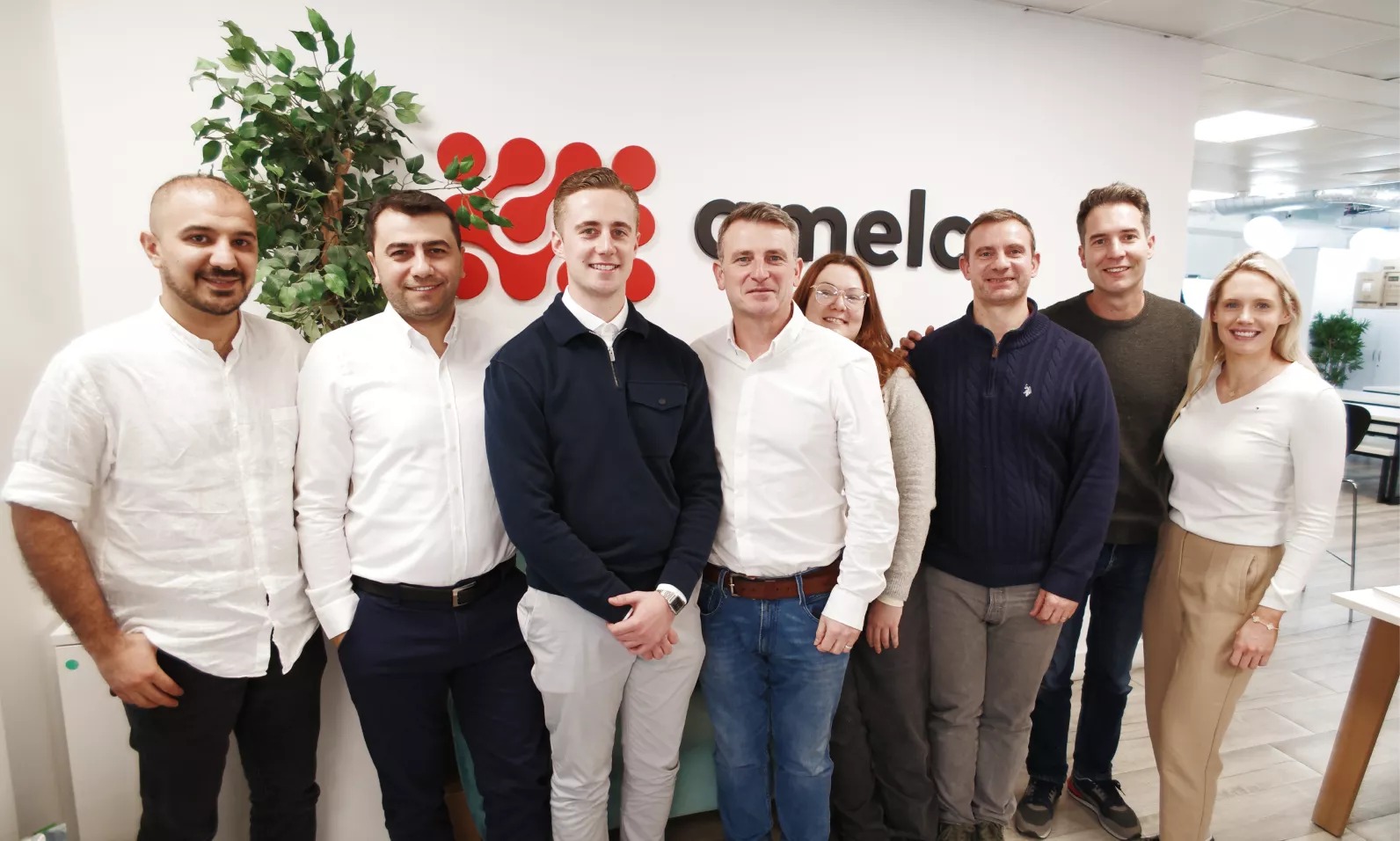
Today the proposition is less “buy our sportsbook” than “choose how much sportsbook you want.” A new operator can take the whole stack. An established casino can add sports. A lottery can bolt on fixed odds. A brand with its own wallet can license only the betting layer. Open interfaces connect payments, customer marketing, identity, content and compliance vendors. Bespoke work preserves a brand’s oddities - often the part its customers actually like.
The catalogue follows the life of a wager. Sports models and external feeds produce prices and fixtures. The sportsbook publishes pre-match and live markets, props, esports and streaming. Trading services watch exposure and adjust odds. Player-account software handles registration, verification, balances and limits. Payment connections move money; reporting tools explain what happened; native and web apps put the result in a customer’s pocket. For casino operators, an aggregation layer collects games from many studios behind one connection. None of these pieces is novel alone. Their coordination - under the load of a Saturday afternoon when every goal moves thousands of prices - is the sell.
The product is control, not code
The alternatives are uncomfortable. Build in-house and an operator gains control but inherits years of engineering, licensing and 24-hour operations. Take a rigid white label and it launches quickly but may make the product look like everybody else’s. Amelco occupies the middle: proven core software, licensed modules and enough source-level flexibility for a customer to shape its own proposition.
That puts it in a crowded infrastructure market. Kambi and OpenBet are familiar choices for large sportsbooks; EveryMatrix, Altenar, GiG, Playtech and BetConstruct sell overlapping combinations of platform, content and service. The most formidable alternative is not always another supplier. DraftKings, FanDuel and other scaled operators have bought or built technology to control their road maps. Amelco’s counter is flexibility: it will provide a complete operation, a component, managed traders or code a customer can develop further. The trade-off is obvious. More control for the operator demands more technical competence from the operator.
Fanatics illustrates the value. Amelco executives have described their technology as an accelerator for the sporting-goods company’s gaming brand. Fanatics could begin with working sportsbook and account foundations, then develop around them rather than spend its first years reproducing solved plumbing. For smaller operators, the same logic is defensive. They cannot match the largest books’ engineering payrolls, but they can rent an industrial stack and compete through product, audience or local knowledge.
“Our technology was very much like an accelerator program for their gaming brand.”Amelco on its work with Fanatics
Customers pay through enterprise software licenses and services: integration, deployment, custom engineering, support and, when wanted, managed trading. Contract prices are private. The company’s latest publicly summarized accounts put turnover at about £44 million for the period ending September 2024, with profit after tax around £11.6 million. No public funding round or valuation is disclosed. This looks less like venture software chasing seats and more like a specialist vendor selling consequential infrastructure on long relationships.
That 70:30 mobile-to-desktop estimate explains why Amelco’s product managers talk less about cramming more markets onto a screen and more about subtraction. Mobile products must make thousands of possible wagers navigable with one thumb. Personalisation is meant to surface relevant teams, leagues and offers without forcing everyone through the same lobby. The company’s formulation - “elegant simplicity” - is refreshingly modest for an industry fond of blinking odds.
There is also an omni-channel problem. A land-based operator may need a cashier terminal, a self-service betting kiosk and a phone to recognize the same account and settle against the same ledger. A national lottery arrives with retail distribution, public scrutiny and systems that were never designed for an app-store release cycle. Tribal operators in the United States bring sovereign and state compact requirements. Amelco’s customer groups are not marketing personas; they are different technical and regulatory geometries. The platform earns its keep when those geometries can share a core without forcing the casino floor, lottery counter and mobile app into one awkward workflow.
Every new market adds another tripwire
Amelco has expanded through regulated markets in Europe and North America, where a platform is only as useful as the specialist vendors attached to it. Paysafe unified deposits and withdrawals inside the player-account system. Radar added geolocation for North America. PandaScore brought esports data. Sporting Risk contributed player-proposition content. Xtremepush connects customer engagement. In 2026, Mindway AI added responsible-gambling controls and Odditt supplied historical data for testing sports models.
This partnership web is a strength because no sensible platform builds every payment rail, location service and sports feed. It is also a source of failure. In 2022, a Sportradar feed contained a market on Pete Buttigieg becoming the next U.S. president. An Amelco setting automatically published it for PlayUp in New Jersey, where political wagering was prohibited. Amelco’s trading team failed to catch the market. One customer placed a $1 bet; the bet was voided. New Jersey later imposed a $10,000 civil penalty on Amelco for unapproved and prohibited events.
The integrations also show how the product has widened. In 2020, payments were the conspicuous U.S. need: give operators cards, digital wallets and cash alternatives through one interface. By 2025, location verification and esports had joined the pitch. In 2026, the additions were historical model data and algorithmic player protection. The platform is becoming an orchestrator of specialist systems. That is useful to a buyer who wants one accountable technology relationship, but it raises the standard for monitoring every handoff.
The useful lesson is larger than one embarrassing dollar. A data provider describes an event; it does not necessarily certify that every jurisdiction permits betting on it. The operator and platform remain accountable for translating local rules into controls. Automation reduces manual work only after the rules have been encoded correctly, with exception queues and people empowered to stop publication.
This is where Amelco’s market position becomes clearest. Its software must be fast enough for in-play sport, adaptable enough for a customer’s design and conservative enough for regulators. Those goals pull against one another. A modular architecture helps change one part without disturbing the rest. It cannot substitute for operational ownership.
The playbook worth stealing
There are three ideas another software company can copy. First, carry expertise across industries: Amelco recognized that financial trading’s pricing and risk habits could solve a betting problem. Second, productize the core while leaving the edges open. Shared infrastructure creates efficiency; APIs and bespoke interfaces prevent sameness. Third, seat domain specialists beside engineers. A trader understands why a number is dangerous; a compliance specialist understands why it may be illegal; an engineer makes those judgments repeatable.
The model works when customers have a distinct brand or market advantage but do not want to own every technical layer. It works when the vendor can keep a common core without turning every request into a fork. And it works only in regulated markets where responsibilities among operator, platform and data suppliers are explicit.
It works less well for a giant determined to own its entire stack, a tiny entrant without the capital or licensing path to operate, or a business that treats configuration as a substitute for product strategy. Modular software can shorten the road. It cannot pick the destination, acquire customers or make a weak proposition interesting.
Amelco’s achievement is deliberately hard to photograph. It has spent 20 years making a complicated transaction feel boringly immediate. The bettor taps a price. Somewhere beneath the brand, a London-born system asks five dozen questions before saying yes.