There is an old office problem hiding inside a new one. A spreadsheet macro quietly becomes essential to a department. Nobody remembers who wrote it. The person who knows how it works changes jobs. Now replace the macro with a Python script composed with an AI assistant, and give it access to a database. This is the sort of software BotCity wants companies to notice before it becomes an incident.
- BotCity gives developers open-source tools to build automations and companies a paid platform to run and govern them.
- Its Orchestrator handles production work: deployment, schedules, queues, runners, alerts and logs.
- Its newer Sentinel product watches Python execution on endpoints, including scripts outside approved pipelines.
- The proposition works best where many teams are writing code and somebody must own the evidence of what ran.
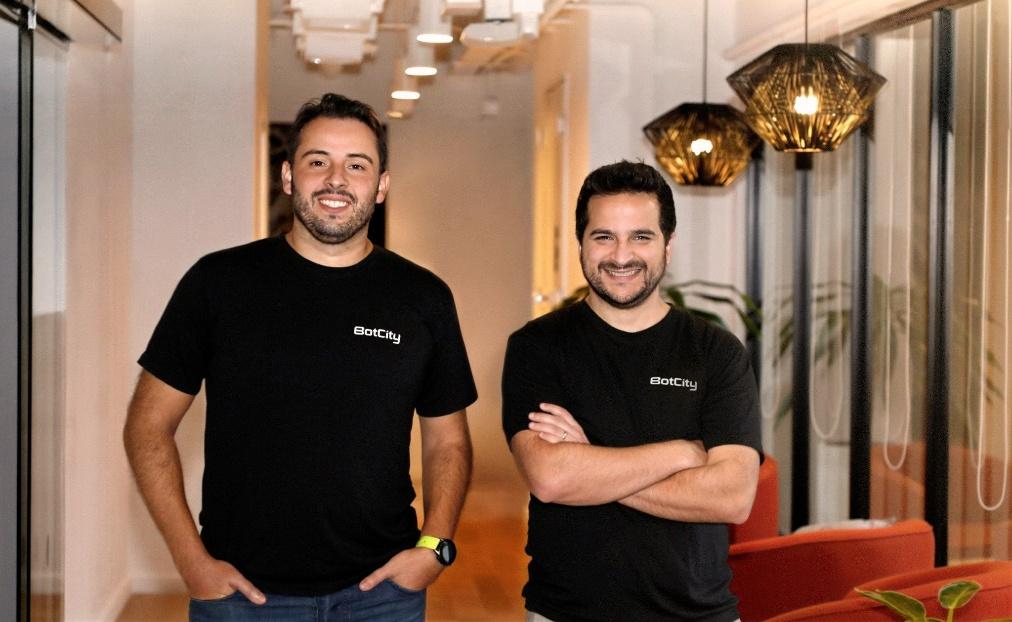
The company was founded in Brazil in 2018 by Lorhan Caproni, now chief executive, and Gabriel Archanjo, chief technology officer. Its early argument was unfashionable in parts of the robotic process automation market. While established vendors sold visual, low-code ways to make bots, BotCity backed people writing actual code, especially Python. The code could be kept, changed, reviewed and moved. What BotCity sold was the machinery around it.
The bot was easy. Tuesday at 2 a.m. was hard.
A script that clicks through a web form is only the first chapter. In a real operation it must run at the right time, on the right machine, against the right version of a system. Its credentials must be protected. Failed jobs need a record, an owner and sometimes a retry. Managers want to know whether the automation saved anything. Auditors want to know who changed it. BotCity Orchestrator is built for this unromantic middle of the story.
Its documentation describes a familiar software pipeline: build a bot, package it, deploy a version, attach a runner and queue a task. The runner can sit on a virtual machine or in a container. The platform supplies scheduling, logs, alerts, permissions and an audit trail. BotCity Insights adds reports on performance. Its open-source frameworks and SDKs help developers create web and desktop automations, including computer-vision interactions with interfaces that do not offer a convenient API.
That is a different sale from promising that one more task can be automated. BotCity is asking an IT team to pay for an operating system for the automations it already has. The open-source development tools can be used without buying the full platform. A limited Community tier lets people test the orchestrator; enterprise subscriptions buy more capacity and governance. The commercial logic is clear enough: writing a bot is cheap; trusting hundreds of them in production is not.
A healthcare group makes the arithmetic visible
Consider Oncoclínicas, a Brazilian healthcare group that had been using low-code tools to automate authorizations with health insurers. Its problem was not a shortage of ideas. It was weak tool support, slow development and code that reflected the habits of individual authors. The group wanted a better return from its automation program and a way for multiple people to maintain the same processes.
According to BotCity’s published case study, the team moved to reusable Python functions and BotCity’s orchestration and error logs. Within a month it had a shared framework and its first rewritten bot in production. The case study says 25 bots were later rewritten from low code to Python and ran on three virtual machines; previously, ten low-code bots needed 15 machines. One measured task fell from 31 seconds to eight. BotCity also reports more than 60 automations in production, 80% savings on licenses and R$2.5 million in savings for the program. Those are customer-reported results, not a universal forecast.
“We now have enhanced execution logs and error analysis, allowing us to maintain and support our processes faster than ever before.”José Roberto · RPA technical lead, Oncoclínicas
The intriguing part is not merely that Python ran faster. The group changed who could understand a bot after its author walked away. Reusable functions, screenshots of failures and centralized logs made automation less dependent on one person’s memory. At Bayer LATAM, another BotCity customer, an existing program reportedly cost €450,000 a year before a budget squeeze forced a rethink. BotCity says more than 220 employees were then trained as citizen developers, automation delivery moved from eight months to four weeks, and the program saved more than €1 million. Both cases link freedom to a common operating layer.
Then everybody got a programmer
AI assistants changed the size of the problem BotCity was addressing. The company says it interviewed 200 automation teams and found that governance and observability were the main obstacles to wider Python use. In 2025 it raised a $12 million Series A led by Four Rivers, with Y Combinator and other investors participating. The stated purpose was to expand globally and build a wider governance system for Python automations and AI agents.
The new product, Sentinel, reaches beyond automations that IT has already accepted into a pipeline. BotCity says it inventories Python scripts as they execute on employee devices, recording who ran them, where, and what resources they touched. It offers alerts for behavior such as access to sensitive data, suspicious traffic or vulnerable libraries, along with policies and evidence for audits. BotCity positions this as a complement to general endpoint security tools, with a narrower interest in what Python code actually does.
There is a practical distinction here. A repository scan can examine code somebody checked in. A scheduler can report on jobs somebody registered. Neither tells a company much about a local notebook that an analyst generated yesterday and ran against a live database. Sentinel’s bet is that this missing execution record will become a budget line as AI makes small scripts easier to create. Whether its coverage and controls meet each customer’s security requirements is a matter for a scoped pilot, not a slogan.
The useful lesson is a boring one
BotCity sits between two familiar options: visual RPA suites such as UiPath and Automation Anywhere, and the homemade mixture of Python, cron jobs, chat messages and hope. Its difference is the combination of developer-owned code with a central control room. The code-first approach gives engineers room to use libraries, APIs and ordinary development practices. The governance layer gives the rest of the business a way to see whether those choices are working.
A team can copy part of the method without buying a platform tomorrow. List the automations that run today. Give each one an owner, a version, a schedule and an error destination. Measure one task before rewriting it. Move repeated actions into shared functions. Record what the process accessed and what happened when it failed. If scripts are being created on laptops with AI help, start by finding where they execute. These are small acts of accounting for software that likes to pass as a shortcut.
BotCity’s own opportunity is narrower than the grand claim that every company needs more automation. Companies with a handful of stable scripts may be fine with ordinary developer tools. Firms with a growing, distributed estate of Python jobs have a different question: when the clever script becomes part of the business, who is watching it? BotCity has spent years building an answer, and the AI era has made the question much harder to ignore.
BotCity website · Sentinel · Orchestrator · Oncoclínicas story and video · Documentation · GitHub · YouTube demos · LinkedIn · Instagram · X