EXCLUSIVE
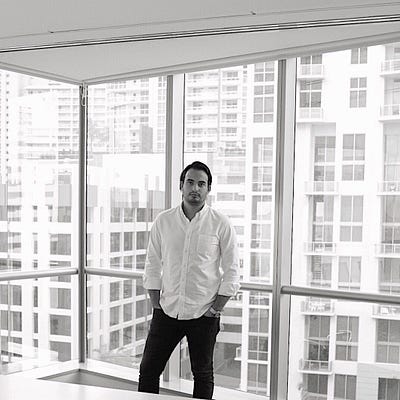
The Profile
Bora
Bora
Hamamcioglu
He built a marketplace for supercars and sold it to Turo. Then he picked a harder problem: the phone that never stops ringing at your veterinary clinic.
He built a marketplace for supercars and sold it to Turo. Then he picked a harder problem: the phone that never stops ringing at your veterinary clinic.
A puppy swallows something it shouldn't. A worried owner calls the clinic. The line is busy, then it rings out, then voicemail. Multiply that by every practice in America that cannot hire fast enough, and you have the problem Bora Hamamcioglu decided to solve.
Mascotte Health, the company he co-founded and runs as CEO from Miami, is built around a deceptively plain idea: veterinarians went to school to practice medicine, not to manage a switchboard. So Mascotte takes the rest off their plate. Virtual triage. Client communications. Virtual front-desk assistance. After-hours care. Virtual scribing. The clinic keeps its name, its protocols and its patients - it just stops drowning in logistics.
The framing matters. Mascotte does not pitch itself as a replacement for staff or a faceless call center. It positions its licensed and registered veterinary professionals as an embedded extension of the practice, trained on each clinic's specific protocols and strategically paired with the teams they support. The promise to a vet owner is unusually concrete: more revenue without more headcount.
And the early numbers gave the pitch teeth. After deployment, partner practices reported roughly a 70% reduction in inbound phone calls handled by in-house staff, a 50% drop in appointment no-shows, and a 40% jump in prescription compliance. In an industry where a missed callback can mean a sicker animal and a lost client, those are not vanity metrics. They are the difference between a practice that scales and one that burns out.
Mascotte spent its first chapter quietly. Rather than announcing itself and figuring things out in public, the company ran pilot programs with a handful of veterinary practices, proving the model before it said a word. It emerged from stealth in the summer of 2023 - not with a manifesto, but with results and a closed funding round.
That round was a $1.2 million pre-seed, and it was oversubscribed. It was led by Dubai-based Nuwa Capital, with angel investors drawn from Uber, Turo and Airbnb - a roster of marketplace and operations veterans who tend to recognize a fellow traveler. The Gulf-to-Miami funding bridge is itself a small tell about how Hamamcioglu moves through the world: comfortably across borders, fluent in the language of operators.
“ Empower veterinary heroes to focus on their true passion - practicing medicine.BORA HAMAMCIOGLU, ON MASCOTTE'S MISSION
Before pets, there were Porsches. Hamamcioglu's first company, CarHopper, was an online marketplace and fleet-management platform for luxury and exotic car rentals. It raised $1.5 million in 2017 to expand a catalog of ultra-luxury vehicles, and it solved the same kind of problem that animates him now: matching supply it didn't own to demand it didn't create, then making the operational machinery underneath actually work.
In March 2020, CarHopper joined Turo, the world's largest car-sharing marketplace. "We have taken our founding vision to new heights by joining the world's leading car-sharing marketplace," he wrote at the time, thanking the employees, hosts and customers who got it there. It was a clean ending to a first act.
What he did next says something about how he thinks. He went into venture capital. From 2021 to 2022 he was a Principal at BECO Capital in Dubai, leading deal-flow, product, and fundraising and investor-relations functions. He had also consulted alongside firms like Bain & Company and McKinsey on fintech and online marketplaces. He had, in other words, every reason to keep operating in the glossy world of mobility and money.
Instead he chose the animal clinic down the street. The throughline is not the industry - it is the structure. A two-sided market with overworked supply, frustrated demand, and a mountain of unglamorous operational work sitting between them. Supercars taught him the pattern. Veterinary care let him apply it where the stakes are warmer.
Most pitches about veterinary technology start with software. Hamamcioglu's starts with a person who is too busy to pick up the phone.
The veterinary world has a structural squeeze. There are more pets than ever and not enough trained hands to care for them. The shortage is real, but it shows up in a peculiar way: not as a lack of medicine, but as a clinic where the medicine is fine and the operations are on fire. The doctor is in an exam room. The technician is restraining a nervous cat. Meanwhile the front desk has three lines blinking, a lobby filling up, and a prescription refill that should have gone out an hour ago. The bottleneck is rarely clinical skill. It is everything that surrounds the skill.
Mascotte's answer is to slot a trained, remote layer into that surrounding work. Licensed and registered veterinary professionals handle triage, booking, client communication, after-hours coverage and scribing - but the crucial design choice is that they are not generic. They learn each practice's specific protocols and are paired with the clinic as a near-permanent extension of the team. A caller does not feel handed off to a stranger. The practice's own standards travel with every interaction.
That is why the pilot metrics read the way they do. Cut the inbound call load that lands on in-house staff by roughly 70%, and the people inside the building get their day back. Reduce no-shows by 50%, and the schedule stops leaking revenue. Lift prescription compliance by 40%, and pets actually finish the treatments that keep them well. Each number traces back to the same root: someone reliable was there to close the loop.
There is a quiet thesis underneath all of this, and it is the same one that made the supercar business work. A marketplace operator does not need to own the asset to make it more productive - it needs to remove the friction that keeps the asset underused. With CarHopper, the asset was an exotic car sitting idle in a garage; the friction was trust, logistics and software. With Mascotte, the asset is a veterinarian's time and a clinic's goodwill; the friction is the operational sprawl that eats both. Hamamcioglu keeps choosing businesses where the unglamorous middle is the whole opportunity.
Geography is part of the story too. Mascotte is a Miami company funded out of the Gulf, which is not the usual shape of a US healthcare startup. It reflects a founder who spent a stretch of his career in Dubai at BECO Capital and is comfortable assembling a cap table that spans time zones and continents. The angels who came in alongside Nuwa - operators from Uber, Turo and Airbnb - are the kind of people who have personally lived the gap between a clever product and a working operation. Their presence on the round is less a stamp of approval than a recognition of pattern.
Founds an online marketplace and fleet-management platform for luxury and exotic car rentals. Founder & CEO.
CarHopper raises funding to expand its ultra-luxury rental catalog and host tooling.
CarHopper joins Turo, the world's largest car-sharing marketplace, in March.
Joins as Principal, leading deal-flow, product, and investor relations through 2022.
Co-founds Mascotte in Miami; the startup exits stealth with an oversubscribed $1.2M pre-seed led by Nuwa Capital.
“ With the industry's employee shortage and the ever-increasing number of pets, we recognize the need to enhance health outcomes.BORA HAMAMCIOGLU
His first marketplace rented out Lamborghinis. His current one helps a clinic remember to call you back about your dog's medication.
Four languages: English, French, Spanish and Turkish. Useful when your lead investor sits in Dubai and your customers sit in Florida.
He built in stealth on purpose - pilots first, press later. Proof before promises.
Georgetown for the master's, Bentley for the bachelor's, then consulting beside Bain and McKinsey before founding anything.
The vet shortage, in Hamamcioglu's reading, is really a workflow problem wearing a staffing costume. Mascotte's bet is that the right support infrastructure - people plus technology, trained on each practice's own protocols - lets veterinarians do more medicine, keeps clients loyal, and gets pets seen faster. Build that well, and the marketplace logic he learned with supercars compounds in a far more meaningful direction.
Profile compiled from public sources including Refresh Miami, dvm360, TechCrunch, Crunchbase, The Org and Turo. Facts only; where the record is silent, so are we.