He spent sixteen years shipping products in California. Then he came home to fix the day every Egyptian family dreads.
Founder & CEO, SOKNA - Cairo / San Francisco
Afuneral is the worst possible time to discover that a system is broken. The paperwork, the queues at the health bureau, the missing stamps, the cemetery that needs setting up, the hall, the transport - all of it landing on someone who can barely stand. Ahmed Gaballah watched that happen once, helping arrange his best friend's father's burial, and he never forgot it. "It was a disaster from every angle," he says. He was so shaken he avoided funerals for nearly a decade afterward. He even skipped his own grandmother's.
Today he runs SOKNA, Egypt's first end-to-end funeral service - the company built precisely so no other family has to feel that helpless. SOKNA handles the burial paperwork, the body preparation, the transport, the cemetery setup, the condolence halls, the obituaries, and repatriation when a death happens abroad. One number, one team, one calm voice on the other end. The promise is right there in the name: "Feel safe, feel Sokna." (Sokna, fittingly, evokes serenity.)
What makes the arc strange is where he started. Gaballah is not an undertaker by trade. He is a product manager - the Silicon Valley kind. Before SOKNA there were sixteen years in California and a resume most founders would frame: Google, Adobe, Facebook. He came back to Cairo in 2019 and pointed all of that operational firepower at the least glamorous, most human problem he could find.
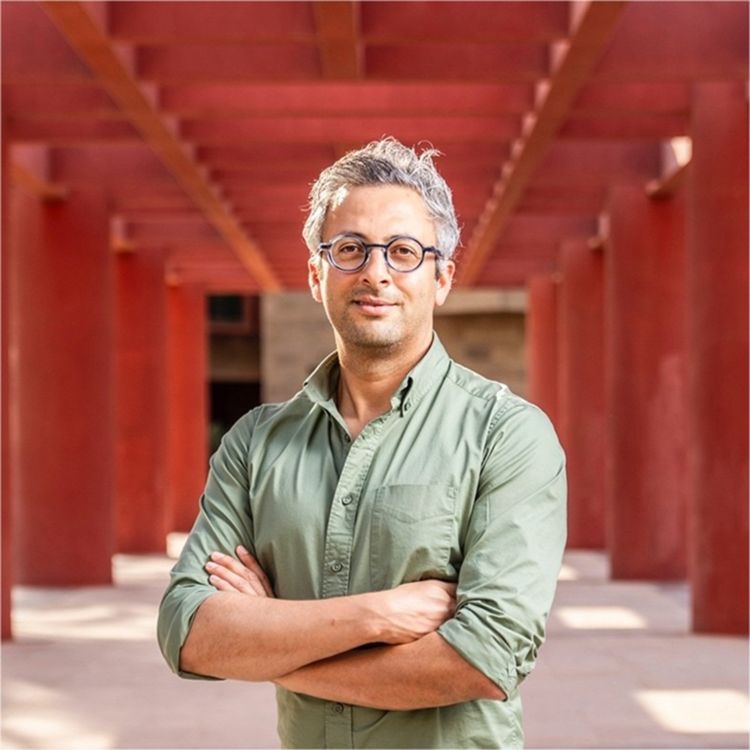
Role: Founder & CEO, SOKNA
Before: Google, Adobe, Facebook
Studied: AUC; Stanford (Advanced Project Management)
Based: Cairo & San Francisco Bay Area
Also: Angel investor (Monarch Money, MaxAB, Parlio)
"When a funeral happens, people say, ‘How did you not call Sokna?’"
Gaballah studied computer science at the American University in Cairo, with a minor in business and study-abroad stops in Beirut and Los Angeles. Then he went west. At Google he started as a decision-support engineering analyst and grew into product roles. At Adobe he ran product for strategic growth markets. At Facebook he cycled through some of the company's hardest product problems - business communication and growth, special audiences, search, and growth itself. Along the way he picked up a Stanford credential in advanced project management and a habit of treating messy human systems as things that can be measured and improved.
The contrast that lit the fuse came in California. When a friend died there, Gaballah saw an end-of-life process that was calm, dignified and organized - the opposite of what he had lived through in Cairo. The gap between those two experiences became the business plan. Egypt, he decided, deserved the dignified version.
So in March 2019 he started SOKNA with a team of three. The first month: nineteen funerals. It was small, and it was the whole point. He was not trying to disrupt a category for the sake of it. He was trying to make sure that on the worst day of someone's life, the logistics simply worked.
One in Cairo went wrong in every way and made him avoid funerals for a decade. One in California showed him how dignified it could be. SOKNA is the distance between those two days.
Releasing burial documents, navigating health bureaus, body preparation - the bureaucratic gauntlet, taken off the family's shoulders.
Cemetery setup, transportation, booking of condolence halls and obituaries. 70+ partner vendors in Greater Cairo alone.
When a death happens abroad, SOKNA coordinates with embassies to bring loved ones home with dignity.
Plenty of founders would have built an app, slapped a logo on it, and called it deathtech. Gaballah went the other way. "Grieving families won't download software," is the logic, so SOKNA's technology lives in the background - dispatching, prediction, data tracking - quietly making the operation faster and more reliable while the customer only ever feels a human being who shows up and handles it.
That restraint shows up in the numbers. Out of every hundred people who use SOKNA, ninety-nine recommend it. Roughly two-thirds find the company organically, by word of mouth, which in this category is the only marketing that has ever really worked. The company has been profitable for years - a sentence you rarely read about a venture-backed startup, let alone one in funerals.
In 2026 the plan is to push further: new technology-driven products designed to sharpen the experience and, crucially, to make SOKNA portable to markets outside Egypt.
Global funeral conglomerates, impressed by the data-driven model, have come knocking. His answer: "We don't want that. We want to grow globally."
"Women have been driving and leading this company from day one."
In 2022, SOKNA's $1M seed round came together fast - blowing past its initial target in about ten days. The list of believers reads like a tour of regional and global tech finance.
He worked at three of tech's biggest names - Google, Adobe and Facebook - before pivoting to funerals. Few career swerves are sharper.
SOKNA's tech is deliberately invisible. No app for the grieving; the software runs behind the curtain.
An NPS of 98.9 is almost unheard of in any industry, never mind one defined by loss.
SOKNA is the exclusive funeral provider for Egypt's Syndicate of Actors, and has worked with the Journalists' Syndicate too.
He flies to the NFDA funeral directors' conference in the US every year to study the global market - and turns down acquisition offers there.
"Feel safe, feel Sokna."
Sources: EnterpriseAM, Enterprise, Daily News Egypt, Disrupt Africa, Wamda, What Women Want, The Org.
Profile compiled from public reporting. Quotes drawn from published interviews.