Boots Dunlap has a habit of arriving when the brochure has gone out of date. He served in Fallujah as the city became shorthand for a hard war. He deployed to Afghanistan's Pech and Korangal valleys. He came home to Phoenix just as its real estate economy began to buckle. Then, in the summer of 2020, he moved to New York while plenty of New Yorkers were moving the other way. He tells this geography as a joke about his own timing. The pattern is funny because it is also the spine of his career: difficult terrain appears, Dunlap takes stock, and the work begins.
Today he is CEO and co-founder of RRA Capital, a commercial real estate investment manager and bridge lender with offices in Phoenix and New York. The firm lends into the awkward middle of a property's life, when a building needs time, capital or a change of plan before conventional financing makes sense. Bridge lending can look elegant from a distance. Up close, it is a business of imperfect facts, impatient clocks and operators whose judgment matters as much as the concrete.
Dunlap's route into that business began with four promises to himself. He would not move back to Arizona. He would not work in real estate. He would not work with his father. He would not marry his high-school girlfriend. By 2007, after five years of active Army duty, he had managed all four. Never is a wonderfully efficient word until life starts editing.
A battlefield lesson without the costume
Dunlap grew up in Arizona, the only boy among five children. At the University of Virginia, he joined ROTC during his senior year, the year of the September 11 attacks. Two of his sisters were living in New York. He has described the moment as his generation's Pearl Harbor, a private conclusion that turned an old interest in military service into a decision.
He completed Ranger and Airborne training and joined the 10th Mountain Division as an infantry officer. In Iraq, his unit operated around Fallujah while attached to the Marines. Afghanistan followed. He eventually received the Bronze Star and Combat Infantryman Badge. Those facts can easily overwhelm the quieter lesson he prefers to discuss: an infantry officer is valuable not because he is doing everybody else's job, but because he can see the field.
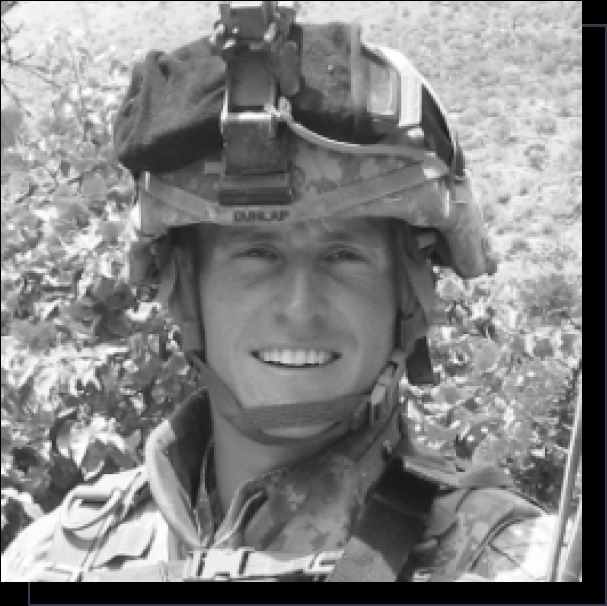
His description sounds almost anti-heroic. Find the position with the widest view. Understand the people and tools around you. Notice vulnerabilities. Put others where their strengths have the greatest effect. In business, that became a case for delegation and humility. The chief executive who must be the best person in every chair has not built an organization. He has built a queue.
“If you don't act humble in this business, the market will humble you.”Boots Dunlap
Humility, in Dunlap's telling, is not a soft-focus virtue. It changes the questions an investor asks. It makes room for more intelligence. It invites a talented colleague to puncture an attractive thesis before the market does. RRA chief investment officer Ted Van Brunt gave the firm a plain formulation: stay humble while underwriting. One can imagine worse inscriptions above an investment committee door.
Phoenix becomes the classroom
When Dunlap returned home, his father Charles had spent roughly three decades in Southwestern real estate development. The son expected to join the trade. Instead, the Great Financial Crisis turned Phoenix into what he remembers as something closer to a depression. An economy deeply tied to homebuilding did not merely slow. It seized.
Father and son began winding down the development company and repositioning it to advise lenders facing trouble in their portfolios. At first the work involved land entitlements and finishing single-family homes. Then the contagion moved. Apartments, shopping centers and offices joined the assignment list. Specialists came aboard. In 2008, the business became Realty Resolution Advisors, which explains the otherwise mysterious initials RRA.
The expected opportunity was to help banks and perhaps buy assets when those banks sold. The second half barely happened. Lenders held on. RRA waited and did the less glamorous work: workouts, asset management, servicing and special servicing. One insurance company asked the team to take over a mortgage portfolio. Years passed at the desk where optimistic assumptions come to explain themselves.
That delay became an education no seminar could imitate. The team saw which plans survived contact with lower rents, tighter credit and exhausted borrowers. It learned how distress travels through a capital stack and how operational weakness eventually lands in a lender's lap. The absence of deals created a store of pattern recognition.
The workout desk turns into a lending desk
Around 2012 and 2013, RRA believed the market was bottoming. The firm approached an insurance-company client about a separately managed account for bridge lending. Banks had pulled back from speculative value-add loans, insurance companies had tightened standards, and post-crisis reforms had narrowed securitized lending. Transitional properties still needed money. Private lenders could occupy the gap.
A second separately managed account followed with a global asset manager. Then came an instructive complication: the partner began building the strategy internally. Dependence on a few large capital providers made the business brittle. RRA shifted toward a broader fund model, accepting the burden of fundraising in exchange for a more durable investor base.
Distressed-loan consulting and workout work establish RRA.
The first separately managed account targets light value-add debt.
Fund I expands into opportunistic debt and preferred equity.
Real Estate Debt Fund II launches.
The firm reports a $224 million fundraise and more than $2 billion originated.
By June 2024, Dunlap was credited with overseeing more than $1.5 billion in bridge loans and consulting lenders on more than $2.4 billion in distressed commercial real estate. RRA announced that total originations passed $2 billion in 2025. The numbers matter, though their deeper value is chronological: the lending scale came after the workout years, not before them.
When the operator becomes the asset
Dunlap's current market view is free of nostalgia for cheap money. In June 2026, he argued that bridge underwriting once divided its attention roughly equally among property, market and sponsor. His new weighting gives 60 percent to the sponsor and operator, with everything else sharing the remaining 40 percent.
Where the underwriting attention goes
Dunlap's 2026 shorthand for a market in which execution can no longer hide behind easy liquidity and cap-rate compression.
The phrase he uses is sharper: “The operator is the asset.” A bridge loan is meant to finance a transition, and a transition is a sequence of human decisions. The sponsor must lease, renovate, refinance, sell or change course. When rent growth and cap-rate compression are no longer doing free labor, the difference between a good operator and a great one becomes expensive.
This is where military analogy can become too neat, so Dunlap keeps it practical. Find first-round talent across the sponsor, property manager, leasing broker and operating partners. Ask where the plan can fail. Avoid mistaking confidence for control. A difficult asset does not need louder optimism. It needs a team capable of changing the facts.
“You should seek discomfort because it will force you to rely on others.”Boots Dunlap
A contrarian with a patience problem solved
Dunlap likes the opposite side of a crowded room. In 2024, while private credit was the fashionable trade, he noted a frustrating inversion: it was easier than ever to raise money for the strategy and unusually hard to invest it. Too much capital was competing for too few sound transactions. Equity, then unloved, looked more interesting. Stable markets without spectacular recent growth deserved another look. Retail had possibilities. Multifamily still carried assumptions priced close to perfection.
His position is not contrarianism for sport. The point is to separate popularity from price and temporary trouble from a broken asset. In 2026, he said RRA's bridge requests were up 27 percent year over year as maturities, forced sales and returning equity began to restart transaction volume. Yet the core test stayed severe: does the borrower need time, or does the property need a miracle?
Outside the deal room, his public record suggests that team language is not merely office wallpaper. He has served in education and community roles connected to Great Hearts Academies, Valley Presbyterian Church, the Boy Scouts, Young Life and YPO. RRA describes itself as family-owned and veteran-founded. Its stated values include constructive feedback, humor and the absence of ego or cynicism. Most corporate value lists are innocent until proven useful; this one at least sounds like people might enjoy lunch together.
Dunlap has also become more public about the thinking behind the portfolio. His Boots on the Ground podcast brings economists, researchers, operators and military leaders into conversations about property, capital and leadership. A 2026 episode on office real estate included roulette with “wet dog” and “puke” flavored jelly beans. Even disciplined underwriting, apparently, has its concessions to broadcasting.
The advantage hidden in the wreckage
There is a tidy version of the RRA story in which a veteran sees a lending gap and builds a firm to fill it. The actual story is better. The planned real estate career collided with a crash. The hoped-for asset sales did not arrive. Consulting expanded into servicing. A large partner became a competitor. Each interruption forced the business to learn something its original plan had omitted.
Dunlap's useful habit is not a taste for calamity. It is the refusal to waste one. Difficult places provide information at an unforgiving price. His Army years taught him to widen the field of view and rely on capable people. Phoenix taught him what optimistic underwriting looks like after the optimism leaves. RRA's capital-partner experience taught him to build a sturdier base. Today's market is teaching lenders to care less about labels and more about execution.
The word “bridge” implies a clean structure between two secure banks. In commercial real estate, one side is often still being built and the weather has opinions. Dunlap's career has been spent there, in the temporary span between a damaged present and a plausible next step. He does not promise that every crossing works. He asks who is operating, what can go wrong and whether the team can see far enough ahead. For a lender, that is less a philosophy than a survival kit.