The revealing moment in Boostability’s story came when small-business owners wanted its software but lacked the time to use it. The founders had built a way to do search engine optimization yourself. Customers had supplied the awkward correction: yourself was already rather busy.
- Boostability does SEO for small businesses and behind the scenes for agencies.
- LaunchPad coordinates the work; specialists carry it out.
- Resellers keep their brand and set their customer prices.
- Buyers need a campaign budget, a clear scope, and patience.
That correction explains the company better than a ranking chart. SEO asks an owner to think about website structure, search terms, copy, local listings, and links. Each task can sound manageable in isolation. Together they become another occupation. A useful tool can still be an invitation to work a second shift.
The customer had bought enough homework
Boostability began in 2009. Its founding team included Rick Horsley, Travis Thorpe, and Jared Turner. LaunchPad debuted that September as a DIY SEO platform. In the company’s account, early customers wanted the solution but could not devote enough time to campaign work. Around 2011, Boostability added a service layer and built fulfillment and customer-support teams.
The change had a personal price. The origin account describes unpaid work, exhausted runway, credit cards, and founders selling property or mortgaging homes. The striking detail is what the money supported: people doing the tasks the software had once explained. The platform survived. Its job changed.
There is a lesson here for anyone selling tools to busy customers. Watch the unfinished work. A buyer may understand the instructions perfectly and still need a service. Convenience is often discussed as a pleasant extra; for a small business, the availability of someone to execute can determine whether a purchase produces anything at all.
The unfinished task is sometimes the clearest description of the product a customer actually needs.AN EDITORIAL READING OF THE PIVOT
Your name on the door, their team in the workshop
Today, Boostability’s white-label offering lets an agency sell SEO under its own brand while Boostability handles delivery. That includes audits, content, link building, and optimization. The agency keeps the customer relationship and the commercial offer. For a web designer or marketing consultant, SEO can become another recurring service without first constructing a specialist department.
This is a different purchase from an analytics subscription. A software tool supplies information and capabilities; somebody still has to act. Boostability combines the operating platform with execution. It also differs from hiring a conventional agency directly: the supplier can remain invisible to the final customer.
The important choice is how much communication to delegate. In the Agency Reseller arrangement, the agency handles client contact. Supported Reseller adds help with strategy, calls, and updates. The fully white-label version includes onboarding, reporting, and communication under the partner’s brand. These are meaningful differences for a small team: an extra service also creates extra questions.
Referral partners take another route, introducing leads while Boostability handles selling and support. Large platforms and marketplaces can use API-driven strategic partnerships. Direct small-business customers can buy SEO themselves. The business therefore meets several buyers at the same operational center, with different arrangements for distribution and responsibility.
A dashboard needs hands
LaunchPad is that center’s coordinating technology. Boostability describes it as a place to manage campaign tasks, keyword tracking, client data, and reporting across markets and time zones. The practical value is visibility into delivery: what has been done, what is being tracked, and how performance changes.
The SEO work underneath remains recognisable. Boostability’s service description includes improving crawlability and page speed, matching topics to customer intent, strengthening on-page content and structure, and developing authority through listings and backlinks. Its AI-readiness work adds attention to how content and data can be understood by generative search systems.
For an agency evaluating the service, the dashboard should start a conversation. Which pages need work? Which search terms matter to this business? What requires approval from the owner? Reporting becomes useful when a customer can connect activity to a commercial goal. A green arrow deserves more than an appreciative nod.
The unglamorous work of being findable
A published mental-healthcare case study makes the service less abstract. Boostability says it incorporated target terms into existing copy, wrote new pages, updated H1 headings, and submitted consistent business information to 75 listing companies. It also worked on backlinks and blog content. The account reports a 69% increase in organic traffic quarter over quarter.
These are provider-reported results from a particular campaign, rather than a forecast for the next buyer. Their value is the specificity of the work. Accurate listings and useful pages are modest subjects for a cocktail party. They are rather less modest to a business that cannot be found.
Another case study, published in June 2021, describes a real-estate company seeking better local visibility. Boostability combined keyword research with local search-profile work. Its table records “residential property morgan county co” moving from position 18 to position 1 between the June 2019 start and an August 2019 first-page milestone. The account reports website traffic up 200% since the campaign began.
The phrase matters as much as the position. A local property business does not need to win every search about real estate. It needs the searches that connect an actual place, an actual service, and a plausible customer. Readers can copy that discipline: start with the business question before celebrating the keyword.
The monthly price has a calendar attached
Boostability’s public pricing page lists Local SEO Starter at $299 a month and Growth 600 at $600. The former specifies five target keywords and one location; the latter lists fifteen keywords and two locations. Scope grows with the plan. An agency’s wholesale arrangement and its final customer price are separate commercial decisions.
At those advertised rates, six months costs $1,794 or $3,600 respectively, before any additional costs. Those are planning calculations, not contract quotations. Boostability says ranking movement commonly takes three to six months and competitive industries can take longer. A buyer expecting enquiries next Tuesday is asking a different question from a buyer funding a search campaign.
The sensible comparison includes the cost of internal hiring, contractors, specialist agencies, and the time required to use self-service tools. For resellers, it also includes account management and the margin left after delivery costs. Outsourcing can buy capacity. It cannot decide whether the offer makes financial sense for your particular customers.
Scale, with the dates left on
In February 2022, the announcement of Cohere Capital’s growth investment described more than 18,000 active customers, over 300 channel partners, and operations in twelve countries. The earlier majority investment by H.I.G. Growth Partners dates to 2014. These markers show a business that developed a substantial partner distribution system.
Today’s company pages say more than 200,000 small businesses have been served. That is a cumulative claim, not a present customer census. Leaving the distinction intact makes the story more useful: the 2022 figure describes an operating footprint at a moment in time; the lifetime figure describes accumulated delivery experience.
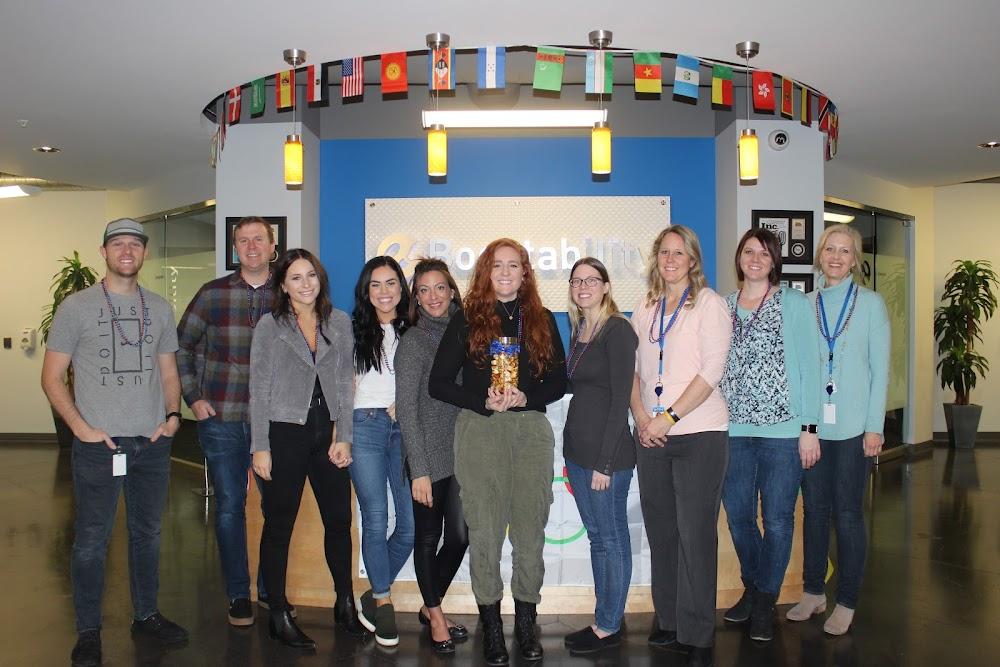
The company presents its workforce as part of the product, stressing in-house, in-language expertise. Its culture page lists honesty, action, collaboration, customer focus, and respectful relationships among its values. BoostCares supports community projects, while the lighter details include Mario Kart and collected company T-shirts. A fulfillment business can systematize tasks and still depend upon people getting along.
The next search box may answer back
Boostability’s current Be Found Framework expands its positioning beyond familiar search listings. A resource updated in September 2026 organizes discovery around SEO, search experience, generative engines, and autonomous agents. The commercial ambition is to help customers remain visible as the places people ask questions change.
That ambition should be evaluated through actual deliverables and measured outcomes. A business with immediate sales pressure, highly specialized needs, or an agency unwilling to share delivery control may need another arrangement. Better rankings alone also cannot rescue a weak offer or a website that fails to convert interest into enquiries.
Boostability’s enduring insight is pleasingly ordinary. Owners have businesses to run. Agencies have customers to keep. Both can want SEO without wanting every task that accompanies it. The company built its place in the market by taking that distinction seriously, then organizing software and people around the work left undone.
Explore the operation
Company website · Plans and pricing · Reseller arrangements · The Boost blog
LinkedIn · X · Instagram · Facebook · YouTube videos