Forty-six credit cards is an awkward number to carry into a business meeting. It is also, by Bing N. Sun’s own account, the number he once maxed out while building his hotel-telephone business. Banks and venture investors had declined the risk. Credit-card companies were more accommodating. For a while, the expansion of a manufacturing company depended on a collection of personal borrowing limits.
The detail has the makings of a cheerful entrepreneurial legend, provided one skips the repayment part. Sun does not. He says rising sales allowed him to clear the balances, after which controlling costs and cash became a governing habit. The cards bought time. The customers had to buy the phones.
It was an improbable destination for someone trained to study materials. Sun had wanted a scientific career. Instead, he founded Scitec in 1993, began manufacturing hotel telephones in 1995 and eventually brought Scitec, TeleMatrix and Teledex together under Cetis. The object at the center of the story was a device many hotel guests barely notice. Sun had learned to notice what people needed.
A schoolbook, an oil lamp, a way out
Sun grew up in a rural Chinese village, the second of five children. His father farmed rice. Neither parent could read or write. There was no electricity, and the family struggled to make its food last through the year. Schoolwork had to fit around work in the fields; studying after dark meant an oil lamp or a candle.
His account of his first school day is particularly harsh. At four, unable to write his name, he watched a teacher burn his books and tell the class he could not learn. Sun remembers deciding to prove the teacher wrong. He began doing well in mathematics and arrived early enough to wait for the school doors to open.
Later, teachers gave him a very different reception. During the Cultural Revolution, former university professors sent to the countryside taught at his schools. They gave him difficult books and instruction beyond the usual school curriculum. A mathematics teacher urged his father to let him concentrate on studying. His physics teacher jokingly called him Doctor. This time, the label was an invitation.
The doctorate came before the company
Sun completed undergraduate studies at Peking University at nineteen. He had begun thinking about studying abroad during his first year there, using spare time to learn English. A French government scholarship then opened another route. Before graduate study, he learned French too, including three months of language classes in Besançon.
At Aix-Marseilles, he earned a master’s in physics and a doctorate in materials science and engineering. He completed his doctoral studies in July 1988, then moved to Geneva for postdoctoral research in materials science and high-temperature superconductivity. Buffalo followed in July 1990; the Beckman Institute at the University of Illinois followed in November 1991.
These were serious investments in a scientific future. Moving between countries meant acquiring languages as well as qualifications, and changing laboratories meant adapting to new work. The telephone business was still absent from the plan. His eventual company name, Scitec, would preserve the attachment: it stood for Science and Technology.
Second place, with one vacancy
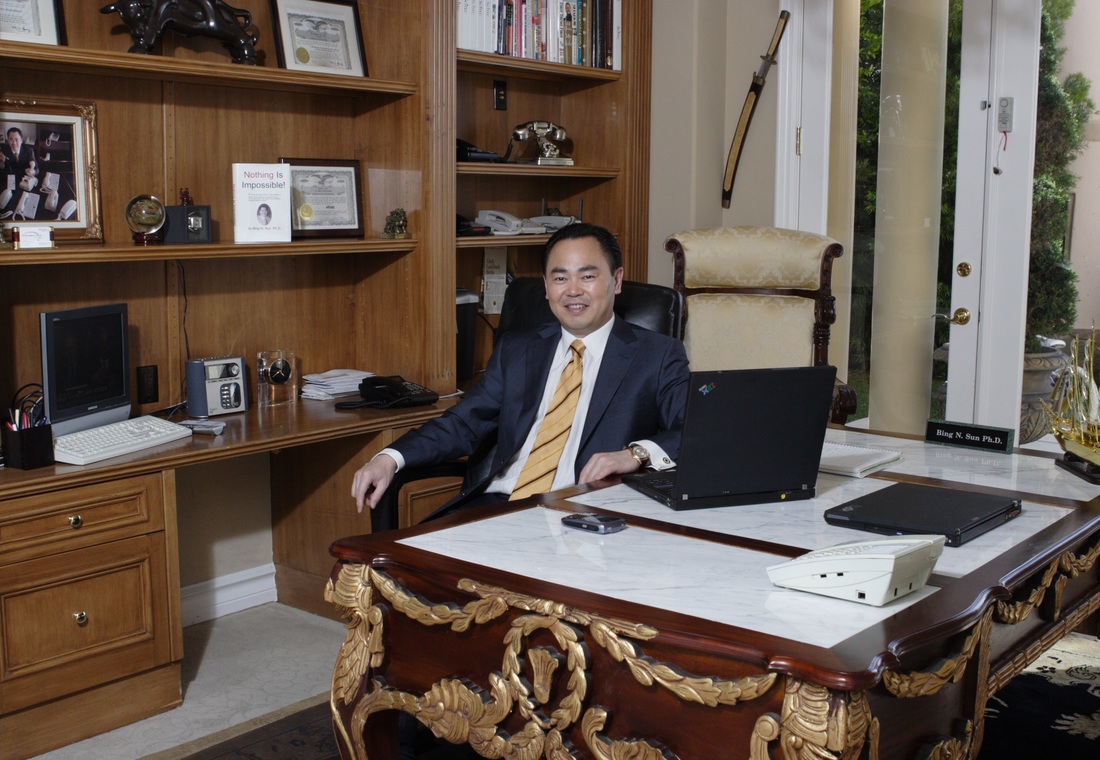
At Illinois, Sun grew frustrated with the time spent seeking research funding. Then came a university job application in spring 1993. He recalled more than 500 candidates competing for one position. The committee ranked him second. An encouraging result, perhaps, if someone else had been keeping score.
He took it as a reason to leave academia. In his telling, he walked away without clearing his desk. The abrupt exit was followed by a less cinematic activity: reading business books and spending long hours in libraries learning how companies worked.
Consulting offered a way to begin with knowledge rather than a large investment. It also put him in conversation with businesses. The scientist had a new subject to investigate, and the questions became wonderfully practical. What did customers need? What was difficult to obtain? What could he arrange to supply?
The blinking light at the other end of the call
Using a toll-free directory, Sun called sales managers and asked about products with long lead times. In 1994, an Atlanta-area seller of PBX telephone systems mentioned neon message-waiting lights for hotel phones. Sun contacted his manufacturing network and found he could supply them faster and at a lower price, while leaving room for a margin.
The opportunity arrived as a small component with an existing buyer. There was no need to persuade a hotel that unanswered messages existed. The work was in getting the required part to the customer on useful terms.
Complete telephones followed. Sun identified demand for inexpensive, reliable hotel sets, including a market already buying refurbished phones. Scitec’s Aegis-branded 2500-series set launched in the second quarter of 1995. He recalled advance sales exceeding 30,000 phones to more than 200 hotels. Later that year came a redesigned economy model.
“I didn’t expect to develop a telephone,” he said. It is an appealing admission from someone whose later business would revolve around them. The product emerged from the conversations.
“I didn’t expect to develop a telephone.”
Dr. Bing N. Sun
Credit has a due date
As the range expanded, financing became a constraint. Sun’s educational credentials helped him obtain personal credit, he recalled, even when other funding routes remained closed. The result was that unwieldy total of forty-six cards. He put the growth in sales at 120 percent annually during the early expansion and said it enabled repayment.
The distinction between an order and money available to spend matters in manufacturing. Products require resources before the sale has finished its journey into cash. Sun’s account puts a personal borrowing problem beside a commercial one: finding customers was essential, and so was meeting the obligations incurred to serve them.
He later described careful cost control and cash management as lasting priorities. It is easy to admire the nerve in the original gamble. His own emphasis on repayment supplies a useful second half to the anecdote.
Learning to reach the next hotel
In June 1998, Scitec shifted from selling directly toward channel distribution. Maintenance Warehouse, later known as HD Supply, began carrying its products. Choice Hotels International provided an early hotel-brand endorsement. A telephone needed a route into the building as much as it needed a working handset.
A manufacturing contract with a Fortune 500 telecom company brought another change in 2003. Sun moved from Champaign-Urbana to greater Los Angeles to help manage the relationship and pursue opportunities. Working from Southern California also made international travel through LAX easier.
He remained involved, but described moving from daily tactical decisions toward strategy and relationships. The job was changing along with the company. Increasing sales of the existing products was one route forward; buying another business became another.
- 1993Sun establishes Scitec
- 2006TeleMatrix acquisition
- 2009Teledex assets acquired
- 2010The brands come together under Cetis
Acquisitions, followed by the work
Sun learned in 2005 that TeleMatrix might be available. Negotiations led to an acquisition in 2006, financed by a bank. He said the business retired that debt within eighteen months. In December 2009, Teledex assets followed. Cetis brought the three brands together in 2010.
The second transaction was followed by financing trouble. Sun recalled a contractual oversight that led the funding partner to declare a loan default. He moved into an apartment near the Colorado Springs headquarters and spent five months working there. By December 2010, he said, the company had become debt-free again while investing in support for Teledex customers.
The acquisition dates look neat in a timeline. His recollection of the aftermath gives them weight. Bringing brands together created obligations to people who already owned the products. Those customers still expected their equipment to be supported while the finances were being put in order.
Two coffees before half past six
Sun gave his sense of urgency a name: Scitec Speed. He recalled an early morning in Urbana when, by 6:30, he had answered email and voicemail from different regions, drunk two coffees and read several news articles. He sent the staff a message about efficiency.
He could be candid about less flattering reactions too. When a salesman left for a competitor, Sun remembered wanting to buy the rival and dismiss him. He eventually acquired the business and kept the salesman. The employee later left again. Even an acquisition cannot guarantee the last word in an office departure.
A colleague offered another view. Brock Munsell recalled considering leaving during his first month at Cetis, before meeting Sun. Their first meeting changed his decision. The person who set the pace could also give someone a reason to stay.
A Mercedes for the staff
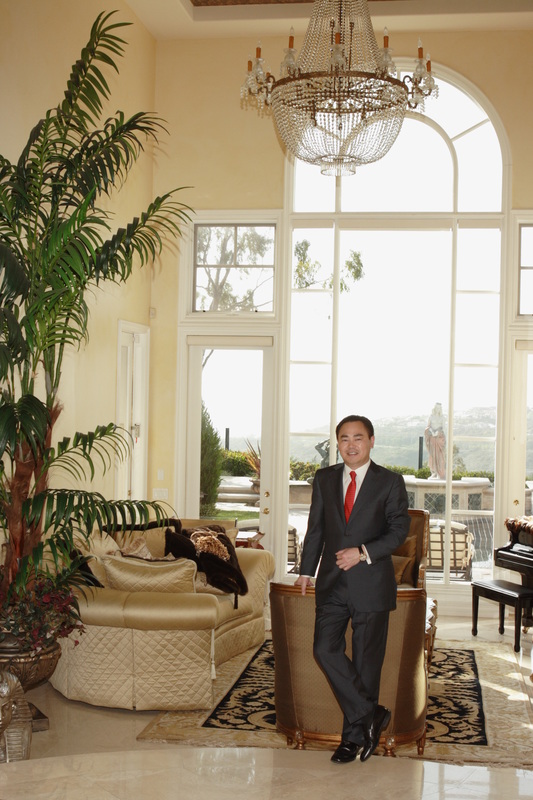
Asked in 2016 what drove him, Sun reached for a surprisingly specific picture. He had told employees he hoped each would drive a black Mercedes sedan. His explanation went back to poverty: he wanted the people around him to succeed financially.
That ambition gives the story a different ending from a list of acquisitions. The child studying beside an oil lamp became a scientist, then a supplier who learned what customers were waiting for. The company grew through products, distribution and purchases, with bills to settle along the way.
The hotel telephone remains an unassuming object. In Sun’s career, it became the means of pursuing something he could recognize from much earlier: enough security to imagine what might come next, and the hope that other people could share it.