In September 2016, Bill Westrate posted a video of a Tesla Model S being crash-tested. He was American Family Insurance’s chief operating officer, visiting the Insurance Institute for Highway Safety. His accompanying words were rather less formal than an annual report: “Model S in slow motion...enjoy!” An insurance executive had found something worth sharing in a car meeting a barrier.
There is a useful introduction to Westrate in that small public moment. Cars are objects of affection, engineering projects and expensive collections of replacement parts. For an insurer, they are also promises waiting to become claims. Watching what happens at impact brings those worlds together. Eight years later, Westrate would chair the institute’s board. By then, he was also chair and chief executive of American Family.
His route to those jobs began in 1996, when he joined the Madison company as an actuarial analyst. The distance between that desk and the chief executive’s office took 26 years to cover. Once there, he encountered a less orderly timetable: damaging weather, rising repair costs and underwriting losses. His story turns on what happens when someone trained to calculate risk becomes responsible for choosing it.
Twenty-six years before the top job
Westrate earned a bachelor’s degree in mathematics at Northwestern College. He became a fellow of the Casualty Actuarial Society and a member of the American Academy of Actuaries. His professional foundation was the business of evaluating uncertainty, an occupation with fewer public appearances than the one he eventually acquired.
Inside American Family, his responsibilities widened through actuarial management, homeowners insurance and risk pricing. He became actuarial vice president in 2006 and personal lines vice president in 2008. In 2011, his executive vice president remit covered product divisions including commercial-farm/ranch, life and personal lines. Each move brought him closer to the practical consequences of the calculations.
One early glimpse of those consequences came in 2009. As personal lines vice president, he backed the selection of new policy administration and billing systems. The stated aim was to make insurance easier for customers and agents. Billing software rarely supplies the glamorous chapter of a business biography. Yet a customer trying to understand a policy or make a payment has every reason to care about it.
He became chief operating officer in 2014 and enterprise president in 2017. The succession plan announced in August 2020 gave him a year as CEO-elect, beginning in January 2021, before he succeeded Jack Salzwedel on January 1, 2022. Salzwedel remained chair. Westrate added the chair’s responsibilities in 2024. The handover had been planned with a patience that the weather would soon decline to imitate.
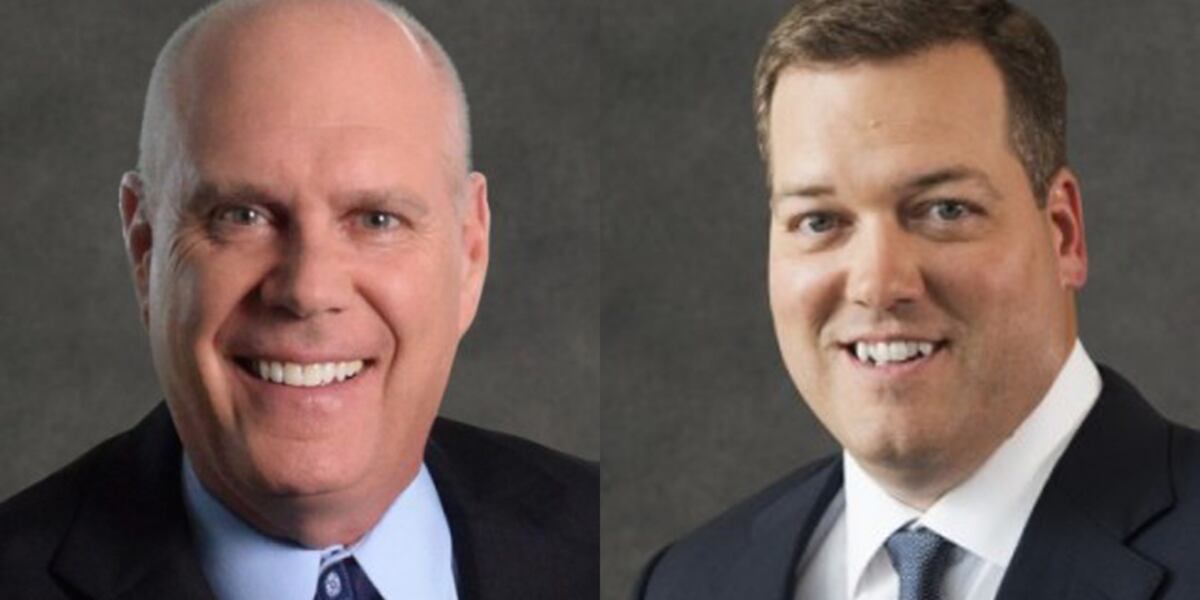
The weather does not read the plan
American Family’s first two years under its new CEO brought property-casualty underwriting losses of $1.5 billion in 2022 and $1.7 billion in 2023. Catastrophe claims reached $3.5 billion in 2023. A business that sells protection from disruption was absorbing a formidable amount of disruption itself.
The combined ratio made the problem visible. In 2023 it stood at 110.8 percent: roughly $1.11 in claims and expenses for every dollar of premium earned. That measure concerns underwriting, rather than the whole company’s earnings; investment income is a separate part of the financial picture. Still, it is an unusually direct way to see a business losing money on its central transaction.
“We’re controlling what’s most directly in our control,” Westrate said in March 2024. His response emphasized expenses, the company’s operations and the work of restoring profitability. Weather and the prices of vehicles, parts and building materials sat outside his authority. The distinction sounds modest until the bill arrives.
The following year’s results showed an improvement, along with its price. American Family returned to a property-casualty underwriting gain in 2024. Its policy count fell 2.8 percent. Revenue rose primarily because of rate actions and investment income. For a policyholder, higher rates are a household expense; for an insurer facing higher claim costs, they are part of the calculation needed to keep paying claims. Both realities belong in the same account.
What $1 of premium had to cover
Property-casualty claims and expenses, expressed as the combined ratio. Below 100% indicates an underwriting gain.
A familiar name leaves the family
The General supplied another test of Westrate’s judgment. American Family had bought the nonstandard auto insurer in 2012. In September 2024, it announced an agreement to sell the business to Sentry Insurance. The completed transaction was announced on January 1, 2025, with a total value of $1.7 billion, including assumed liabilities and required capital.
Westrate’s explanation in a subsequent interview was about focus. American Family wanted to concentrate on selling multiple insurance products into households through its agency business. Its agents could still offer access to nonstandard auto insurance through partnerships. Owning the provider was a separate decision.
The choice of buyer mattered, too. Sentry was another Wisconsin mutual. Westrate described stewardship of The General and its employees as part of the decision; all 1,300 employees moved to Sentry, and its president, Tiku Raval, remained in charge. A sale places a large number on a press release. It also gives a workforce a new employer. His account made room for both.
The distinction between access and ownership is useful in understanding this chapter. An executive who has spent years inside an expanding group must eventually decide which pieces still belong together. Familiarity can make that judgment awkward. Selling a business that has grown successfully requires an explanation beyond whether the business is good. It requires an answer about whose plans it now serves.
Employees moved from The General to Sentry, with its president remaining in charge.
Belonging, brought home
Westrate has also used his public voice for something more personal than portfolio decisions. In March 2021, he wrote about anti-Asian racism and an incident involving his mother-in-law, Chin Stone. A student at the school where she volunteered had used a racial slur to describe her. Westrate explained that his daughters have Asian heritage and described the conversations the incident prompted within his family.
His workplace argument followed from that family experience. People should be able to come to work feeling safe and included. He connected that expectation with American Family’s business resource groups and its strategic emphasis on inclusion. The detail about his mother-in-law gave a corporate subject a recognisable human scale: a grandmother volunteering at a school, and a family having a conversation it should never have needed.
In a 2023 podcast conversation about leadership, he returned to culture, welcoming new colleagues and helping people understand the organisation’s values. He discussed the shift from operational responsibilities toward aspirations and culture. The progression is revealing. A chief operating officer can spend much of the day asking how work gets done. A chief executive also has to explain why people should want to do it together.
“We’re controlling what’s most directly in our control.”
Bill Westrate · March 2024
Madison is more than an address
His civic work gives that idea a local setting. Westrate is a past chair of United Way of Dane County and remains listed on its 2026 board. The organisation’s leadership brings him alongside people from local businesses, public institutions and community groups. It is a different kind of table from an insurance executive committee, with the city’s needs setting the agenda.
Asked about his favourite Wisconsin destination, he chose an entire sporting itinerary: Camp Randall Stadium, the Field House and Kohl Center in Madison, Lambeau Field in Green Bay, and American Family Field in Milwaukee. A single destination would have been more economical. His answer left plenty of room for overtime.
The sports connection also has a professional dimension. His 2024 election as chair of the Insurance Institute for Highway Safety board put him in an industry role concerned with vehicle safety. The crash-test footage he had shared years earlier gives that appointment a small, pleasing continuity. Before the board title came the curiosity about what the machines actually did.
The next calculation
By 2025, American Family’s property-casualty combined ratio had fallen to 84.6 percent. Quieter catastrophe experience helped, alongside underwriting and expense decisions. The improvement came with a smaller book of business: the company ended the year with 12.1 million policies, down 11 percent, or 3 percent after excluding specified strategic actions. Those figures resist a simple victory lap. The business had become more profitable while serving fewer policies.
Westrate’s next announced move showed where he wanted to add capabilities. In August 2026, American Family agreed to acquire the Bowhead shares it did not already own, in a cash transaction valuing the specialty insurer at about $1.2 billion. American Family had made a founding investment in 2020. The plan would retain Bowhead’s name and Stephen Sills as its chief executive, with Bowhead operating as a standalone business within the group.
As of October 21, the acquisition remained proposed, with a shareholder meeting scheduled for November 13 and completion subject to approvals and other conditions. Westrate’s August letter to Bowhead employees stressed preserving the team, culture and capabilities. He also described plans to visit their Chicago and New York offices that day. The language of a transaction was followed by a schedule for meeting people.
That is where this long apprenticeship has brought him: choosing what to sell, what to buy, what to preserve and whom to meet. American Family approaches its centenary in 2027 with an executive who has spent three decades inside it. His first assignment was to work with the numbers. The present assignment is to make decisions that will still hold up when someone needs the promise behind them.