The deadline was June 30. Anthony Carter wanted to stay with the Miami Heat, where a player option would pay him $4.1 million for the coming season. His agent’s office needed to tell the team. The notification never arrived. In July 2003, Carter became a free agent by accident, an unusually expensive way to discover the importance of office administration.
Bill Duffy accepted responsibility. His name was on the company. Carter subsequently signed with San Antonio for much less money, and Duffy agreed to pay him $3 million from his own pocket. They worked out a payment schedule. The payments continued until 2020.
Seventeen years is long enough for a basketball prospect to become a veteran, retire and begin another career. Duffy’s obligation survived the changing seasons. Carter confirmed that the money had been paid. A mistake that could have become the final word on an agent instead became a story about what he did afterward.
lost in 2003
by Duffy
completed
Different figures, different meanings: the lost option and Duffy’s agreed repayment.
An introduction from Ronnie Lott
By then, Duffy had already traveled a considerable distance from the career he first imagined. He played basketball at the University of Minnesota, then Santa Clara, where he graduated in 1982. Denver selected him in the fifth round of that year’s NBA draft. His future in the sport would depend less on scoring than on knowing whom to call.
One useful number belonged to Ronnie Lott. They had known each other since childhood and played high school basketball together in Southern California. Lott became a San Francisco 49ers player and introduced Duffy to his agent. Duffy began helping recruit football players. The route into basketball representation ran, rather agreeably, through football.
His playing background gave him familiarity with the people and ambitions involved. It also left him with a connection to Santa Clara that continued into his professional life. Steve Nash, another Santa Clara player, became a client. Two careers separated by years on campus met in the same business.
Duffy eventually founded BDA Sports Management in Walnut Creek. The firm’s initials put its founder close to every promise it made. That arrangement is flattering when things go well. The Carter episode demonstrated the other side of having your name attached to the office.
In 2019, Santa Clara honored Duffy as a Bronco Legend. He seemed uncomfortable with the individual attention. “You don’t do things by yourself, you don’t live by yourself, you don’t function by yourself,” he said. His account of success kept returning to the people around him.
The world outside the draft room
The relationships extended well beyond California. Duffy grew up in a military family and spent part of his childhood in Asia. Years later, he invested time in China as Yao Ming’s path toward the NBA took shape. The work required patience across institutions, countries and expectations.
Yao became the first selection in the 2002 NBA draft. Duffy was part of the group helping him make the transition. It was a conspicuous moment in basketball’s international development, but the preparation had taken years. The draft announcement was brief. Getting to it had been a rather longer conversation.
Duffy’s international work also included players from Europe. In Serbia, he heard players complain that they felt like second-class clients. His stated approach was to give international players the same level of attention as Americans. It was a practical promise about service, with consequences for how athletes and their families experienced moving into another basketball culture.
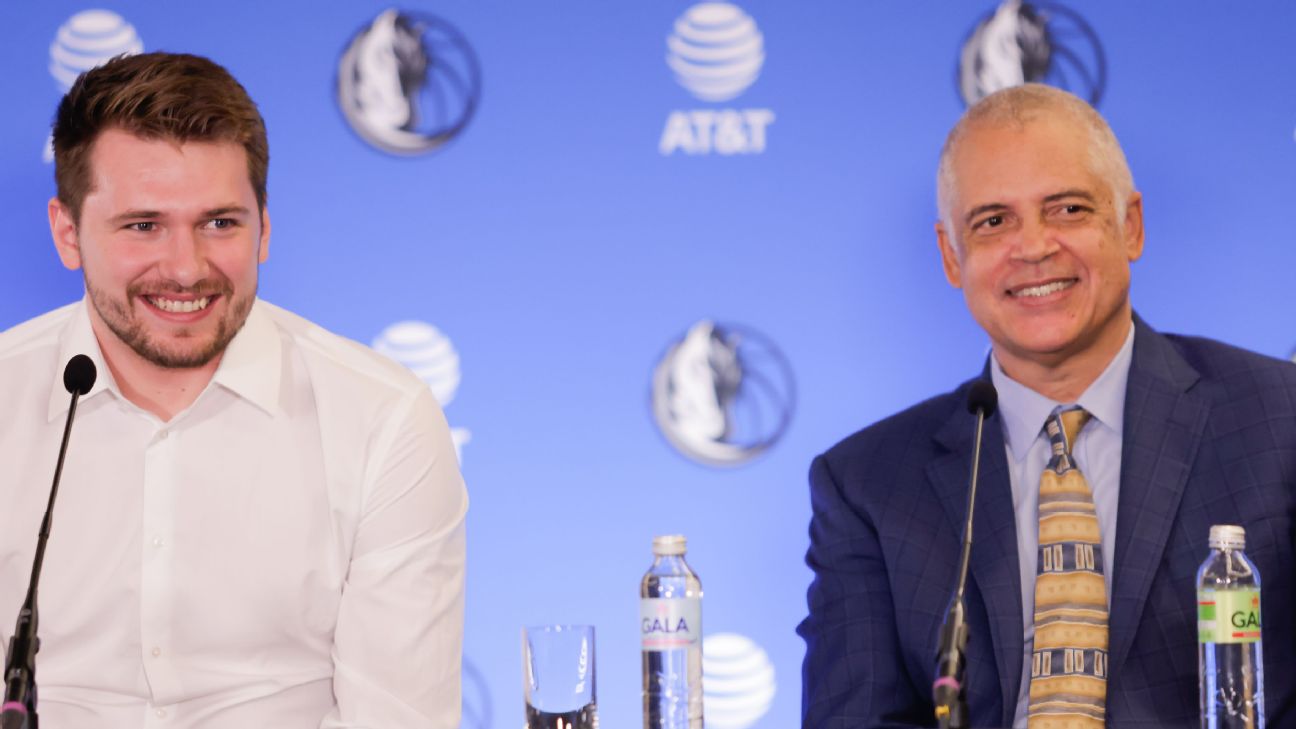
His client history came to include Slovenia’s Luka Dončić and Goran Dragić, alongside Nash and Yao. The international connection could show up in a contract negotiation. It could also take the form of a carefully arranged afternoon.
Before Dončić’s first NBA season, Duffy helped organize a private workout with Stephen Curry in Pleasanton, California. The session in August 2018 stayed quiet. Duffy wanted Dončić to see the work behind Curry’s skill. An introduction could be useful without becoming an announcement.
That detail gives the job a more interesting shape. Representation includes deciding what a player might benefit from seeing, who might teach him something, and when a room should have fewer people in it. An agent can occasionally improve an occasion by declining to invite the rest of us.
The client in the backyard
With Sabrina Ionescu, the geographical distance was considerably shorter. She grew up in Walnut Creek, where Duffy and his wife, Jamese, raised their five children. Ionescu and her twin brother, Eddy, were in the same grade as the Duffys’ son Christian.
They played on the half-court in Duffy’s backyard and at a nearby gym. Their friendship began in elementary school. Duffy remembered the children wanting to stay in the gym late into school nights. Basketball had a firm grip on the household’s visiting hours.
By the time Ionescu became the first pick in the 2020 WNBA draft, Duffy had known her for years. He served as her basketball agent and adviser and helped her interview agencies for marketing and off-court work. A professional decision had grown out of a relationship that began before there was a professional career to manage.
The story is specific enough to resist the standard sports-business vocabulary. There was an actual backyard. There were actual children playing together. Their later success gives those afternoons another significance, but the afternoons came first.
Duffy has spoken about his enthusiasm for the WNBA’s growth and investment in women’s basketball. Ionescu gives that interest a personal history. His involvement reaches back beyond draft preparation, endorsements or a signature shoe to the local gym and the friends who kept finding reasons to stay.
A new name on the office door
Duffy’s connection to WME began through another longtime client. In 2014, the agency contacted him about working with Nash on opportunities away from playing. Duffy appreciated being included in the conversation. He and WME began cooperating on Nash’s next chapter.
It was an introduction with a long afterlife. WME took a stake in BDA in 2020, then acquired the remainder in 2023. Duffy became head of basketball. The partnership brought his basketball operation into a larger business with resources in entertainment, marketing and media.
Those resources mattered as athletes’ careers expanded beyond their team contracts. In a 2024 discussion with Harvard’s undergraduate sports organization, Duffy described the demands of social media, sponsors examining players’ online histories, and the importance of being present with clients and their families. The job kept acquiring new places where something might need attention.
- 2020A partnership begins
WME takes a stake in BDA.
- 2023BDA joins WME
Duffy becomes head of basketball.
- 2025Independent again
WME Basketball operates separately.
In 2025, the ownership structure changed again. Following Endeavor’s take-private by Silver Lake, WME divested its basketball representation business to address a potential conflict of interest. WME Basketball retained its name but became independently owned and operated, led by Duffy. Ari Emanuel and Mark Shapiro invested in a personal capacity.
The corporate sequence takes a moment to explain. The basketball work kept moving. In May 2025, the independent operation announced a draft class featuring Dylan Harper, Tre Johnson and Derik Queen. Across the previous three drafts, the agency had represented seven top-ten selections.
For Duffy, a new generation had already supplied fresh motivation. He described the arrival of younger clients as invigorating. He also expressed an interest in greater racial diversity beyond basketball. His stated ambitions involved helping people build careers and legacies, alongside the daily work of representing them.
Who keeps the calendar?
A list of clients can make an agent’s life look like a sequence of important telephone calls. The supporting work is less photogenic. Someone books flights for relatives. Someone coordinates a commercial shoot. Someone makes the team schedule and the off-court schedule coexist.
By September 2025, WME Basketball’s head of client management, Camala Lapray, oversaw eight client managers serving about 55 players. Her calendar connected to every player’s daily calendar. Duffy’s promises were being delivered by a staff whose work had to survive the ordinary complications of travel, families and changing plans.
He had a domestic analogy for giving everyone enough attention. Ask his five children who their father’s favorite is, he said, and each would nominate themselves. The line is funny because every parent recognizes the ambition. Running a representation business adds time zones.
“Helping people keeps me motivated.”
Bill Duffy
Duffy’s career has accumulated honors, including Santa Clara’s Athletic Hall of Fame and a 2025 induction into the National Sports Agent Hall of Fame. They recognize a body of work that reaches across generations of basketball players.
The Carter payments offer a smaller, less ceremonial record. Each one was a commitment renewed after the original error. By the time the last arrived, the story was old enough to have lost its novelty. Duffy still owed the money. He paid it. A basketball career can be measured in contracts signed, introductions made and obligations met long after everyone else has turned the page.