The curious thing about Bill Boor’s route to the housing business is that it includes a brewery. Before taking charge of Cavco Industries in Phoenix, he ran Great Lakes Brewing Company in Cleveland. A career that had already passed through consumer goods, timber, building materials and mining acquired a chapter in craft beer. On a résumé, this can look like indecision. In a factory, the common thread is easier to spot: people making something other people will pay to take home.
Then came the return. In April 2019, Boor became Cavco’s chief executive, moving from beer to factory-built houses. He already knew the company from its board and from an earlier job at its former parent. The new assignment arrived with a rather old question: how do you make a manufactured product work better for the people who make it, sell it and buy it?
Housing gives that question an unusually personal consequence. A manufacturing decision eventually becomes somebody’s kitchen. A financing decision becomes a monthly payment. A local ordinance can decide whether that kitchen is allowed to exist on a particular lot. Boor’s job reaches across all three, which makes his varied career less of a curiosity than it first appears.
A brewery in the middle of the résumé
Great Lakes appointed Boor its first CEO in 2015. For a home brewer, it was an appealing collision of work and private enthusiasm. He spent time around the brewers and enjoyed getting close to production. Cleveland was meant to be a lasting stop. As he later put it, “I have had good plans, and they have been wrong many times.”
The beer chapter also supplies an unusually cheerful piece of corporate vocabulary. In May 2018, founders Pat and Dan Conway announced an employee stock ownership plan. The annual Conway Award went to all 245 employees, and the occasion acquired its own beer: Extra Special Opportunity Pils. Few financial arrangements arrive with such an accommodating acronym. The founders would gradually dilute their stakes to build the employee trust.
Boor described the initial employee stake as relatively small. That detail matters. The announcement was a starting point rather than a claim that ownership had been handed over in a single afternoon. It joined two things that recur in his working life: the practical machinery of a business and the people whose labor keeps it running. The label supplied the joke; the ownership arrangement supplied the substance.
Leaving after nearly four years meant walking away from a role he had enjoyed. Cavco nevertheless offered something a new company could not: familiarity accumulated over years. He could assess the opportunity with experience of the boardroom already behind him. There is a difference between changing industries and entering unfamiliar territory. In this case, he did the first while considerably limiting the second.
- 2003Works on Cavco’s spin-off at Centex
- 2008Joins Cavco’s board
- 2015Leads Great Lakes Brewing
- 2019Returns as Cavco CEO
- 2025Joins La-Z-Boy’s board
The company he had already helped send out into the world
Boor’s connection to Cavco predates his directorship. At Centex, where he worked in corporate development, he helped with Cavco’s strategy and its 2003 spin-off. He joined Cavco’s board in July 2008 and later served as nonexecutive chairman. His appointment as CEO took effect on April 15, 2019, with acting chief executive Daniel Urness returning to the finance role.
That sequence gives the return an unusual shape. He had helped think through the business while it belonged to another company, watched it as an independent director, and then accepted responsibility for running it. Each position brings a different view of the same enterprise. A director can ask for a better explanation. A chief executive has to organize the people who will produce the answer.
His preparation included a chemical engineering degree from Penn State, an MBA from Harvard Business School and the Chartered Financial Analyst designation. His employers included Procter & Gamble, Weyerhaeuser, Centex, American Gypsum and Cleveland-Cliffs. The credentials explain part of the range. The succession of physical products explains another part: this is a career repeatedly drawn toward businesses with production floors.
By 2025, Boor was describing a deliberate effort to connect Cavco’s previously separate operating businesses and invest in employee development. Acquisitions add names and locations to an organization. Making those operations function together requires a different sort of work. It is less photogenic than a deal announcement and considerably harder to finish with a ceremonial handshake.
What he brought back from Northern Ontario
Asked about a defining experience, Boor has pointed to a mining project in remote Northern Ontario among First Nations communities. He said it taught him to give more weight to the people affected by a project than to business results alone. He connects that lesson to affordable housing. It is a revealing choice of memory for someone with a long list of corporate appointments to choose from.
His description of leadership is similarly organizational. He wants a team capable of acting without constant direction, with a shared understanding of where the business is going. Listening, in his telling, is work that requires attention. With thousands of employees, a CEO cannot substitute personal contact for a functioning management team. The philosophy has to survive the distance between headquarters and the next shift.
“You must be a learner and a true listener”Bill Boor, on the qualities leaders need
That is a useful standard by which to read his public remarks. It leaves room for a question after the speech: what changed in the way the organization works? The interesting evidence comes in the programs, production decisions and relationships that follow. A leader’s language becomes more informative when it can be compared with something tangible.
A house needs somewhere to stand
During 2026, Boor took that tangible approach into housing advocacy. In March, Senator Mark Kelly visited Cavco’s Phoenix plant. General manager Todd Jensen led the tour, and industry representatives joined discussions about barriers to homeownership. A production line gives a housing conversation something a conference table cannot: a visible account of how the product comes together.
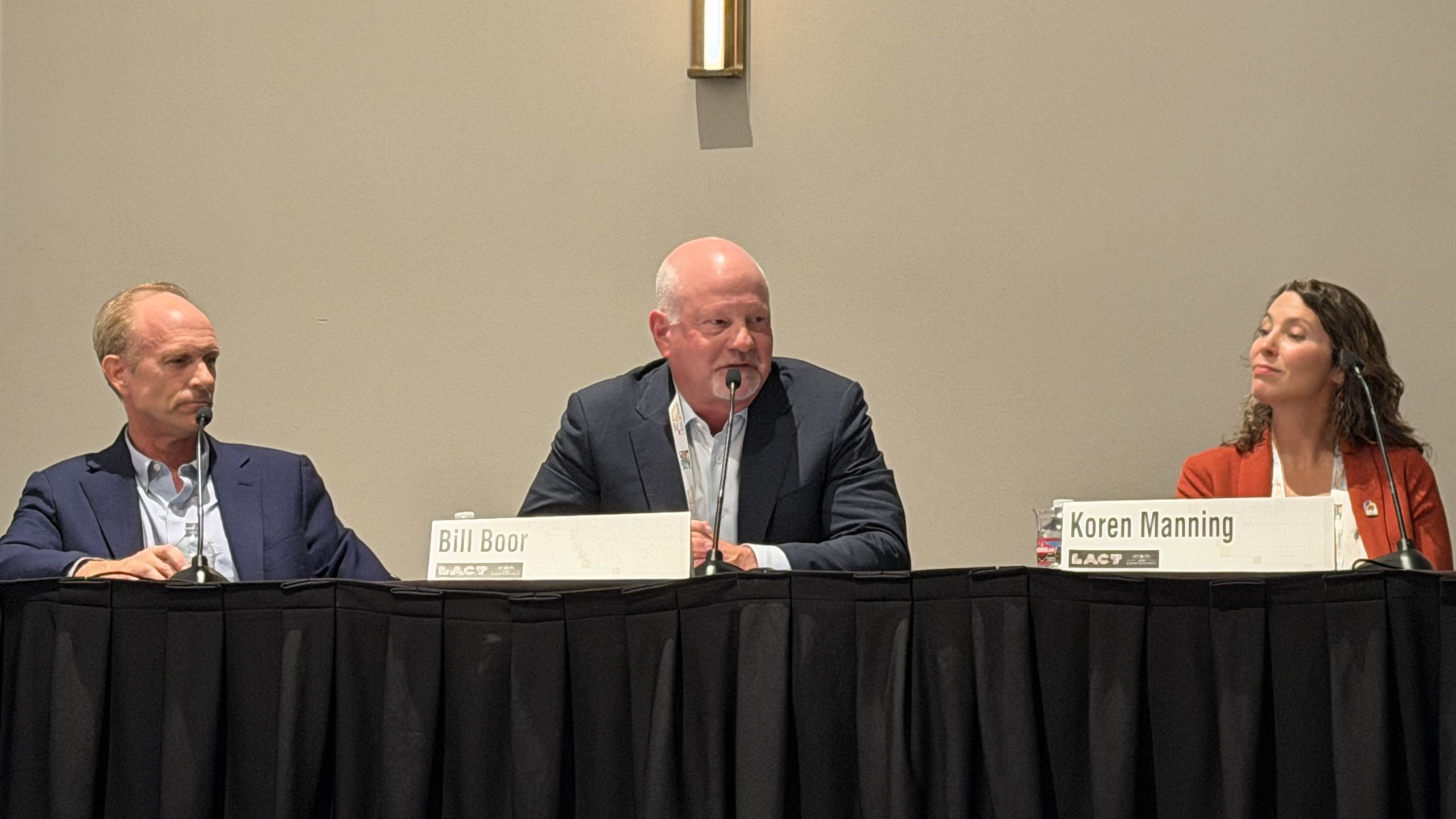
In August, Boor appeared before municipal leaders at the League of Arizona Cities and Towns conference. He argued for demonstration projects that would let communities see manufactured housing for themselves. “Breaking down some of the mindsets takes examples,” he said. It is a modest proposal in one sense: find a place willing to try. In another, it goes straight to the difficult part of the business.
A factory can improve its output while the places willing to accept that output remain limited. Virginia offered a concrete example of the policy side in June, when Cavco hosted Governor Abigail Spanberger for a ceremonial bill signing at Rocky Mount. The measures addressed unequal zoning treatment of qualifying manufactured homes. Their relevance to a manufacturer is plain: production capacity and permission to place a home have to meet.
Boor’s role is commercial as well as civic. More opportunities for manufactured housing also mean more opportunities for Cavco. The useful test is what a proposed change lets a buyer do. Can a home go on the intended lot? Can it be financed? Can the finished arrangement fit a household’s budget? Those questions are less comfortable than a general declaration in favor of affordability, and much more useful.
Taking the argument to the National Mall
At the September 2026 Innovative Housing Showcase, Cavco displayed the Grande Arbor, a demonstration of a HUD-code home built without a permanent steel chassis. Boor met policymakers around a product they could walk through. The company’s Rocky Mount team built the home; its Martinsville team handled the installation and porch at the Mall. The exhibition turned a technical construction discussion into rooms, doors and a front entrance.
The floor plan gave visitors another subject to consider. Two primary suites sit at opposite ends of the home, with shared living space between them. The arrangement addresses households that want privacy and common space under one roof. It is an everyday design problem with financial consequences: how to share the expense of a house without making everyone share every part of their lives.
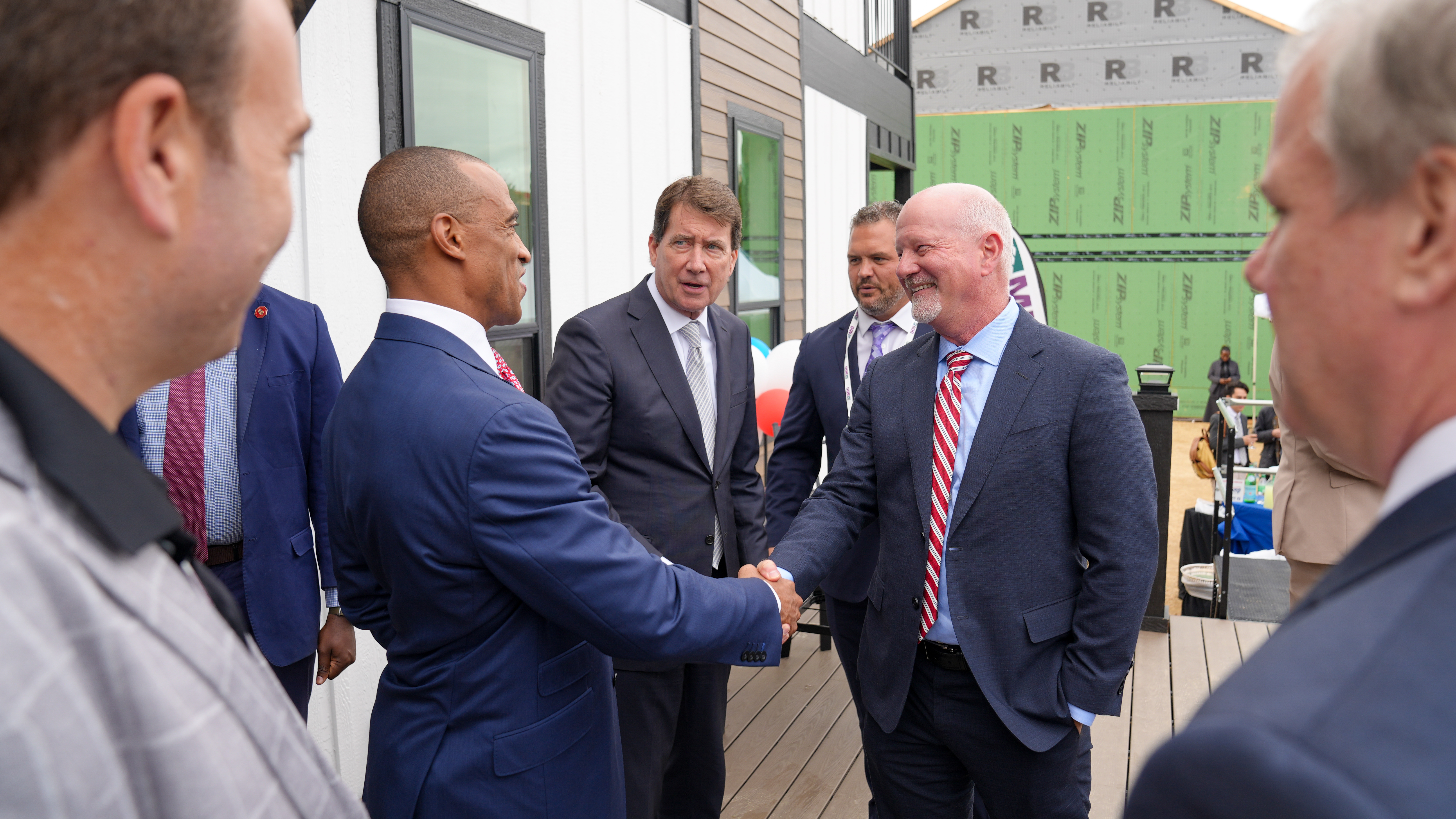
The distinction between an exhibit and a widely available product remains important. In late September, Cavco said the chassis-free model was a demonstration and that broader adoption still depended on production guidance and other implementation steps. The on-frame version was available. A promising house on the Mall is evidence of a design; getting that design into ordinary neighborhoods is a further assignment.
The next factory, and the next question
Meanwhile, Cavco has committed to another physical project near home. In May 2026, it announced a planned 616,000-square-foot manufacturing facility in El Mirage, Arizona. The design starts with one production line and allows for a second. The company targets operations by mid-2027, subject to permitting and construction conditions. It is a substantial bet on demand beyond the next quarter.
Planned El Mirage facility · One initial line · Target: mid-2027
Announced May 2026. Timing remains conditional.Boor also joined La-Z-Boy’s board in December 2025. The appointment puts another household product on a career already full of them, while drawing on his manufacturing, retail and governance experience. Homes and furniture are different businesses, but both eventually face the verdict of someone deciding what belongs in the place where they live.
For Boor, the route now leads back to a familiar combination: a factory, a team, a customer and a set of decisions connecting them. The brewery gave the career its unexpected chapter. Housing gives the current chapter its stakes. The next convincing argument will have to leave the exhibition ground, pass through a production line and find an address.