The man who drove a hatchback to California, bet the internet on strangers, and then repped America in Prague. He shoots film. He means it.
His parents never planned on meeting. His father came from Iran. His mother from Korea. Both landed in New York in the 1960s, both ended up at the same medical school, and both became U.S. citizens as soon as the law allowed. The kitchen table conversations in the Sabet household weren't about grades or sports. They were about freedom and democracy - what those words actually mean when you've watched regimes crumble and borders close.
Bijan Sabet graduated from Boston College in 1991, accounting and computer science on the transcript, something else entirely in his gut. Then Macworld happened. He walked through that conference and saw the future arranged in demo booths and developer badges. So he drove - literally, in a hatchback, from Boston to Silicon Valley - because that's where the thing was being built and he intended to be part of it.
He spent the next decade in San Francisco helping build the consumer internet. WebTV Networks, one of the earliest bets on connecting television to the web, was where he cut his teeth as a senior executive. Microsoft bought the company in 1997 for $425 million. Not bad for a first act. But Sabet wasn't done - he co-founded Moxi Digital, then made the counterintuitive move back to Boston to join Charles River Ventures as an Entrepreneur-in-Residence.
That's where he met Santo Politi. In 2005, the two - along with Todd Dagres and Paul Conway - founded Spark Capital with a deceptively simple premise: do things differently. No enormous funds chasing consensus. No boardroom politics masquerading as conviction. Just founders, products, and the question: would you work for these people if you weren't a VC?
Before writing a single check, Bijan runs every opportunity through four questions. Simple on the surface. Ruthless in practice.
From a 11-person startup that reshaped global conversation to a 19-year-old's blogging platform that sold for a billion dollars. A selection.
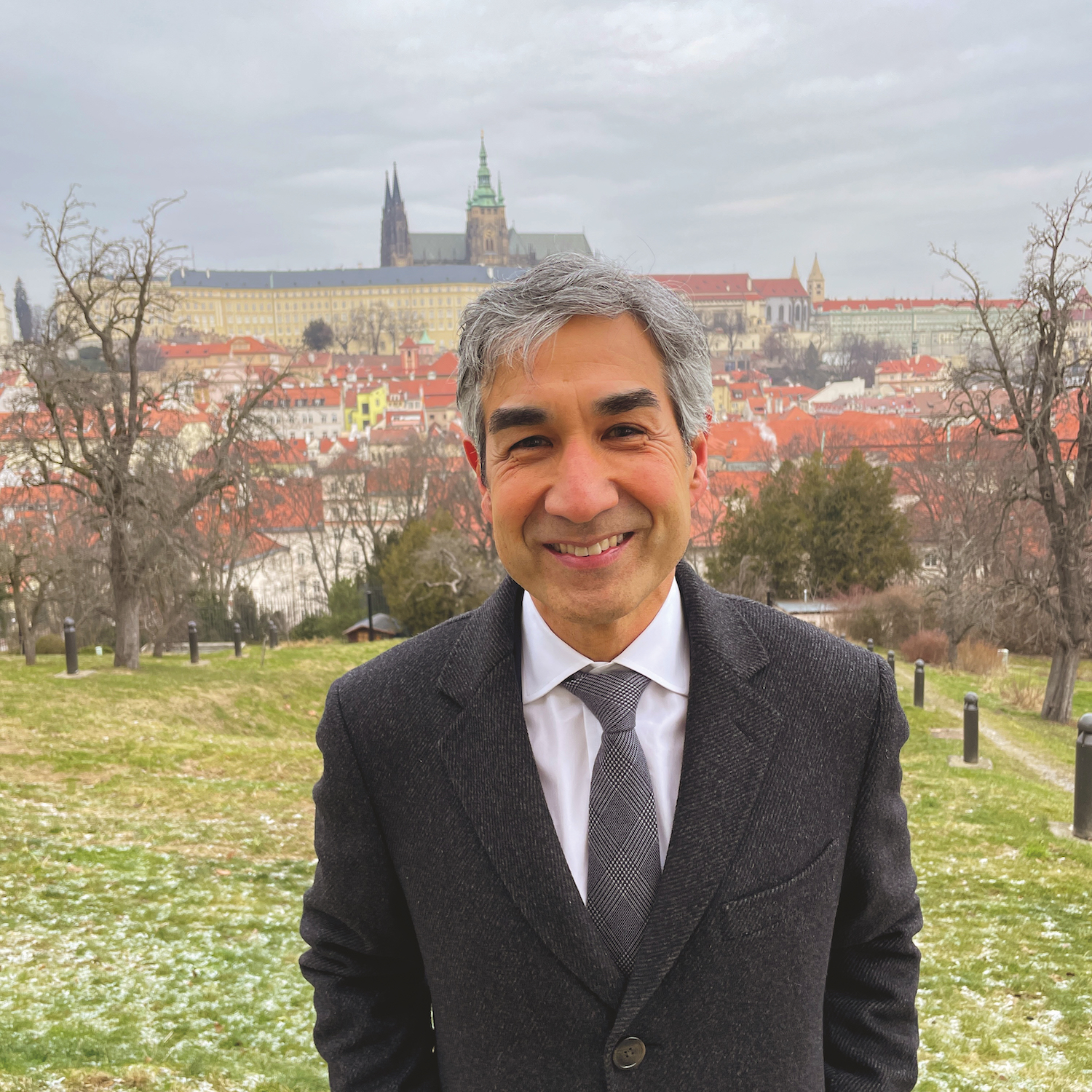
In August 2022, President Biden nominated Bijan Sabet to become the United States Ambassador to the Czech Republic. This was not the expected next chapter for a Boston VC. The Senate confirmed him by voice vote in December. He was sworn in December 16. By February 2023, he had presented credentials to Czech President Milos Zeman.
Sabet described it as "the honor of a lifetime to be chosen from the private sector to represent the United States." It landed differently than a portfolio exit. His parents - two immigrants who became citizens as quickly as the law allowed - had raised him on kitchen table conversations about freedom and democracy. Now he was the one delivering those talking points to foreign heads of state, and meaning them.
His focus as ambassador was pointed: strengthening U.S.-Czech ties, supporting Ukrainian refugees (the Czech Republic absorbed roughly 650,000 displaced Ukrainians despite a population under 11 million), countering disinformation, backing independent journalism, and advancing Roma equality. He brought the same urgency he applied to early-stage investing - a heightened sense of what needs to happen in a finite amount of time.
He served until January 20, 2025. A different kind of exit, but an exit nonetheless.
Bijan Sabet does not shoot digital. That says something. In a world where every phone is a camera and every camera is instant, he chooses film - the format that makes you wait, forces composure, costs you something when you waste a frame. He fills his Instagram and Twitter feeds with scans from analog cameras, street scenes mostly, the kind of images that require you to see before you shoot.
He is married to Lauren, who sits on the Board of Regents at Boston College while he sits on the Board of Trustees. Three kids. No emails on Saturdays - a rule he set years ago and treats as non-negotiable. He has said, plainly, that family means more to him than anything else. Coming from a VC who backed some of the most attention-consuming products of the last two decades, that's a statement worth taking seriously.
He serves on the board of Human Rights Watch. He's been involved with the Democratic National Committee and the Senate Campaign Committee. He cares about economic inequality and education with the specificity of someone who watched his parents start with nothing and build something.
After returning from Prague in 2025, he started building again - small digital tools, seed investments with his wife, a focus on climate solutions. The hatchback-driving kid from New York has given himself another act. Watch the film rolls for clues about where it goes.