At Iowa Western Community College, a textbook experiment began with a fairly sensible suspicion. The college had been disappointed by content providers before. Another promise of cheaper books and easier access deserved a test. In fall 2023, it piloted BibliU. Among 86 students surveyed, nearly 98% recommended expanding the service, according to BibliU’s case study. The college rolled it out in fall 2024. The interesting part is the sequence: a small trial, a student verdict, then a campus decision.
- BibliU sells colleges digital course materials, delivery software, and campus store services.
- Its early student subscription model ran into publisher resistance and expensive customer acquisition.
- Today, its proposition combines institutional purchasing, Day 1 access, and physical retail.
The customer was sitting in another office
Dave Sherwood’s starting problem was personal. Studying at Oxford after attending the University of Western Australia, he found textbooks expensive, heavy, and inconvenient. In a 2020 interview, he described hauling six two-kilogram books home from the library. Music had moved online. His reading list still involved weightlifting.
Sherwood traces the idea to a Trans-Siberian train journey before Oxford. The company emerged through Oxford’s startup incubator; its British legal entity was incorporated in December 2014. His co-founders included Daniel Engelke, Tao Mantaras, and Ellis Gecan. The early ambition was familiar: make academic reading available through a student subscription.
The economics were less obliging. In his account of the company’s development, Sherwood says publishers resisted that model, restricting access to desirable content. Acquiring customers cost too much relative to their lifetime value. A useful app could still be an awkward business. Then Sussex and University College London approached BibliU about paying for access for their students. Board adviser Tom Hatton urged the switch to institutional sales.
“Publishers, however, were not interested in this model”
Dave Sherwood / on the original subscription model
That changed the purchasing unit. Instead of persuading one student after another to subscribe, BibliU could negotiate access across an institution. Colleges had a reason to care beyond cheaper shopping: students without the assigned reading arrive at the same lecture with a different chance of keeping up.

One reading list. Fewer errands.
BibliU now sits between publishers, institutions, and students. BibliU Access delivers required materials through a college’s learning management system. Single sign-on and course links bring books into the place students already visit for assignments. Faculty select materials; administrators manage adoption and billing; students read, search, highlight, and listen using text-to-speech. Mobile and offline functions accommodate study away from a reliable connection.
The catalog includes textbooks, monographs, courseware, and open educational resources. Library UAA, its User-Activated Acquisition service, addresses another purchasing problem: libraries can make selected titles available against a deposit, with charges triggered when use exceeds a preview allowance. BibliU Engage adds interactive learning activities. These are different tools for the same institutional headache: matching content expenditure to useful access.
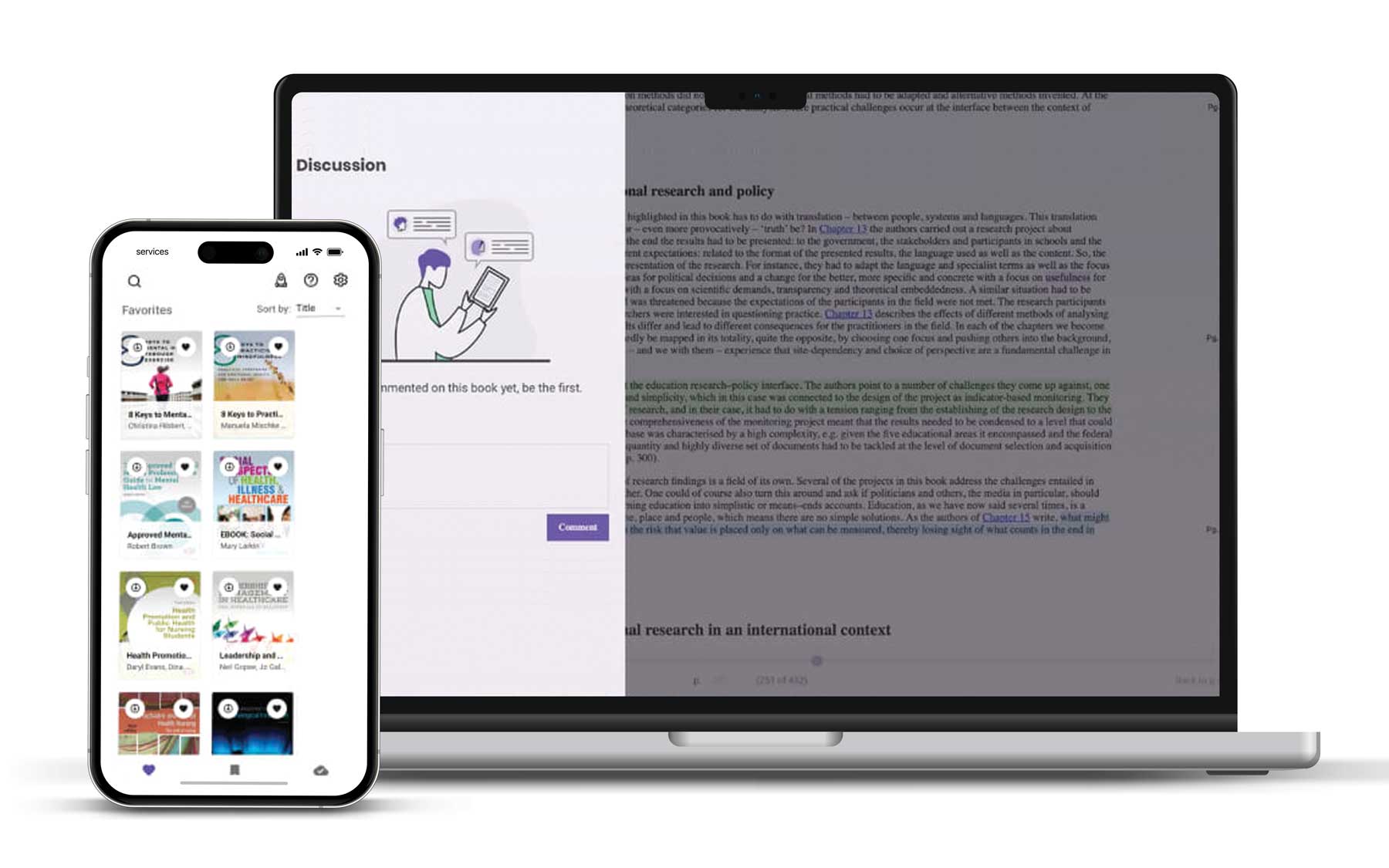
There are competing ways to assemble that experience. VitalSource and Kortext provide digital textbook platforms; Follett and Barnes & Noble College operate campus stores. A college can also retain its own bookstore and purchase separate technology. BibliU’s pitch is the combination: its own delivery platform alongside managed retail, e-commerce, and publisher relationships. Buyers should compare the whole arrangement, including service responsibilities and the student bill.
- 01Faculty selectAssign the materials
- 02College arrangesAccess + billing + LMS
- 03Students readReady for the first class
Then the app bought the shop
In October 2023, BibliU acquired Texas Book Company. The transaction brought campus store operations into a company built around digital delivery. Its Universal Learning Plus offering combined the two. Suddenly, the reading app’s universe included merchandise, inventory, and the person behind the counter.
Johnston Community College shows how the pieces can accumulate. It began its Day 1 access program in fall 2023, then moved to BibliU-managed store operations in October 2025. BibliU’s case study reports a 1% opt-out rate and on-time course-material delivery across spring and fall 2025. Those are company-reported operational results, useful measures of execution rather than proof that a platform alone improves grades.
The expansion also changes what growth requires. BibliU announced $10 million in Series A funding in April 2020 and an initial $15 million Series B tranche in June 2022. In June 2026 it announced a further $55 million from BlackRock, Stonehage Fleming, and others. It reported annual revenue above $100 million. Capital would support inventory, technology, and operating capacity: a revealing shopping list for a former textbook app.
BibliU describes a remote-first team, with offices available for collaboration. Its stated values emphasize ownership, customer needs, and resourcefulness. Coordinating software delivery with campus retail gives those principles a practical test.
The fee deserves its own close reading
BibliU Access offers flat-fee and variable billing. Flat fees can be set per credit hour; variable charges follow courses or titles. Materials are generally billed through tuition or student accounts. BibliU also describes a credit-hour option that excludes sections using OER or requiring no publisher content. That distinction matters: a course using free materials should not quietly become an expensive participant in a bundle.
Savings depend on the comparison. A student otherwise buying new commercial textbooks faces different arithmetic from one borrowing books, buying used copies, or taking mostly OER courses. Colleges can also add a markup under BibliU’s flat-fee arrangement. Students therefore need the actual fee, the assigned list, and the opt-out deadline. BibliU’s equitable-access program allows opting out before the census date. Automatic delivery and automatic savings are separate propositions.
Copy the trial before copying the scale
Iowa Western offers a practical method: pilot the service, involve faculty and administrators, survey students, and expand after evaluating the results. The survey measured support for expansion, not a causal effect on retention. A college considering BibliU can test Day 1 availability, accessibility, billing accuracy, and the cost of its own reading lists before signing up more students.
The company keeps widening that test. October 2026 announcements added Tulsa Community College and Clover Park Technical College, with Clover Park’s launch scheduled for January 2027. Tulsa’s stated problems included access-code confusion, spreadsheet-based faculty adoptions, and a campus without bookstore coverage. These are concrete jobs for a supplier. BibliU’s story becomes most persuasive at that level: the right materials, the right account, and someone responsible when the first class begins.