The first thing to know about BeneSys is that its early employees had a weekend problem. Computer jobs took so long that someone had to return to the office to check them. In the company’s anniversary account, longtime software employee Don Herman remembered colleagues taking turns leaving a nearby bar to inspect the machines. Eventually, they built a batch-processing system. The programs could follow one another. The evening could continue.
- BeneSys runs benefit administration for trust funds.
- Its BenefitDriven software also lets fund offices do the work themselves.
- Its specialty is the unusual rule, the connected record and the person awaiting an answer.
It is a useful origin story because it makes automation wonderfully unromantic. Someone knows the work, gets tired of a particular nuisance and writes a better way through it. BeneSys began with computer services in 1979, adding administration in 1986. Today, the same company sells both the people who handle benefit administration and the software that helps other administrators handle it.
The exception is where the work begins
BeneSys operates in the world of Taft-Hartley multiemployer trust funds, along with municipal and VEBA funds. Its customers need health and welfare benefits administered, pensions calculated, contributions recorded and claims processed. The company emphasizes its experience with unusual plan parameters. That detail matters: a benefit system must reflect the particular plan it serves.
Consider the chain its products cover. Contributions arrive from employers. Eligibility records establish who qualifies. Claims must be evaluated against the relevant benefits. Participants want information; trustees need reporting. A pleasing screen is useful, but the underlying records must agree. BeneSys’s opportunity sits in the joins between those jobs.
- 01ContributionsRecord what comes in
- 02EligibilityEstablish who qualifies
- 03Claims & pensionsApply the plan’s rules
- 04Member accessMake the answer visible
A conceptual map of connected administration tasks, not a processing-time chart.
This is a business with recognizable customers beneath the specialist vocabulary. BeneSys has publicly named Operating Engineers Local 324, Pipefitters Local 636 and Plumbers Local 98 among its clients. Its website reports more than 250 clients representing over 500 trust funds. Those totals describe the company’s reach, rather than a count of software subscriptions.
Hire the office. Or keep the office.
The distinction between its two routes is unusually helpful. A fund can engage BeneSys for administrative services. Alternatively, a fund office that wants to retain administration can use BenefitDriven. The platform is also available to other third-party administrators. BeneSys therefore sells operational capacity and the tools for operating independently.
BenefitDriven combines eligibility, contributions, claims, pensions and self-service portals in a cloud platform. The product proposition is that information flows between modules, reducing the need to reconstruct the same picture in separate places. The participant portal and mobile application were relaunched in 2024. Their audience includes the person who wants to check benefits without making another call.
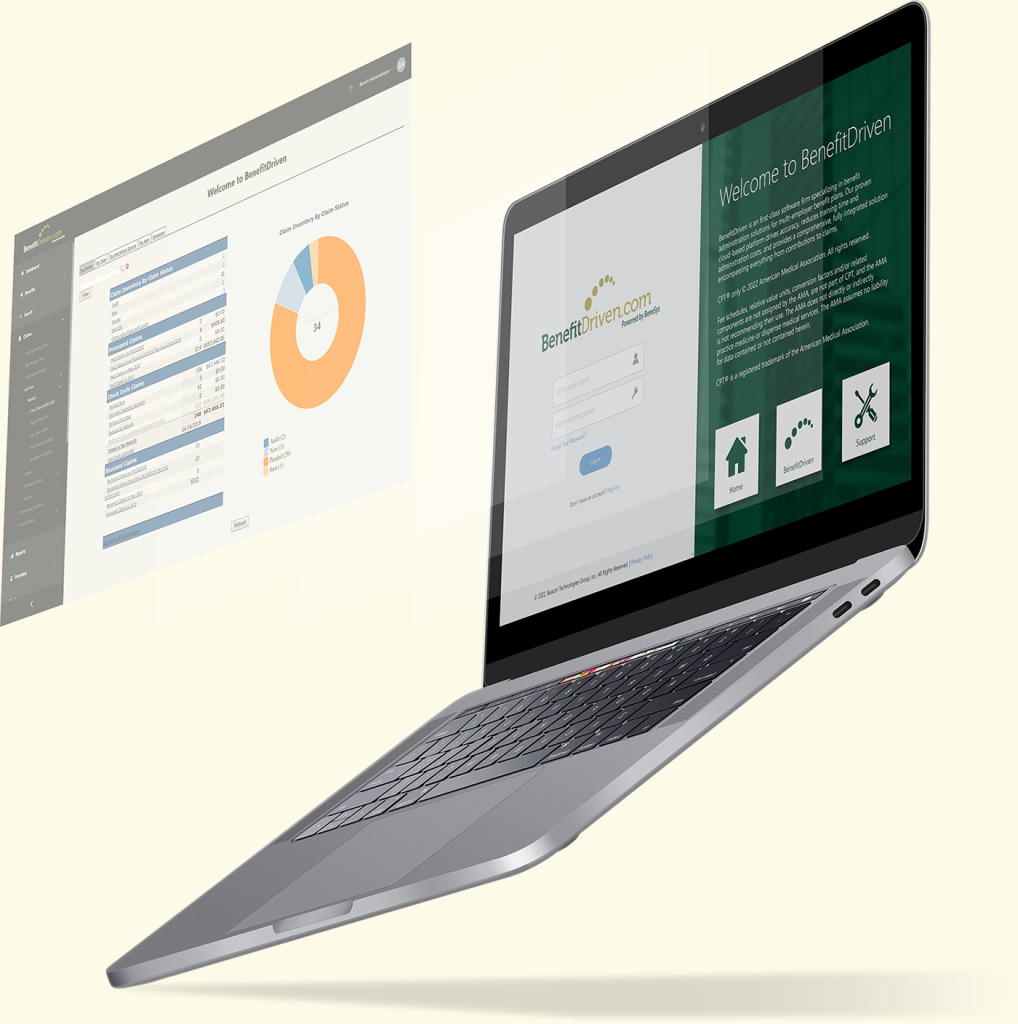
On the service side, BeneSys’s offering extends through medical, dental and vision claims, pension administration, continuation coverage and spending accounts. It coordinates with consultants, stop-loss carriers, case-management providers and pharmacy benefit managers. Its published provider list includes Aetna, Cigna and Kaiser Permanente. The work requires cooperation across organizations as well as competence inside one.
The commercial model follows the split: business customers buy administration services or software. Administrative buyers request a proposal; software buyers can request a demonstration. For a trustee weighing the options, the useful comparison includes the work retained by the fund office, the conversion effort and the support arrangement. A software demonstration should show who handles an exception after the screen flags it.
The buyer also has to decide what should remain local. A fund with an experienced internal team may value software that supports its existing expertise. A fund seeking administrative capacity has a different conversation. BeneSys’s two offerings make that distinction explicit, even when both routes eventually involve the same underlying benefit records.
The migration has a human cost
The history becomes more revealing when the machines stop behaving conveniently. In its fourth-quarter 2021 newsletter, BeneSys acknowledged that clients experienced challenges during its move to Microsoft Azure. The stated objectives were better disaster recovery, business continuity and security. The intended destination made sense; the journey still disrupted clients.
That episode gives a buyer something concrete to investigate. A new platform has to inherit existing records while people continue needing benefits. Conversion deserves questions about continuity, reconciliation and responsibility. The cost of change includes staff attention and service disruption alongside the contract price.
“BeneSys is Benefit + Systems.”
Don Herman, company anniversary newsletter, 2024
BeneSys acquired Beacon Technologies Group in 2021, bringing its SpyGlass claims technology into the business. BenefitDriven’s June 2026 newsletter announcement reported that the SpyGlass migration was complete. That interval is instructive. Buying a platform and moving an operating business onto it are separate accomplishments, spread across years.
The phone still has to ring somewhere
Technology also leaves evidence in the queue. In early 2025, BeneSys described adding staff for the busy January and February health-plan period, establishing a national pension audit team and tracking why people called. Its newsletter reported improved answering speed and abandonment measures, alongside reduced client dissatisfaction. These were company-reported results, without published numerical comparisons.
That is a more useful account of responding to feedback than another promise about service. More people handled demand. Call reasons became data. Audits received dedicated attention. An administrator can improve the machinery and still need to change the way people work around it.
There is a related example in document handling. Hyland named BeneSys a Trailblazer winner in its 2025 Innovation Awards, describing the replacement of manual indexing for 30,000 documents a month with content intelligence and natural-language search. The interesting unit is the document: an ordinary object that becomes a formidable workload when enough of them arrive.
For another service business, the lesson is practical. Start with a repeated task that people can describe precisely. Then watch the surrounding work: the handoff, the follow-up call, the missing document. An automated step earns its keep when the whole job becomes easier to finish.
Bring the awkward cases
BeneSys shares its market with specialists such as Zenith American Solutions, which also offers Taft-Hartley administration. Its position is the combination of operating experience and its own technology. That combination offers a practical evaluation method: bring difficult plan rules, a troublesome claim and an incomplete contribution record to the conversation. Ask how each moves through the system.
This approach suits funds with specialist administration needs. Someone shopping for an individual insurance policy, or a small employer seeking basic payroll tools, starts with a different problem. The transferable lesson is narrower and better: connect the records, test the exceptions and measure what happens to the person seeking help. The early programmers wanted their evening back. Today’s participant wants an answer.