Before Ben Rubin built rooms on screens, he studied rooms made of concrete. Architecture at the Technion in Israel taught him to watch what a space permits: where strangers cross, where friends linger, where a doorway invites and where a wall quietly says no. By his third year, the phones in everyone’s pockets had started to look like a more elastic material. Each carried a camera, a screen and an internet connection. Rubin left school in 2012 and began designing places no one could walk through.
The career that followed can be misread as a sequence of fashionable technologies. First mobile livestreaming, then group video, workplace audio and now an onchain messaging protocol. The surface keeps moving because the internet moves. Underneath sits an architectural obsession: arrange people differently and conversation itself changes.
Rubin’s products are less like monuments than party venues after several renovations. Yevvo had too much furniture. Meerkat installed a stage and packed the hall. Houseparty opened the doors between rooms. Towns is trying to hand the keys, the rules and part of the economics to the people inside.
A product can have too many good ideas
Life On Air, the company Rubin co-founded with Itai Danino in Israel, began with a plain mission: bring people together in a human way when they could not be physically together. Its early mobile livestreaming experiments included AIR and Yevvo. Yevvo found groups of young users in countries including Brazil, Mexico and Sweden, but the attention did not hold.
Rubin later described the product through a kitchen metaphor. It was his first time cooking, and he wanted to cook everything. Yevvo offered live video, comments, hashtags, locations, sharing and a stop-motion feature called Flashbacks. Each feature sounded defensible. Together, they slowed the team’s learning. A crowded product can hide the one behavior worth saving.
Three rooms, three social geometries
One broadcaster, a live crowd and borrowed distribution through Twitter.
Small groups, open doors and permission supplied by mutual friendship.
Familiar chat with programmable entry, subscriptions and community control.
One Yevvo behavior stood out: people used its Twitter integration to livestream concerts. The team reduced the idea until little remained beyond a button. Meerkat was built in roughly 60 days and launched on Product Hunt in February 2015. Logging in brought a user’s Twitter relationships along. Tapping once started a broadcast and placed it in front of followers. The product skipped the empty-room problem because it entered a room Twitter had already filled.
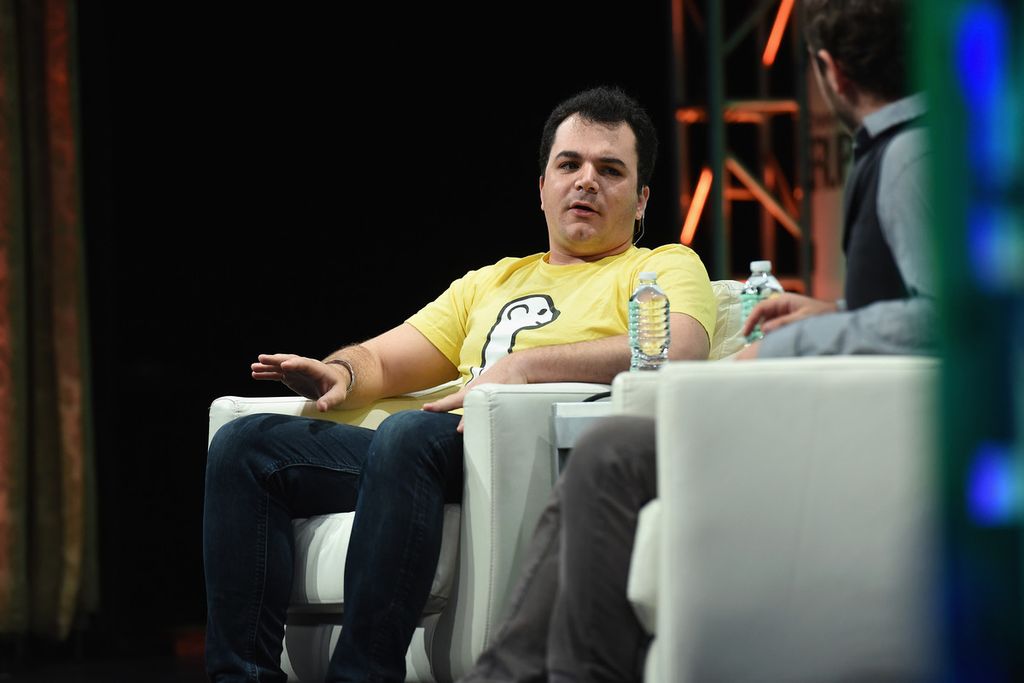
The applause arrived before the foundations
At South by Southwest in March 2015, Meerkat became the app people used to show one another what was happening. Investors competed to fund it. The company raised $12 million. The speed was intoxicating and structurally awkward: Twitter had acquired the competing livestreaming app Periscope, and it restricted Meerkat’s access to its social graph just as the festival put Rubin’s product in the spotlight.
Losing distribution was brutal, but platform dependence was only part of the diagnosis. Rubin studied how people actually used Meerkat. The durable broadcasters tended to be celebrities, media organizations and influencers. Most people did not want a daily television station. They wanted to participate, especially with people they knew.
So Rubin told investors the product would not work and pointed the team elsewhere. This was not the tidy pivot mythology in which a dashboard flashes red and a founder instantly becomes wise. The company had attention, new funding and a recognizable animal. Walking away required admitting that a moment could be real without becoming a business.
“I still look at myself as an architect today. It’s just that the medium that I work in is digital.”Ben Rubin
The team kept the camera and changed the geometry. Instead of one person performing for many, a few friends would share a room. Instead of scheduling a call, users could see who was present and wander in. Houseparty turned a familiar medium into something closer to hearing voices in the kitchen and joining without an engraved invitation.
Houseparty designed the arrival
Houseparty’s central feature was social permission. Friendship was mutual. If one of your friends was already speaking with someone else, you could enter, meet the stranger and say hello. The app’s rooms were open enough to create serendipity and bounded enough to feel legible. It was less intrusive than turning up at a physical home, Rubin joked, but natural in the same way.
The app reached roughly one million daily active users within about a year. It also stumbled. Growth slowed, fundraising became harder and, after years of work and about $70 million raised by Life On Air, the choices narrowed to another reinvention or a sale. Epic Games acquired Houseparty in 2019. When pandemic isolation arrived months later, the app experienced a rush of demand and added tens of millions of sign-ups. Epic ultimately closed it in 2021.
Rubin had described Houseparty as a building with rooms, meetings, flirtations, friendships and farewells. The metaphor was useful precisely because buildings outlive none of the institutions that maintain them. A beloved social space can vanish by corporate decision. The guests supplied its value, but they did not hold the deed.
“I want to explore whether there are more people like me that are excited about the idea of making the internet intimate, without making it smaller.”Ben Rubin
After Houseparty, Rubin worked on SlashTalk, an audio-based workplace product intended to make short conversations less formal than meetings. He also spent time around venture capital as a Sequoia scout and a Benchmark entrepreneur in residence. The next project returned to consumer communication, now carrying a sharper memory of what happens when a platform or owner controls the ground.
Towns changes the ownership layer
Rubin co-founded Here Not There Labs in 2020 with Brian Meek, an engineer who had worked on Skype. The company introduced Towns in 2023 as both a group-chat application and a protocol for programmable communication. A $25.5 million Series A led by a16z crypto accompanied the debut. In 2025, Towns announced another $10 million round led by the same investor, with Coinbase Ventures joining and Benchmark continuing its support.
Towns looks much like familiar chat software. Rubin considers that restraint a feature. His product rule is that a builder can innovate on the graph, meaning how people assemble, or on the activity they perform once together. Trying to reinvent both risks making the experience feel extraterrestrial. WhatsApp-like rooms give users steady flooring while the machinery beneath them changes.
A Town can use programmable membership rules, charge a subscription and direct value among participants. Messages are end-to-end encrypted. The protocol uses an EVM-compatible chain and a decentralized network of off-chain nodes. At the application layer, communities can shape who enters and who speaks. Rubin has imagined a food group in which active restaurant-goers post while everyone else reacts, or a trading group where speaking rights depend on provable experience.
Leaves architecture school and starts Life On Air.
Meerkat compresses live broadcasting into one tap and breaks out at SXSW.
The team turns from public broadcast toward Houseparty’s small-group video rooms.
Epic Games acquires Houseparty.
Towns arrives with a protocol, a chat app and a $25.5 million Series A.
Towns announces a $10 million Series B and launches its token economy.
This architecture introduces its own tensions. A price can discourage spam and reward useful participation, but payment also changes the social temperature. A credential can raise the signal, but any admission rule draws a boundary. Community governance distributes authority and also demands that someone exercise it. Rubin’s position is that protocol infrastructure should remain available while client applications handle legally required moderation and their own presentation choices.
By September 2025, Rubin said Towns had about 1.5 million users and group chats had generated more than $40 million in revenue since the October 2024 launch. Many active groups centered on trading, anime and gaming. He compared the early mix to Snapchat’s beginnings: a starting culture may be narrow or playful before later uses emerge. He has become wary of predicting precisely where a social product goes.
A career held together by one question
Rubin likes a provocative line: every social network is essentially a dating app. He means that beneath feeds, likes and reaction buttons sits a wish to be seen, understood and wanted. The line also explains why his work keeps resisting the lonely efficiency of a content feed. He is interested in the live wire between people, and in products that create a socially acceptable reason to touch it.
Meerkat made attention immediate. Houseparty made presence casual. Towns is trying to make conversation ownable. Each attempts to move a threshold: one tap to broadcast, one friend to enter, one membership rule to form a community. The useful lesson is not to copy any of those mechanics whole. It is to notice how much behavior begins at the door.
There is a pleasing stubbornness in Rubin’s path. He left architecture, yet never stopped practicing it. He discarded products without discarding their purpose. He watched a borrowed graph disappear, sold a popular digital gathering place, experimented with the office and returned to the messy consumer internet. The rooms change; the human appetite inside them barely does.
Towns may or may not become the durable structure Rubin wants. His own posture has softened from forecasting toward daily maintenance: make the system sustainable, useful and available for communities to steer. Architects draw plans, but occupants reveal the building. Online, they may eventually hold the keys as well.