A public relations founder suggesting that companies sometimes talk too carefully is an agreeable complication. Ben Merritt has made a living helping technology businesses decide what to say. At a San Francisco discussion about corporate storytelling, he also made room for the possibility that the prepared message could become a nuisance. Give a knowledgeable person a little latitude. Let the conversation move. Then find the route back.
“Sometimes companies and agencies might over-message,” he said. Coming from a communicator, the observation has the charm of a tailor admitting that a suit can be too tight. It also offers a way into Merritt’s career: a succession of roles around the difficult business of making another person understand why something matters.
There is a company with his surname, Merritt Group, which he founded and later sold. There is another, Merritt & Rose Communications, whose brand launched in 2023. Behind both are earlier chapters in journalism, corporate communications and the US Navy. The founder’s name is the easy part to remember. The movement between those worlds makes the story worth following.
A reporter changes sides
Merritt graduated from the University of Florida and subsequently served in the Navy. His service included a posting in Japan as an officer. Long before a technology company needed a message, he had a life that took him beyond an American campus and into a different professional setting overseas.
The distinction matters because an agency biography can make a career appear to begin at incorporation. Merritt’s began elsewhere. His professional background includes journalism, followed by work on both the agency and corporate sides of public relations. He held senior positions at Regis McKenna and Network General; his experience at the latter included its public offering.
Those jobs put a person on different sides of an exchange. A reporter wants something worth telling readers. A company wants its work understood. An agency must make the introduction credible to both. Merritt’s route gave him experience in each setting. That is a useful preparation for a profession in which everyone involved can agree that a subject is important while disagreeing completely about the opening sentence.
Two coasts and a company name
In 1996, Merritt founded Merritt Group. The agency developed a presence in the Washington area and San Francisco, bringing its technology communications work to two distinct business environments. Its client work extended across enterprise technology, security, networking and government. The audience might be a commercial buyer, a public-sector decision-maker or an industry observer.
By April 2003, Merritt was being introduced as the firm’s president for a communications strategy session in McLean, Virginia. The session addressed reaching the business and trade press, along with customers, analysts and financial audiences. The subject was practical: how does a company get its message in front of people whose attention has a business consequence?
That question remained visible as the agency’s work expanded. Its 2011 offering combined PR with marketing, digital work, social media and the web. Clients listed at the time included Verizon Business, Microsoft Public Sector, Booz Allen Hamilton and Teradata. A company with a story also needed decisions about where that story belonged and how its different versions connected.
is founded
founder listing
brand launch
A 2013 description of the agency’s method made the sequence explicit: research, communications strategy, execution and measurement. The assignments could include positioning, media outreach, customer relations, podcasts or an eBook about an industry trend. The firm described measuring the effect of a campaign, whether the result was an article, a customer event or another encounter with its intended audience.
For a founder who had worked as a journalist, that list placed the press relationship inside a broader business. The agency could pursue a publication while also helping a client speak elsewhere. The question from his 2003 session had acquired more possible answers. A customer might encounter the company through an event, a digital publication or material the company produced itself. Deciding among them required an understanding of the audience before the activity began. Merritt Group’s stated method put that research first.
The work was shared with people whose careers would become part of the agency’s history. Tom Rice later recalled arriving at a firm led by Merritt, Alisa Valudes Whyte and Megan Lamb. Rice had moved toward communications after studying finance and working at Ein Communications. He wanted to work closer to home and was interested in technology.
He found room to develop that interest at Merritt Group, helping win cybersecurity accounts and build the security practice. His recollection places Merritt within a working leadership team. Businesses acquire a founder’s name quickly; they acquire an enduring group of colleagues through the slower accumulation of assignments, opportunities and decisions.
A little less rehearsal
In 2012, Merritt described the kinds of companies he wanted to work with. He looked for commitment to the process, a worthwhile story and businesses that “have true substance and sound business models.” Strategic communications belonged within their marketing plans. There was an expectation of effort on the client’s side as well as the agency’s.
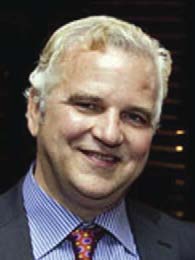
It is an unromantic requirement with considerable practical appeal. An announcement can introduce a company. Repeated attention requires more material. If the business has little to show, each new explanation must carry a heavier load. Merritt’s stated preference put some of the responsibility back where it belonged: with the enterprise asking to be noticed.
He described work serving both businesses and government, from young, venture-funded companies to established category leaders. These organizations arrive with different resources and reputations. Their communications still have to establish a credible position. A young company cannot assume familiarity. A familiar company cannot assume that familiarity will explain its next move.
At the San Francisco roundtable, where Merritt participated as a Lumina executive vice president, his concerns widened to the people who did the explaining. Technical leaders and product managers could build relationships with relevant influencers. A spokesperson could take a conversational detour, provided there was a connection back to the central idea.
“How can we have a human face?”
Ben Merritt, on technology companies and public trust
He also raised the issue of Silicon Valley’s social responsibilities amid criticism of major technology companies. Read together, these remarks suggest a communicator interested in what sits behind the statement: the person speaking, the organization’s priorities and the credibility of the encounter. A script can help someone begin. It can also make everyone sound as though they have met the same very cautious lawyer.
The name stays. The founder moves.
By the 2014 agency directory, Merritt’s title was chairman and founder. Alisa Valudes Whyte was listed as CEO. Other leaders included Rice, Jayson Schkloven and John Conrad. A company introduced through one person’s name now had a leadership structure that made its continuation visible on the page.
Merritt later sold the firm. His subsequent professional biography describes the business he sold as a 50-person communications agency with Washington and San Francisco offices. The change belongs to a longer career in which founding a company was followed by doing communications work in other organizations.
HOPZERO’s team biography, for example, lists him as communications director. It puts the earlier journalism, Navy service and technology PR experience into a short introduction for another business. The familiar credentials have a new use. An agency founder’s experience can travel into a company that needs someone to do the explaining from inside.
Another launch, with work already underway
On May 23, 2023, Merritt & Rose Communications announced its brand. Merritt, Kira Rose Wojack and other PR veterans were behind the venture. Its focus was emerging technology and cybersecurity, with services intended to scale from early-stage businesses to public companies. The announcement followed a week at the RSA Conference.
The date marked a public introduction rather than the first day of collaboration. The founders reported helping more than fifteen companies since 2020. Named examples included Neosec, acquired by Akamai, and Zebrium, acquired by ScienceLogic. These were client histories in the launch announcement; the acquisitions were outcomes in those companies’ own lives.
For Merritt, the newer agency brought a familiar interest into another organization. His role covers strategy and media relations. His biography emphasizes helping early-stage businesses enter markets and making technology understandable as an innovation with a purpose. There is continuity here: the company changes, while the difficult introductory conversation remains.
A boat in the biography
One of Merritt’s other professional introductions is at Bluewater, where he is listed as a yacht-sales associate. It describes an interest in boats that began in childhood, continued through Navy service and included owning watercraft of different kinds. The sea belongs in this biography before any tempting metaphor about steering a company.
The interest is personal; the work is also commercial. His Bluewater introduction talks about understanding what a buyer wants from a yacht and finding a suitable match. That is a different purchase from a technology service, with a rather better view from the meeting room. It still involves listening closely before offering an answer.
Merritt’s public LinkedIn profile now places him in Wilmington, North Carolina. The professional activity remains connected to technology stories and the people who report them. In one comment about a journalist, he remembers pitches being rejected and the reporter remaining kind. There is a small, recognizable professional life in that detail: the relationship continues after the answer is no.
That gives his observation about over-messaging some weight. A career in communications includes preparation, introductions and plenty of rejection. It also includes the moments when another person responds to something that sounds like an actual person speaking. After building one agency and beginning another, Merritt still leaves space for that encounter.